



|
Getting your Trinity Audio player ready...
|
By: Fern Sidman
The aftermath of a deadly Midtown mass shooting has intensified scrutiny of New York City mayoral frontrunner Zohran Mamdani, whose longstanding calls to dismantle the NYPD’s Strategic Response Group (SRG) have collided with the unit’s critical role in responding to the bloodshed. The New York Post has reported on Tuesday that the socialist assemblyman, now the Democratic nominee, continues to face mounting criticism over what opponents describe as a dangerous anti-police agenda.
On Monday, as gunman Shane Tamura carried out a rampage on Park Avenue that left four dead, including an off-duty police officer, SRG officers were among the first to storm the building and secure the scene. Yet Mamdani — who has praised first responders for their bravery in the crisis — has previously pledged to abolish the very unit credited with containing the carnage.
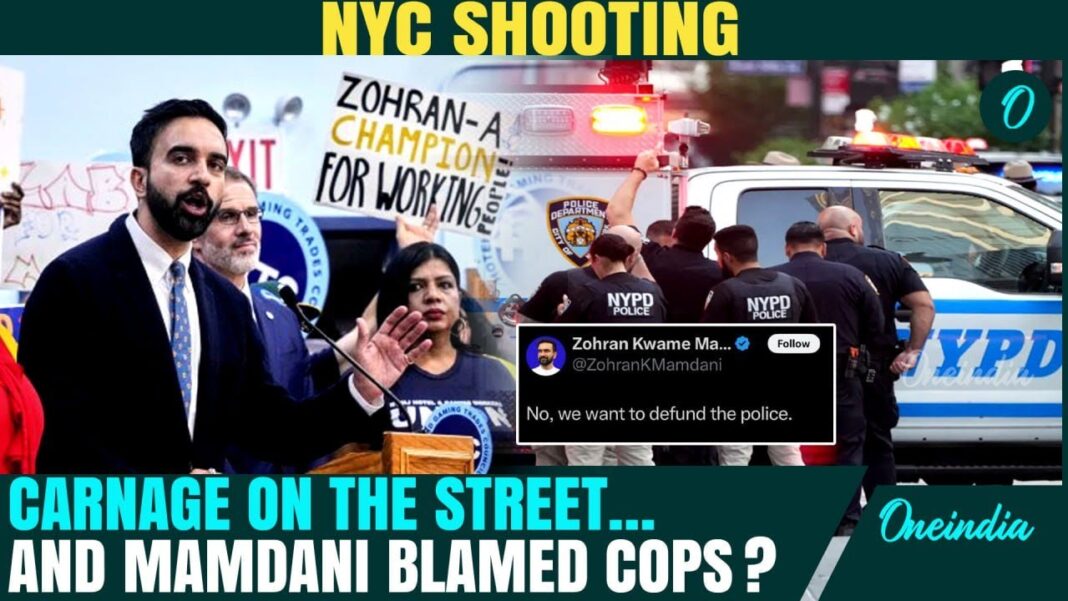
In December 2024, just months into his mayoral campaign, Mamdani wrote on social media: “As Mayor, I will disband the SRG, which has cost taxpayers millions in lawsuit settlements and brutalized countless New Yorkers exercising their First Amendment rights.” The New York Post report noted that the remarks came as part of a broader critique of NYPD practices that Mamdani has championed since the George Floyd protests in 2020, when he explicitly called for defunding the department.
The NYPD’s Strategic Response Group is a special operations division created to handle large-scale citywide mobilizations, civil unrest, and significant public events. According to the department’s own materials, SRG units also respond to critical emergencies such as shootings and armed robberies.
During Monday’s attack, SRG officers charged into the Park Avenue building in the heart of Manhattan, ensuring that Tamura was contained and preventing additional casualties. Law enforcement sources told The New York Post that their rapid deployment was vital in limiting the scope of the tragedy.
Yet Mamdani has maintained that the SRG represents an unnecessary and harmful force within the city, pointing to lawsuits and complaints filed against the unit over its handling of protests. His vow to dismantle the group has become a flashpoint in the campaign, drawing praise from progressive allies but sharp condemnation from police unions, Republicans, and even some Democrats.
Hours after the shooting, Mamdani released a statement on social media expressing grief and solidarity. “I am heartbroken over this horrific shooting,” he wrote. “I am holding the victims, their families, and the NYPD officer in critical condition in my thoughts. Grateful for all of our first responders on the ground.”
The New York Post report underscored the irony that among those very first responders were SRG officers — the same unit Mamdani has vowed to eliminate. Critics quickly seized on the apparent contradiction, arguing that his public statements of gratitude could not be reconciled with his campaign platform.
“Mamdani is hypocritical and irony-deficient,” Democratic strategist and longtime police union advisor Ken Frydman told The New York Post. “He can’t say he’s ‘heartbroken’ over the Midtown mass shooting and praise first responders while calling for disbanding the Strategic Response Group.”
The backlash has been swift and sharp. One police source described the mayoral frontrunner bluntly to The New York Post: “He’s a joke. He only wants to ban SRG because they are the ones responding to his people’s protests.”
NY Rep. Elise Stefanik (R-21) resurfaced one of Mamdani’s 2020 social media posts, amplifying the criticism. “Flashback: Kathy Hochul’s very own Commie Mamdani. A disgrace and truly unfit to be Mayor of NYC,” she wrote, sharing his earlier post that read: “We don’t need an investigation to know that the NYPD is racist, anti-queer & a major threat to public safety. What we need is to #DefundTheNYPD.”
Gerard Kassar, chairman of the New York State Conservative Party, also issued a warning. “New Yorkers need to seriously ponder who their next mayor will be,” he told The New York Post. “If Mr. Mamdani were elected, he would have direct control over the NYPD — an agency he publicly despises. That cannot work in a city like New York.”
Governor Kathy Hochul, who has herself called for stronger federal gun control measures in the wake of the shooting, attempted to deflect some of the criticism aimed at Mamdani. Speaking to CNN, she dismissed Stefanik’s attacks.
“Seriously going after an unelected official who said something back in 2020? Come on, give me a break,” Hochul remarked, urging reporters instead to focus on what policies lawmakers were offering to enhance public safety. The New York Post report highlighted Hochul’s defense as a rare moment in which the governor openly aligned herself with Mamdani, despite their differences in political positioning.
On Tuesday morning, Mamdani sought to underscore his respect for the police by honoring the life of Officer Didarul Islam, a 36-year-old father of two who died in the line of duty during the shooting.
“When he joined the police department, his mother asked him why he would pursue such a dangerous job. He told her it was to leave behind a legacy that his family could be proud of,” Mamdani wrote. “He’s done that and more. I pray for him, his family and honor the legacy of service and sacrifice he leaves behind.”
While the tribute struck a somber and respectful tone, critics noted that it did little to quiet concerns about Mamdani’s broader anti-police record.
Despite the outcry, Mamdani is not without support. Other progressive figures have echoed his opposition to the SRG, citing a pattern of alleged misconduct by the unit at protests and demonstrations.
Council member Chi Ossé of Bed-Stuy introduced legislation in January that would prohibit the SRG from being deployed at “First Amendment events.” The measure has already attracted support from 24 Democratic council sponsors, including Brooklyn Councilwoman Crystal Hudson.
For Mamdani and his allies, the push to rein in the SRG is part of a larger campaign to rethink policing in New York City, aligning with nationwide calls for reform and accountability.
Yet the timing of Mamdani’s long-held positions could not be more fraught. As New Yorkers grapple with the shock of another mass shooting, the role of specialized police units like the SRG is under intense scrutiny. The New York Post report observed that Mamdani’s dual posture — simultaneously condemning violence and honoring police while advocating for disbanding one of the department’s most visible units — places him in a precarious position.
Conservative leaders have framed his candidacy as a threat to public safety, while even some Democrats express quiet unease about the optics of a mayor who has openly disparaged the police force he would command.
Despite repeated inquiries from The New York Post and other outlets, Mamdani’s campaign has not clarified whether he continues to stand by his pledge to disband the SRG in light of Monday’s events. His spokesperson did not respond to multiple requests for comment.
That silence, coupled with his prior statements, leaves voters with significant questions as the election approaches: Would a Mamdani administration seek to abolish the SRG entirely? If so, what would replace the unit’s rapid-response capacity in crises like Monday’s shooting?
As the campaign intensifies, the controversy over the SRG may become a defining test of Mamdani’s credibility. His opponents have already seized on the issue to paint him as anti-police and out of touch with the realities of public safety. His supporters argue that his positions represent a necessary step toward accountability and reform.
What remains clear, as The New York Post report has emphasized, is that the debate over the future of the SRG is no longer an abstract question of policing policy. It is now inseparably linked to the lived experience of New Yorkers who witnessed firsthand the role of the unit during one of the city’s darkest days.
For Mamdani, the challenge will be reconciling his progressive principles with the pressing demands of governance in a city still grappling with violence, fear, and the enduring search for security.
 |
|