



|
Getting your Trinity Audio player ready...
|
By: Benyamin Davidsons
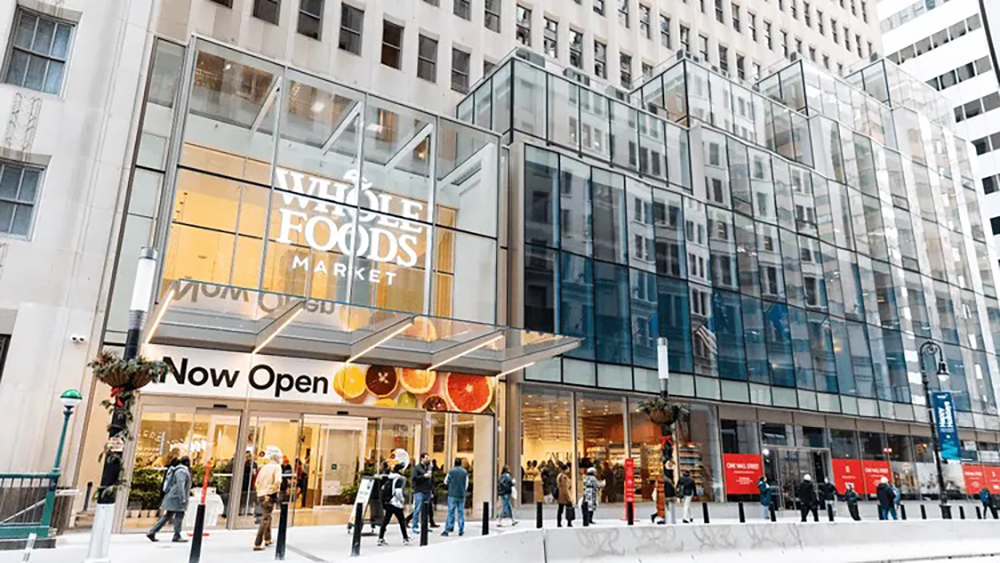
Whole Foods is opening new small-format stores in New York City in a bid to lure urban consumers shopping in a hurry.
As reported by Crain’s NY, the organic grocer, owned by e-commerce giant Amazon, plans to open new compact stores, under the name Whole Foods Market Daily Shop. The new stores will span between just 7,000 to 14,000 square feet, as opposed to the average roughly 40,000 square foot regular Whole Foods stores. The Daily Shops will carry a similar selection, although a smaller range of products, including fresh produce, frozen food, prepackaged meals and Whole Foods’ 365 branded products. The slimmed down stores will not offer buffet bars or meat counters. “The introduction of home delivery has changed customers’ mentality. People want things fast,” said Christina Minardi, executive vice president of growth and development at Whole Foods Market and Amazon.
The first Daily Shop is slated to open in the fall of 2024 on the Upper East Side in Manhattan, Crain’s reported. The company has signed five leases in NYC for similar scaled-down stores and will consider expanding into other cities across the United States. The stores will feature both self-checkout stations and cashiers and Amazon One, the company’s palm payment service, Minardi said. Whole Foods will stick to its quality standards by continuing to ban products with ingredients like high-fructose corn syrup, artificial colors, preservatives and hydrogenated fats.
The Whole Foods supermarket chain, headquartered in Austin, Texas and established in 1980, currently operates over 530 stores in North America, Canada and the United Kingdom. The supermarket chain currently boasts roughly 90,000 employees, and boasted a revenue of $17 billion in 2021. Amazon had purchased the organic chain in 2017, paying $13.7 billion. It has become the online company’s mainstay grocery business.
During the pandemic, the stores had felt the dire effects of diminished traffic and were compelled to shut down its popular food bars and samples, which have since been brought back. Per Crain’s, Amazon is currently content with the growth at Whole Foods, but is trying to grow its market share in the grocery industry, and starting to retreat from apparel and other retail endeavors. The e-commerce giant is also developing a lower-priced point grocery chain under the Amazon Fresh brand.
In 2022, the company hired Tony Hoggett to lead its grocery business.
This isn’t the first time Whole Foods experimented with smaller stores. In 2016, it opened more compact stores under the name 365 by Whole Foods Market, which specialized in cheaper private-label groceries, as per Crain’s. Those stores were about 25,000 square feet, which is still substantially bigger than the currently planed stores. They targeted a wider customer base with lower-end products and also included the full-service sections with food bars. In January 2019, it was announced that the 365 by Whole Foods Market concept would be discontinued, and shortly after, those remaining stores were converted into regular Whole Foods stores.
Minardi said she has been thinking about this smaller, convenience store concept for Whole Foods since 2010. She and her team have been working out the fine points for the last two years. Smaller retail spaces are easier to come by than the traditional oversized supermarket locations, she noted.
