



|
Getting your Trinity Audio player ready...
|
Edited by: TJVNews.com
In a deeply troubling case, a New Jersey state trooper, Jason Dare, was terminated from his position last year after nearly two decades of service due to his visible white supremacist tattoos, including a notorious Hitler Youth slogan, as was reported by The New York Post. The discovery of these tattoos and the subsequent investigation into Dare’s affiliations with extremist groups have raised significant concerns about the presence of individuals with extremist views within law enforcement agencies.
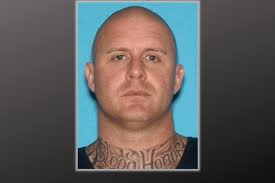
The case came to public attention in March 2023 when the New Jersey State Police issued a missing persons alert for Trooper Jason Dare, who had left a Pennsylvania medical facility and was declared “missing and endangered.” The alert included a photo of Dare that quickly drew attention due to the prominent “Blood Honor” tattoo on his neck. The Post report also added that social media users recognized the phrase as a Hitler Youth motto used during World War II, which sparked widespread outrage and calls for further investigation.
Following the alert, internet sleuths and the Anti-Defamation League (ADL) uncovered further evidence of Dare’s connections to white supremacist ideologies. Photos on Dare’s Facebook page revealed additional tattoos, including Iron Crosses on his wrists and a pit bull illustration associated with the Keystone State Skinheads, a Pennsylvania-based white supremacist group, as was revealed in a report in The Post. Moreover, Dare had shared posts on Facebook that alluded to white supremacist and neo-Nazi groups, further cementing the concerns about his affiliations.
In response to these revelations, the New Jersey Attorney General’s Office of Public Integrity and Accountability launched an internal investigation into Dare’s conduct. According to reports, the probe concluded that Dare’s visible tattoos violated law enforcement policies related to conflicts of interest and associations with racist ideologies. Indicated in The Post report was that the investigation found that Dare’s tattoos and social media activity were in direct conflict with the values and standards expected of law enforcement officers.
Despite the serious nature of the findings, the official state police disciplinary report did not explicitly cite Dare’s tattoos as the reason for his termination. Instead, it mentioned “uniform and grooming standards” and several instances of misconduct. Dare’s termination was also linked to his violation of a previously negotiated plea agreement for misconduct. The Post report said that he had left the medical facility without notifying the Division and entered an unoccupied residence in Pennsylvania without permission. Additionally, Dare discharged a shotgun round through the front window of his residence.
The disciplinary report stated: “[Dare] violated the terms of a previously negotiated plea agreement for misconduct by leaving a medical facility without making proper notification to the Division and entering an unoccupied residence in Pennsylvania without permission. The member also discharged one round from a shotgun through the front window of his residence. The member was terminated from employment with the Division.”
The annual personnel disciplinary report published by the state police did not explicitly cite Dare’s hate-linked tattoos as the reason for his termination. The Post report said that instead, the charges against him included “uniform and grooming standards.” Additionally, the report detailed several severe instances of misconduct:
- Dare violated the terms of a previously negotiated plea agreement by leaving a medical facility without notifying the Division.
- He entered an unoccupied residence in Pennsylvania without permission.
- He discharged a shotgun round through the front window of his residence.
These actions constituted clear violations of law enforcement protocols and were significant factors in his dismissal.
The circumstances surrounding Dare’s medical treatment, disappearance, and the firearm incident have not been fully disclosed by the state police. This lack of transparency has led to public frustration and concern about the thoroughness and openness of the investigation. Noted in the Post report was that the Attorney General’s Office confirmed Dare’s termination on November 27, following its investigation, but did not provide further details.
