



|
Getting your Trinity Audio player ready...
|
Wall Street’s Great Migration: As Mamdani’s Rise Rattles New York, Dallas Becomes the New Capital of Capital
By: Andrew Carlson – Jewish Voice News
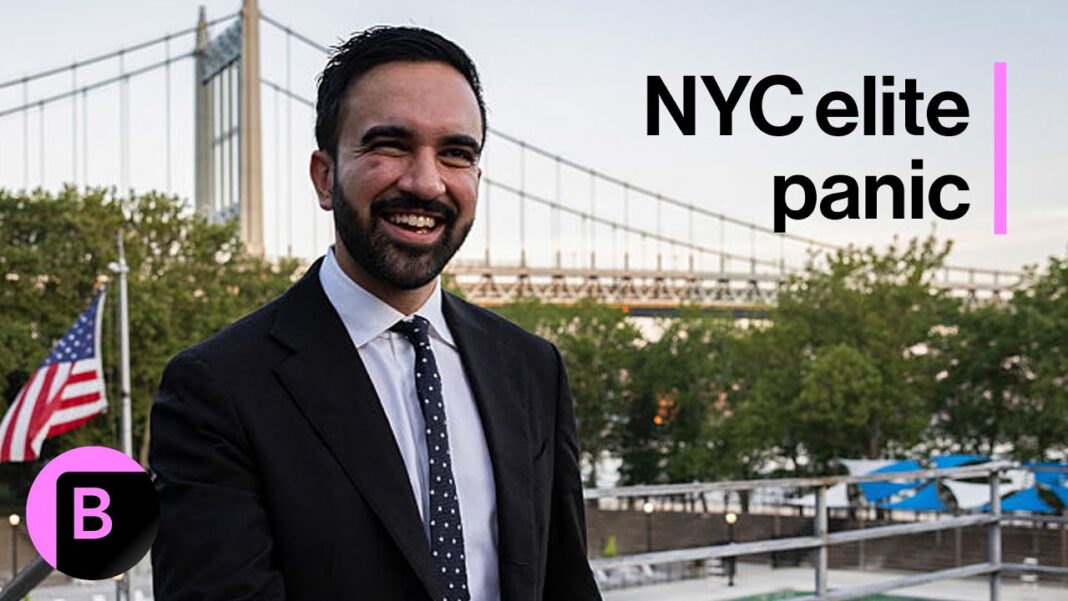
As New York City stands on the brink of electing Zohran Mamdani, the self-styled socialist and vocal champion of higher taxes and rent freezes, a quiet exodus is accelerating from the world’s financial capital. What began as a trickle of relocations during the pandemic has, according to a report on Monday in The New York Post, evolved into a steady migration of money, talent, and institutional confidence—southward, toward the sprawling, business-friendly skyline of Dallas, Texas.
Once viewed as merely an outpost for regional banking, Dallas has in recent years transformed into a formidable rival to New York’s financial dominance. Its rapid rise has been fueled by a convergence of policy pragmatism, economic freedom, and—ironically—the ideological turbulence now defining the Big Apple’s political climate. With Mamdani’s ascendancy, that turbulence has reached a crescendo, and Wall Street is paying close attention.
As The New York Post reported, Mamdani—a Uganda-born progressive and outspoken supporter of the Democratic Socialists of America—has pledged to raise taxes on the wealthy and impose aggressive rent-freeze policies, sparking alarm among business leaders who already view New York’s regulatory environment as hostile. His flirtation with “defund the police” rhetoric and frequent denunciations of corporate interests have only deepened concerns that his administration would mark the most anti-business chapter in the city’s modern history.
That apprehension isn’t confined to political theory—it’s measurable in migration data, investment flows, and corporate real estate footprints. The Post has tracked the exodus of financial firms and executives over the past three years, many of whom cite the same underlying grievances: taxation, bureaucracy, and ideological hostility.
“Two years ago, people were talking about Florida. Today, they’re talking about Texas,” the Post report observed in a recent analysis of the trend. “And what’s fueling it now isn’t just the weather—it’s policy.”
Few cities embody America’s economic reinvention like Dallas. The Lone Star metropolis—home to iconic business figures such as Ross Perot, Mark Cuban, and Jerry Jones—has long thrived on an entrepreneurial spirit. But now, that same ambition is drawing the attention of global finance.
In a move that stunned Wall Street, Goldman Sachs announced plans to construct an 800,000-square-foot, $500 million campus in Dallas, slated to open in 2028. The facility will consolidate over 5,000 employees, symbolizing both confidence in Texas’s future and frustration with New York’s present.
As The New York Post reported, Goldman’s decision is more than symbolic—it’s strategic. The firm has not only committed massive capital to the project but also recruited top local leadership, including Robert Kaplan, former president of the Federal Reserve Bank of Dallas, as its vice chairman.
And Goldman is not alone. JPMorgan Chase, the country’s largest bank, now employs 31,000 people in Texas, surpassing its 24,000 New York-based staffers—a remarkable reversal considering the firm just unveiled its $3 billion Park Avenue headquarters designed by famed architect Norman Foster.
“It shouldn’t have been that way, but Texas loves you being there,” CEO Jamie Dimon told Bloomberg in 2023—a quote the Post cited as emblematic of a broader sentiment among finance executives weary of New York’s antagonistic business climate.
No company captures the Dallas zeitgeist better than Fortress Investment Group, a $53 billion asset manager that relocated part of its operations to Texas in 2021. Speaking from the firm’s sleek 50,000-square-foot headquarters in the heart of what financiers have cheekily dubbed “Y’all Street,” co-CEO Drew McKnight told The New York Post that Dallas represents the “future of American finance.”
“New York is still the financial capital of the U.S. and one of the financial capitals of the world,” McKnight said. “But Texas can compete.”
The 47-year-old Goldman Sachs alumnus described a striking contrast between the two cities: while New York has become bogged down in bureaucracy, Texas is defined by speed, pragmatism, and pro-business policy.
“It’s not just the tax regime—it’s permitting, decision-making, and execution,” he explained. “In Texas, when you plan something, it happens.”
McKnight illustrated his point with a case study: MP Materials, a Fortress-backed rare-earths producer, broke ground on a magnet manufacturing plant in Fort Worth in May 2023 and was operational by Thanksgiving 2024—a timeline, he noted, that would be “unthinkable anywhere else.”
This kind of efficiency has made Texas an irresistible magnet for capital—and a case study in how governance shapes economic geography.
While The New York Post report acknowledged that New York remains the nation’s largest financial hub, the numbers tell a story of rapid convergence. Dallas now supports 384,000 financial sector jobs, making it the second-largest financial center in the country, while statewide figures reveal an even more striking picture.
According to data compiled by New York business leader Kathryn Wylde, Texas overtook New York in 2024 in total financial sector employment, boasting 519,000 financial services workers compared to New York’s 507,000.
The Post attributes this shift to both economic fundamentals and political foresight. Texas, it notes, has constitutionally banned financial transaction taxes—a decisive gesture to Wall Street firms wary of revenue grabs—and established specialized business courts to streamline corporate litigation.
“Texas has made it really easy to do business and really easy to hire,” McKnight told the Post. “And they’ve done it without sacrificing lifestyle.”
In a city where every minute counts, Dallas’s average commute time of 27 minutes, as reported by the St. Louis Federal Reserve, is no small advantage. Its central location allows executives to reach either coast in roughly three hours, while the region’s cost of living—still dramatically lower than New York’s—makes it possible for young professionals to live comfortably without the financial contortions required in Manhattan or Brooklyn.
As The New York Post report observed, “The city that once defined cowboy grit now embodies corporate grace.” High-end restaurants, cultural venues, and entertainment have surged alongside the financial boom.
“There are too many great restaurants coming in,” McKnight told the Post, naming Carbone and Mr. Charles among his favorites. “Your ability to see sports and live music is fantastic.”
Even those who once saw Dallas as a temporary relocation now view it as a permanent home. “I’ve heard of folks who made the New York-to-Miami move that have since moved back,” McKnight said. “We’ve had no one come to Dallas and move back.”
The New York Post has dubbed the emerging shift the creation of a “dual-core economy”—with New York and Dallas acting as twin poles of U.S. financial power. While Manhattan continues to serve as a symbolic and historical center of global finance, the gravitational pull of Texas’s low taxes, infrastructure efficiency, and business-friendly governance is undeniable.
McKnight characterizes this as evolution, not exodus. “Things would have to change a lot for us not to want a strong presence in New York,” he said. “But Dallas isn’t just catching up—it’s competing.”
That subtle phrasing reflects a broader truth: firms aren’t necessarily abandoning New York out of disloyalty—they’re diversifying away from political risk.
As The New York Post editorial board noted in an October commentary, “The fear isn’t that New York will lose Wall Street overnight—it’s that, under Mamdani’s ideological experiment, it could slowly bleed it dry.”
Indeed, what makes Dallas’s rise so consequential is not merely economic—it is ideological. The shift calls attention to a growing divide between regions that view business as a partner in progress and those that regard it as a source of inequity.
Under Mamdani’s prospective leadership, New York’s financial elite fear not only higher taxes but also moral vilification. His rhetoric frames wealth accumulation as social harm, and his policies—such as freezing rents and expanding corporate taxation—signal a worldview fundamentally at odds with private enterprise.
“The message from City Hall,” a Manhattan hedge fund manager told The New York Post, “is that success makes you suspect. That’s not sustainable in a global economy.”
Such sentiments echo across industries beyond banking—from real estate to media to tech—where concerns about regulatory overreach have already prompted contingency planning. Many now see Texas not simply as a refuge but as the next frontier of American capitalism.
Despite its challenges, New York remains, as McKnight and the Post both emphasize, “one of the financial capitals of the world.” Its infrastructure, talent pool, and cultural magnetism are unmatched. But confidence is an ephemeral currency, and once it wanes, recovery is rarely quick.
For now, Wall Street’s mood is pragmatic, not nostalgic. Firms are hedging their bets—retaining symbolic headquarters in New York while relocating operational capacity to places like Dallas, Austin, and Houston.
As The New York Post put it, “The capital of capitalism is diversifying its portfolio.”
If Mamdani triumphs on Election Day, analysts predict that this diversification will only accelerate. For New York—a city that once prided itself on being indispensable—that possibility carries an existential sting.
In a final irony, Dallas’s gleaming new financial towers may soon symbolize not just growth, but warning: that ambition, like capital, flows where it is welcomed.
