



|
Getting your Trinity Audio player ready...
|
By: Andrew Carlson
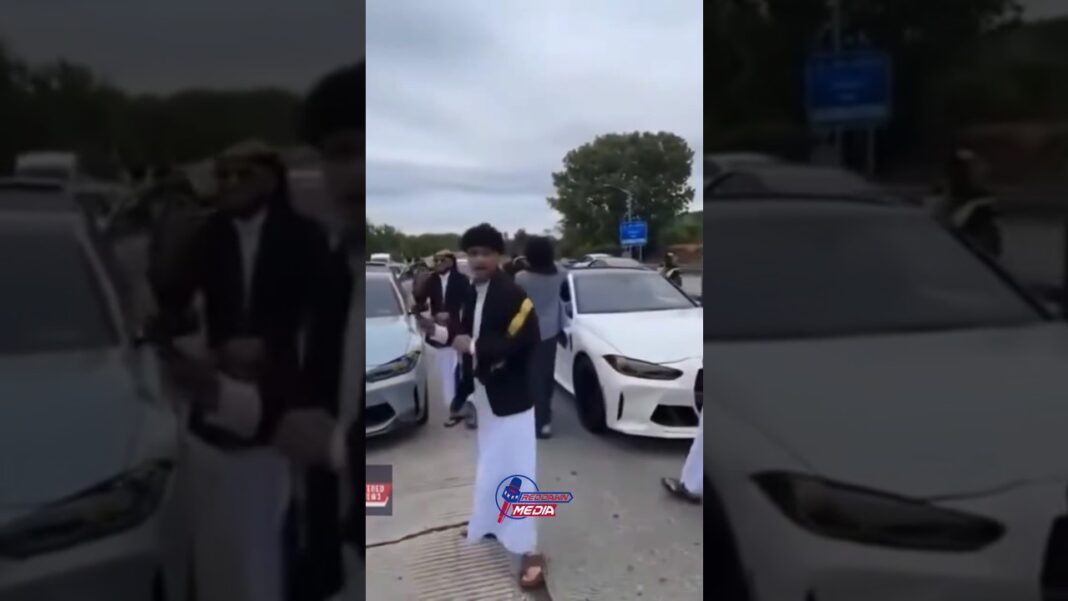
In a troubling episode that highlights the rise of overt antisemitism in urban public spaces, a group of demonstrators brought Brooklyn’s Belt Parkway to a standstill on Thursday, paralyzing traffic near the Pennsylvania Avenue exit while shouting inflammatory chants, including “Globalize the Intifada.” According to a report on the Matzav.com webssite, the incident unfolded in broad daylight and left hundreds of commuters stranded, bewildered, and increasingly alarmed.
The Belt Parkway, a critical arterial highway connecting Brooklyn and Queens to Long Island, serves as a daily conduit for thousands of drivers. On this occasion, however, the roadway was transformed into the scene of an unauthorized protest, as individuals reportedly exited their vehicles and disrupted traffic flow by physically occupying travel lanes. As reported by Matzav.com, the demonstrators could be seen waving flags and shouting slogans widely understood to glorify violence against Jews and the Jewish state.
Eyewitness accounts gathered by Matzav.com revealed a scene of both chaos and intimidation. “This was not a peaceful demonstration—it was obstruction, plain and simple, accompanied by hateful, threatening language,” said one motorist who was caught in the ensuing traffic jam. “When you chant about a global intifada, you are invoking a history of bloodshed, not justice. That message was loud and clear.”
The term “intifada,” used by the protesters, carries chilling historical connotations. Traditionally associated with two violent Palestinian uprisings targeting Israeli civilians and military personnel during the late 20th and early 21st centuries, the word’s usage in this context was perceived by many, including law enforcement observers, as a call to escalate conflict beyond the Middle East. The report at Matzav.com noted that video footage circulating online showed protesters chanting in unison, making no attempt to conceal their intent or rhetoric.
Law enforcement sources told Matzav.com that a full review of the protest is underway, with investigators analyzing digital footage and social media posts to identify participants and determine how the group coordinated such a disruptive and dangerous event on a vital New York City transportation corridor. At this time, it remains unclear whether the demonstration was premeditated or spontaneous, though its scale and timing suggest some degree of logistical planning.
The New York Police Department confirmed that its intelligence and counterterrorism divisions are involved in the probe. No arrests had been reported by late Thursday evening, but pressure from elected officials and Jewish community leaders is mounting.
“We need answers and we need accountability,” one Brooklyn-based Jewish advocacy organization told Matzav.com in a statement. “Blocking a public highway to incite hatred and glorify terrorism is not protected speech—it’s an affront to civil society and a threat to public safety.”
Community leaders across the city expressed outrage at the boldness of the protest. Several emphasized that this incident is only the latest in a string of aggressive public demonstrations that have crossed the line from political expression into hate-fueled provocation. “What we witnessed today was a symptom of something far more serious,” one rabbinical figure told Matzav.com. “The normalization of hate speech against Jews—often disguised as anti-Zionism—has reached our highways.”
While city officials have yet to publicly comment on the Belt Parkway incident, several lawmakers at the state level have already called for the prosecution of those involved. “This was not protest—it was incitement, disruption, and a violation of public order,” said one state legislator who spoke to Matzav.com. “Anyone who thinks shutting down a major highway while chanting for global terror is exercising a right to protest is dangerously mistaken.”
The timing of the demonstration also struck a nerve. With rising global tensions and increased reports of antisemitic incidents in New York and beyond, Thursday’s incident has renewed calls for heightened vigilance and stronger enforcement of laws against hate crimes and public endangerment.
According to the information on the Matzav.com website, Jewish residents in Brooklyn and neighboring areas expressed concern not only for their physical safety, but also for the societal trend that allows such displays to emerge with increasing regularity. “This isn’t happening in a vacuum,” one community advocate warned. “It’s the direct result of emboldened hatred, amplified on college campuses, on social media, and now—on our streets and highways.”
As of this writing, city agencies are coordinating with state officials to assess whether additional measures are needed to prevent similar incidents in the future. Civil liberties groups are also watching closely, weighing the boundaries of protest rights against the imperative of safeguarding public infrastructure and communal peace.
The Belt Parkway has since reopened, but the impact of Thursday’s demonstration is likely to reverberate beyond the traffic delays. For many, as the Matzav.com report emphasized, the moment encapsulates a disturbing shift in the public discourse—one where hatred is shouted openly, and antisemitism marches down highways under the guise of protest.

Maybe it is time to “globalize the war against AMALEK!”
If they aren’t American citzens they need to be deported. If they are Americans they need to be arrested