



|
Getting your Trinity Audio player ready...
|
Edited by: TJVNews.com
In the heart of Brooklyn, overlooking the East River, stands an architectural marvel that defies convention. The 167-year-old Domino Sugar Refinery, a symbol of New York City’s industrial heritage, has undergone a jaw-dropping $150 million transformation, emerging as a truly unique venue for work and innovation, as was reported by the New York Post. This ambitious project, led by developer Two Trees and architect Vishaan Chakrabarti of Practice for Architecture and Urbanism, has breathed new life into this historic landmark, reimagining it as a 15-story, 460,000-square-foot masterpiece of “adaptive reuse,” the Post report added.
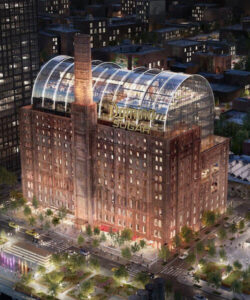
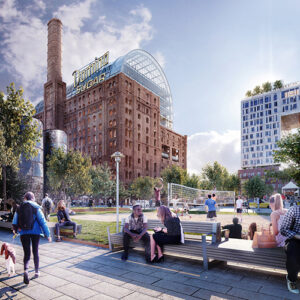
“The Refinery at Domino” transcends the traditional definition of an office building. Instead, it is a mesmerizing glass box nestled within the original structure, with the glass façade set back fifteen feet from the outer walls, according to the Post report. Beyond this glass barrier, a lush green oasis, curated by the design firm Field Operations, softens the space. What makes this transformation truly enchanting are the 548 church-like, uncovered arched windows in the original façade, each offering panoramic views of the Manhattan and Brooklyn skylines, the East River, and the iconic Williamsburg Bridge, as was indicated in the Post report. An intriguing quirk is that these outer windows don’t consistently align with the floor plates, imparting a distinctive character to each floor.
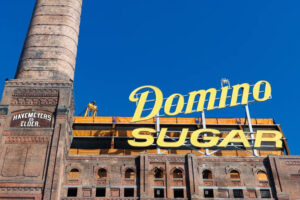
At the pinnacle of the Refinery is the glass-dome penthouse known as “Skylight,” which serves as a communal gathering space for future tenants. The Post report noted that a meticulously crafted replica of the original Domino Sugar sign, adorning the outer wall, pays homage to the site’s rich industrial history. Two Trees has deliberately preserved the façade’s imperfections and weathered appearance, ensuring that it retains the patina of its century-and-a-half-long journey through time, according to the Post report.
This remarkable architectural endeavor can be likened to the audacious transformation of the High Line Park, another project designed by Field Operations. As was reported by the Post, the Refinery at Domino, however, represents an even more ambitious endeavor, preserving the soul of an industrial behemoth while infusing it with new purpose.
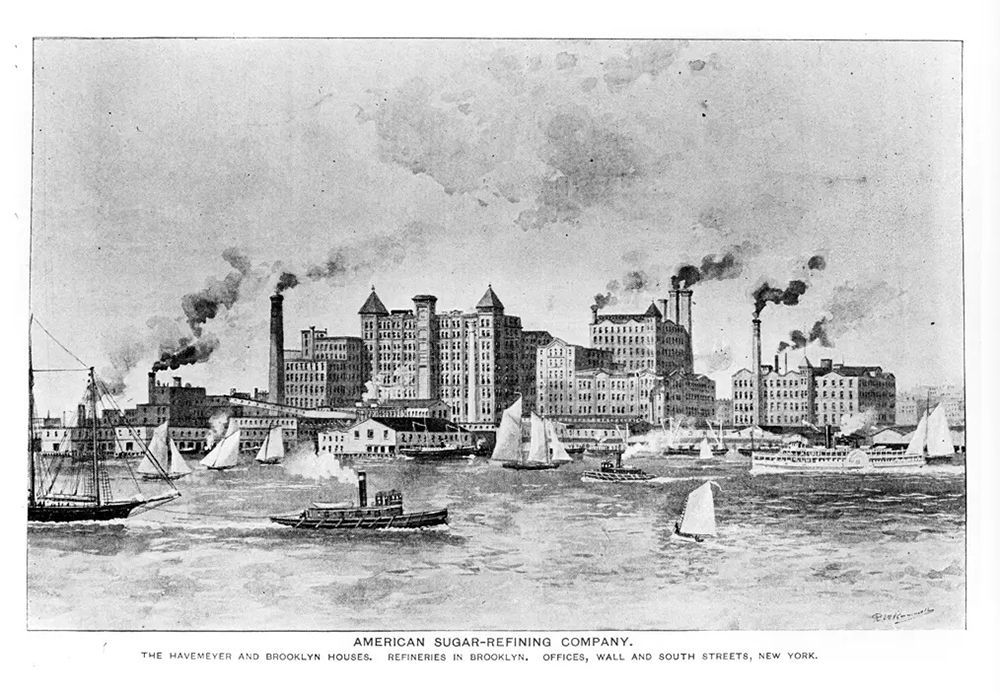
The original Domino Sugar plant, established in 1884 by the family of three-term mayor Henry Havemeyer, was a symbol of the city’s industrial prowess during the late 19th century, the Post report recalled. It was a bustling hub of sugar production, churning out as much as 1 million pounds of sugar daily and contributing to the fortunes of Wall Street, the report added. The refinery’s distinctive 214-foot-tall chimney became an iconic part of the East River waterfront.
However, the plant ceased operations in 2004 when Domino relocated to Yonkers. The report in the Post noted that in 2015, Two Trees embarked on a journey to transform this industrial relic into the centerpiece of a vibrant residential and commercial complex on the Williamsburg waterfront. The process was far from simple, involving the removal of over one hundred 30-foot-high vats that had been used in sugar processing, the report in the Post added.
Mary Ann Tighe, the head of the project’s leasing team at CBRE tristate, vividly remembers the challenges of the site. “Your feet stuck to the floor from the sugar residue. It was black, icky, and rancid,” she recounted. Two Trees’ Jed Walentas added, “The sugar plant was so hot; they had to keep kegs of beer to cool off.”
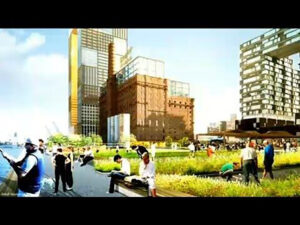
The Refinery stands at the heart of Two Trees’ sprawling eleven-acre, $3-billion Domino complex, which encompasses residential and commercial spaces, including an all-new office building, three apartment towers, 60,000 square feet of stores, a river esplanade, and a five-acre park, as was indicated in the Post report. The entire complex exudes an optimistic and festive atmosphere, characterized by beautiful landscaping, a Danny Meyer taco stand, and a collection of salvaged artifacts that infuse it with character.
The Refinery celebrated its official opening with a media event last week, although it is yet to have any tenants. The Post reported that Two Trees is seeking $60 per square foot for rent, but thanks to the city’s Relocation and Employment Assistance Program (REAP), many tenants will likely pay less. REAP provides a per-employee benefit for companies that relocate from Manhattan, making this an attractive prospect for forward-thinking enterprises, the Post report added.
However, attracting tenants may pose a challenge amidst higher interest rates slowing growth and some employees continuing to work remotely. Two Trees head, Jed Walentas, suggested that potential tenants may hail from tech, media, and other creative industries rather than the financial sector, according to the Post report. The development benefits from its proximity to the Bedford Avenue stop on the L train and the Lorimer Street station on the J line. Additionally, it offers access to the “great density of human capital and talent massed in North Brooklyn.”
The Refinery’s allure, like other anachronistic properties, lies in its unique character and historical significance. The Post report said that Apple recently relocated its European headquarters to London’s Battersea Power Station, a relic of the past, while Meta, the parent company of Facebook, moved its New York operation into the 1912 Farley Building, a historic structure near Penn Station, according to the Post report.
The Domino Sugar Refinery’s transformation is part of a broader revitalization of Brooklyn’s long-neglected waterfront, including developments like Industry City in Sunset Park, the rebirth of the Brooklyn Navy Yard, and the scenic riverfront greenway anchored by Brooklyn Bridge Park.
The Refinery at Domino stands as a testament to the power of adaptive reuse, honoring the industrial heritage of New York City while repurposing a historic site for the 21st century. Its juxtaposition of old and new, industry and innovation, makes it a symbol of Brooklyn’s enduring spirit of reinvention and progress.