



|
Getting your Trinity Audio player ready...
|
The Growing Power of the NYPD Muslim Officers Society Raises Grave Concerns of Takeover of Department
By: Tzirel Rosenblatt
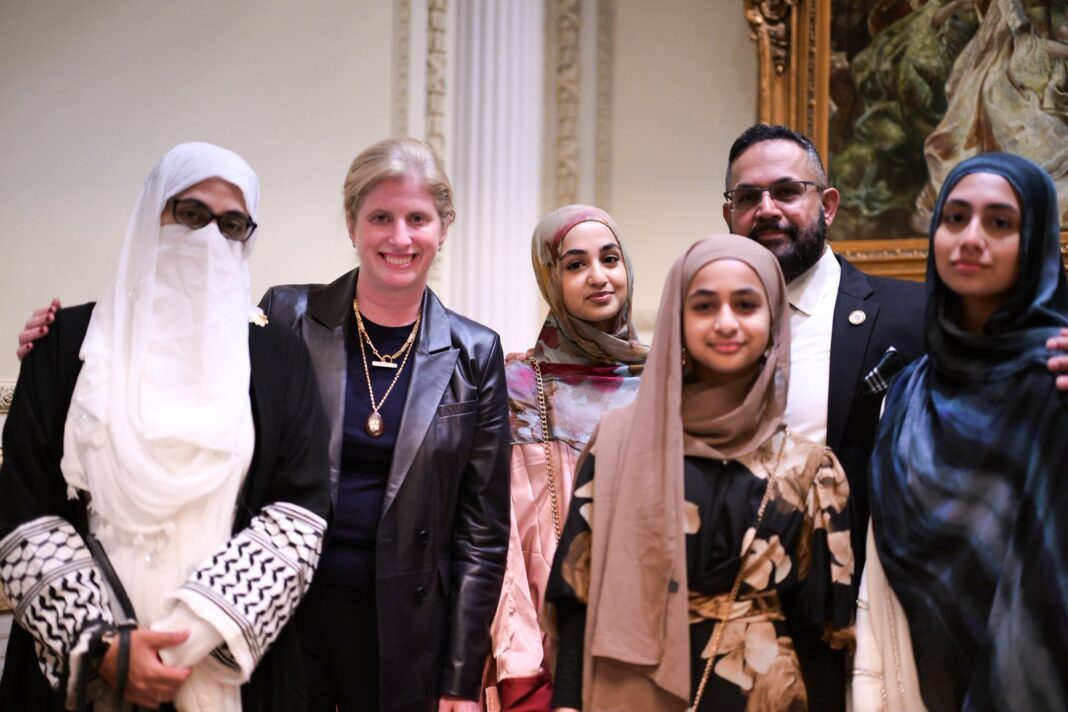
On Friday, New York City Police Commissioner Jessica Tisch, the first female Jewish commissioner in the department’s history, was honored by the NYPD Muslim Officers Society (MOS) with its Woman of the Year Award during the organization’s 17th Annual Scholarship Awards Dinner. At first glance, the evening was a celebration of diversity: a Jewish commissioner receiving recognition from a Muslim police officers’ association, with Mayor Eric Adams present to honor the late Detective First Grade Didarul Islam and other recipients.
Commissioner Tisch described the moment as emblematic of New York’s pluralistic ethos, a city where “every faith is practiced, every language is spoken, and every tradition has a home.” She highlighted the fact that despite cultural and religious differences, NYPD officers remain “bound together into service,” emphasizing that shared civic duty outweighs personal identity.
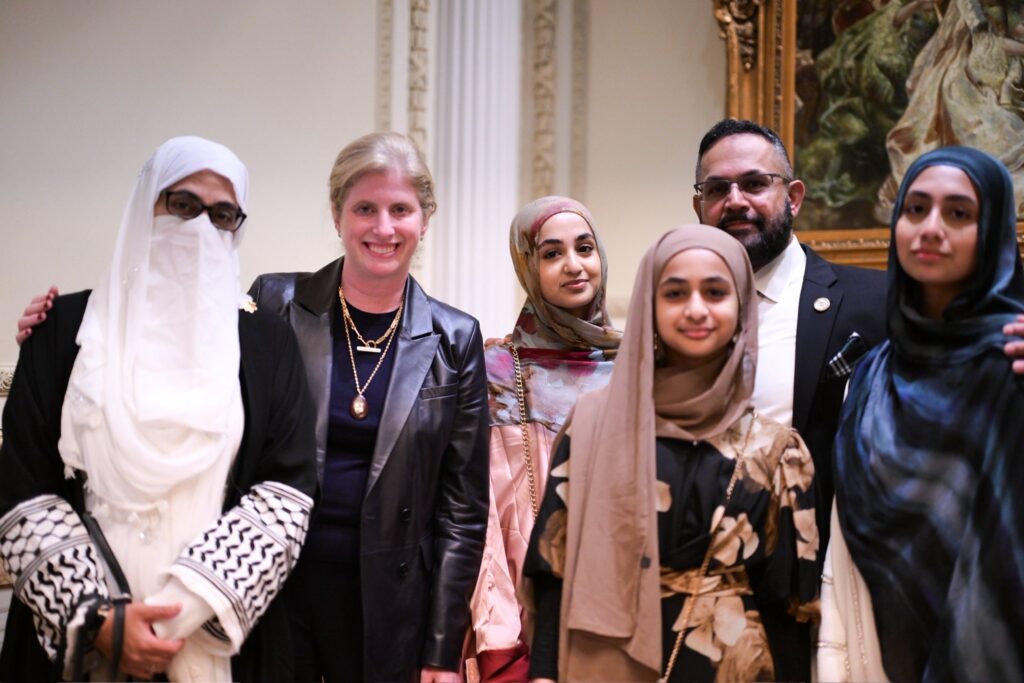
Yet behind the ceremonial photographs and the gracious social media posts lies a growing debate about the expanding influence of the Muslim Officers Society within the NYPD. While its supporters describe the group as a critical bridge between law enforcement and one of New York’s most visible faith communities, critics warn that its rapid growth—combined with the troubling surge of antisemitism and virulent anti-Israel activism across the city—creates the potential for deep conflict within the ranks of the NYPD itself.
Founded in 1992 as the first fraternal organization for Muslim law enforcement officers in the United States, the MOS was initially a small collective meant to provide support for Muslim officers facing workplace challenges, from scheduling difficulties during Ramadan to ensuring accommodations for religious observance. Over the decades, however, the MOS has evolved into one of the most influential affinity groups in the department, paralleling the Fraternal Order of Police and the Guardians Association in visibility and activism.
Its stated goals—providing professional support, promoting integrity in policing, and enhancing relations with New York’s Muslim communities—seem benign, even laudable. The group hosts scholarship dinners for the children of members, organizes Islamic funeral services for fallen officers, and participates in community outreach at mosques and Islamic cultural centers.
But what is striking is the trajectory of growth. The MOS has become a central player in recruitment drives, particularly in neighborhoods with large Muslim populations in Brooklyn, Queens, and Staten Island. With the city’s Muslim population surging, and with many young recruits drawn to law enforcement for the promise of upward mobility, the proportion of Muslim officers in the NYPD is projected to increase sharply over the next two decades.
Indeed, observers note that the MOS may soon represent one of the largest religious or ethnic officer blocs in the department, surpassing traditional Catholic and Jewish police societies in size and influence.
The expanding role of the MOS cannot be viewed in isolation from the dramatic uptick in antisemitism in New York City since Hamas’s Oct. 7, 2023 massacre in Israel. NYPD data has shown spikes in antisemitic hate crimes, particularly assaults and harassment of visibly Jewish individuals in Brooklyn and Manhattan.
NYPD is openly recruiting for Sharia compliance!
This isn’t about “inclusion.” It’s about normalizing submission—one hijab at a time.
💬 “We have 1,200 Muslim officers… 10 in hijab… I’m looking forward to another 100,000 ladies wearing hijabs in the near future as NYPD.”… pic.twitter.com/NEf2TgnnVB
— Amy Mek (@AmyMek) February 24, 2025
At the same time, New York City’s college campuses—Columbia, NYU, CUNY, and others—have become epicenters of anti-Israel demonstrations, some of which have descended into open hostility toward Jewish students. Protesters have trafficked in antisemitic slogans, glorified Hamas terrorism, and attempted to shut down Jewish and pro-Israel events.
It is in this fraught atmosphere that critics question whether a powerful bloc of officers united by a faith-based affiliation—many of whom may themselves be sympathetic to pro-Hamas activism—can maintain the strict neutrality required of law enforcement.
One veteran officer, speaking to a reputable media source on the condition of anonymity, warned: “The NYPD has always prided itself on being above politics, but if one fraternal society grows to dominate the force, it risks shifting the balance of loyalty. In a city where antisemitism is at its highest levels in decades, that is not a small concern.”
ALERT TRUMP!
The Islamization of Law Enforcement: This is what YOUR TAX DOLLARS FUND!
The NYPD’s “Office of Equity and Inclusion”—a left-wing activist cell masquerading as law enforcement—is actively undermining America from within.
WHY DOES THIS EVEN EXIST IN A POLICE… pic.twitter.com/d2Im1pklWh
— Amy Mek (@AmyMek) March 5, 2025
Commissioner Tisch’s recognition by the MOS carries multiple layers of symbolism. For the commissioner, it was a gesture of goodwill, a demonstration that faith-based divides can be bridged in the shared mission of public safety. Tisch, who has often been seen as a technocrat focused on modernization and crime statistics, projected an image of inclusivity and solidarity by attending the event and publicly thanking her hosts.
For the MOS, however, the award represented something else: a demonstration of its political clout. To honor the Jewish commissioner at a high-profile dinner, with the mayor in attendance, was a way of underscoring the society’s centrality to the NYPD’s institutional fabric.
On social media, the MOS praised Tisch’s “hard work, integrity, and fairness” and highlighted the meeting it held with her in July, where discussions reportedly centered on “growth, advancement, and development” of Muslim officers. That phrasing—repeated in multiple official MOS statements—suggests an ongoing agenda of ensuring Muslim officers are not only represented but also promoted into positions of authority.
While no one publicly questions the right of Muslim officers to organize, critics contend that the scale and assertiveness of the MOS today exceeds its original mandate.
Editorials published in Jewish media have raised concerns about the timing of the society’s rise against the backdrop of a wave of antisemitic intimidation and pro-Hamas sentiment in New York’s streets and campuses. These outlets argue that as anti-Israel marches increasingly dominate city life, the growth of a faith-based law enforcement bloc with potentially sympathetic leanings could have troubling implications for Jewish safety.
Last night, I proudly presented a proclamation to the Muslim Officers Society of the NYPD. Thank you for your service, sacrifice, and commitment to our City. True heroes in and out of uniform. 💙 pic.twitter.com/muB3ksCtAy
— Jenifer Rajkumar (@JeniferRajkumar) August 22, 2025
An editorial noted: “The NYPD has long been the bulwark against hate crime in our city. But when the cultural climate of anti-Israel activism becomes so pervasive, the prospect of an officer corps heavily identified with one side of the conflict should not be dismissed lightly.”
The issue also intersects with Mayor Eric Adams’s balancing act. Adams, a former police captain, has courted faith-based police groups for years, attending their events and promising them a voice in City Hall. His presence at the MOS dinner underscored this alignment.
But Adams also faces mounting criticism from Jewish leaders who accuse his administration of failing to protect Jewish neighborhoods from harassment and violence. The mayor’s continued embrace of the MOS, critics argue, risks alienating Jewish New Yorkers who increasingly feel under siege.
Last night, I had the honor of receiving @NYPDMuslim’s Woman of the Year Award.
It’s not lost on me what this represents: the first female Jewish Police Commissioner in the history of the NYPD being recognized by our Muslim Officers Society.
This could only happen in New York… pic.twitter.com/lHidbR1bV2
— Jessica S. Tisch (@NYPDPC) August 22, 2025
The honoring of Commissioner Jessica Tisch by the NYPD Muslim Officers Society was in many respects a celebration of the city’s famed diversity, a testament to the notion that officers of every background can unite under the same badge. Tisch’s gracious words reflected the aspiration that the NYPD remains a place where differences dissolve in service of the public good.
But as various media outlets have underscored, beneath the surface lies a deeper and more controversial reality: the ascendant power of the Muslim Officers Society, its trajectory toward becoming the dominant voice in the department, and the uneasy questions this raises at a time of rising antisemitism and anti-Israel hostility in New York.
For supporters, the MOS represents progress, inclusion, and outreach to marginalized communities. For critics, it symbolizes a troubling shift that could undermine Jewish confidence in law enforcement.
The future of New York’s policing may depend on whether the NYPD can strike a balance—ensuring that its officers’ personal identities never compromise their sworn duty to protect all New Yorkers equally, especially in a city where antisemitism remains an urgent and growing threat.