



|
Getting your Trinity Audio player ready...
|
Edited by: TJVNews.com
In the heart of New York City’s diverse landscape, nestled within Forest Hills, Queens, there exists a close-knit community of Bukharian Jews. This is a community that has faced an unsettling and distressing challenge in recent years – a rising tide of opioid overdoses, as was recently reported by the Jewish Telegraphic Agency. While the exact number of lives lost remains uncertain, the impact is undeniable. Leaders within the Bukharian Jewish community have decided that enough is enough, and they are determined to make a change, the JTA report added.
The opioid crisis has swept across the United States in recent years, leaving no community untouched. The Bukharian Jewish community in Queens, NY, (immigrants hailing from Central Asia), is no exception, according to the JTA report. The proliferation of dangerous street drugs, frequently laced with the deadly synthetic opioid fentanyl, has contributed to the skyrocketing rate of opioid overdoses across the nation.
Within this tight-knit community, the problem is exacerbated by certain risk factors. The JTA report indicated that many parents work tirelessly to provide for their families, leading to a lack of communication and supervision for their children, a known risk factor for substance abuse among youth according to the Centers for Disease Control. Additionally, a generation gap exists between those who grew up in different worlds with varying responsibilities and resources, making it challenging to address drug abuse within the community, the report added.
One of the most significant barriers to combating the opioid crisis within the Bukharian Jewish community is the veil of silence. Parents often hesitate to discuss addiction issues due to fear of judgment from others within the community, the JTA reported. The fear of jeopardizing their children’s prospects for marriage and future prospects perpetuates this silence.
Jack Musheyev, who grew up in the community and battled addiction himself, recognizes the dire consequences of this silence. He stresses that “they don’t understand that these kids are dying from their silence,” as was reported by the JTA. Musheyev’s personal journey through addiction highlights the urgent need for a comprehensive response to this crisis.
Recognizing the gravity of the situation, leaders within the Bukharian Jewish community have taken matters into their own hands. As was indicated in the JTA report, David Aronov, along with Hiski Mierov, spearheads the “Save a Life” program, a collaboration between the UJA-Federation, the New York City Department of Health, and the Jewish Board. The primary objective of this initiative is to address the acute crisis within the Bukharian Jewish community, which has experienced an 80% increase in overdose rates since 2019, the JTA report added.
“The community is so tight-knit that when one of these deaths does happen, it spreads really, really fast,” Aronov told the New York Jewish Week. “After a large number of deaths within a small amount of time, for the size of the community, you know that it is a really big issue.”
“Everybody in the community has either been touched by this issue or knows someone that has been touched, but people don’t want to reach out for help,” Aronov said. “We want individuals in the community to be more open and talk about the issue… and we want to make sure that stigma is not preventing individuals from getting the help that they need.”
The program employs a multi-pronged approach to tackle the opioid epidemic:
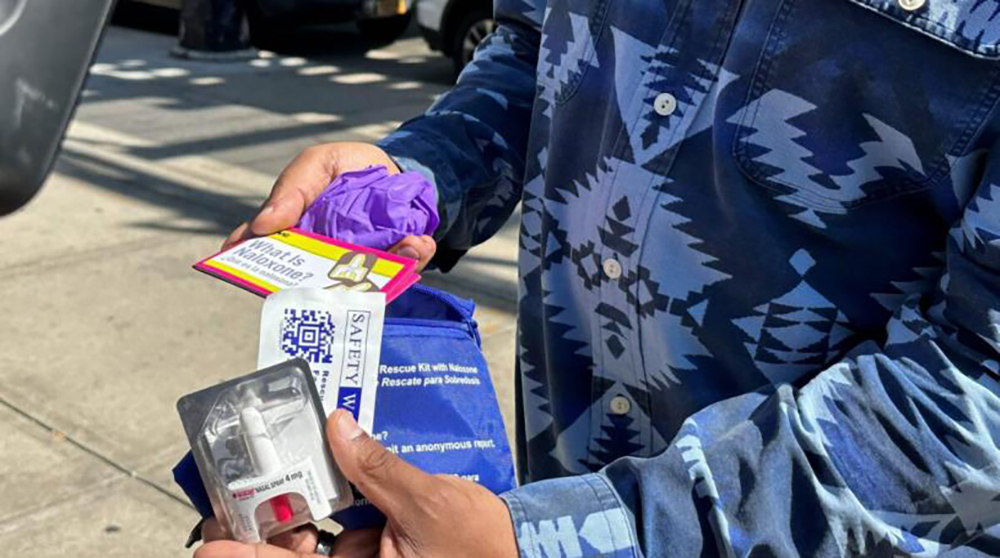
Narcan Distribution: A critical component of the program is the distribution of Narcan, a life-saving medication that can reverse opioid overdoses. Twelve synagogues in Queens neighborhoods with a significant Bukharian Jewish population have been equipped with Narcan kits, and volunteers are trained to administer the medication.
Community Education: Reducing the stigma of addiction is paramount. Community education initiatives are being planned to encourage open dialogue about drug use and overdose response. The aim is to create an environment where individuals feel comfortable seeking help.
Public Awareness Campaign: To reach a broader audience, Aronov is implementing a public affairs campaign. Educational materials, including flyers and videos in both English and Russian, are distributed through social media platforms like WhatsApp, providing information about Narcan and available resources.
Support Networks: While Narcan is a life-saving intervention, long-term support is essential. Initiatives like opening 12-step chapters within Bukharian communities in Queens and providing mental health services are vital steps toward helping those in need.
Ahuva Lilliana Yelizarov, who runs the Forest Hills synagogue Anshey Shalom with her husband, has actively participated in deploying Narcan kits in the community. As was noted in the JTA report, she emphasized that addiction does not discriminate based on religious or cultural background and calls for a collective effort to address the crisis.
The “Save a Life” program is designed to break down barriers, both physical and emotional. The Narcan distribution and training at synagogues across various neighborhoods with Bukharian Jewish populations signify a united front against the opioid crisis.
Musheyev, now in recovery from addiction, believes that the initiative is a step in the right direction but suggests that more can be done. The JTA report indicated that he highlighted the importance of providing therapy, holding AA meetings, and creating spaces where individuals can find the support and inspiration they need.
In the end, it’s not just about saving lives but also offering love, hope, and inspiration to those who have been affected by addiction. The Bukharian Jewish community is demonstrating resilience, determination, and a commitment to preserving the well-being of its members.
The Bukharian Jewish community is setting an example not only in saving lives but also in fostering a culture of hope, understanding, and resilience in the face of adversity.