



|
Getting your Trinity Audio player ready...
|
By: Fern Sidman
By any measure, the streets surrounding Chabad World Headquarters in Crown Heights are among the most closely watched blocks in New York City. Yet on Tuesday afternoon, in a moment that has sent tremors through Brooklyn’s Jewish community and far beyond, violence intruded once again. A 35-year-old man was stabbed near the corner of Kingston Avenue and Lincoln Place in an incident the New York Police Department are now investigating as a possible antisemitic attack, according to multiple reports cited by CBS News.
The attack occurred around 4 p.m., a time when the neighborhood is typically alive with children returning from school, families shopping for groceries, and religious students moving between study halls. Dozens of officers converged on the scene as emergency responders rushed the victim to Kings County Hospital, where he is recovering, CBS News New York confirmed. While the physical wounds may heal, the emotional impact of the attack—especially given its proximity to Chabad’s global headquarters—has left the community shaken.
According to preliminary accounts shared by CBS News, investigators believe the incident began as a seemingly random verbal interaction between the suspect and the victim. Police say the exchange escalated after the victim followed the individual down the block, where additional words were exchanged before the confrontation turned physical.
What has elevated the case from a street assault to a potential hate crime are the words uttered by the attacker. A Chabad leader told CBS News that the suspect shouted explicit antisemitic slurs, including “f*** these Jews,” and made a chilling remark suggesting it would be acceptable if the Holocaust happened again today. Those statements, if substantiated, place the incident squarely within the framework of bias-motivated violence.
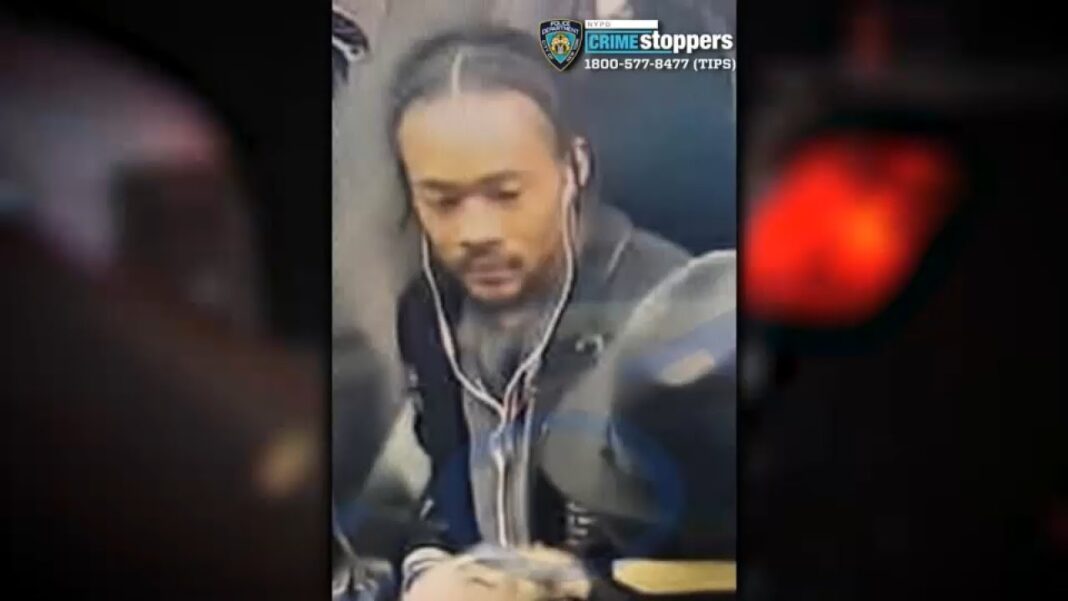
The NYPD has since released images of a person of interest and is asking the public for assistance in identifying and locating him. Officers have increased patrols throughout Crown Heights as detectives analyze surveillance footage from nearby buildings and canvass witnesses, a process closely followed by CBS News and other outlets.
The stabbing comes at a particularly sensitive moment. Just days earlier, the global Jewish community was reeling from a deadly antisemitic shooting at a Hanukkah celebration in Bondi Beach, Sydney, where members of the Chabad community were among those targeted. That attack, which claimed 15 lives, has reverberated powerfully in Crown Heights, where Chabad’s international movement is headquartered.
“We just had a huge tragedy in Bondi Beach and everybody in this neighborhood in particular is connected,” Crown Heights resident and Chabad community member Krana Nebenzahl told CBS News. “We are all one body—literally and figuratively—and it’s horrible.”
Her words capture a sense of collective vulnerability that has become increasingly pronounced. For Chabad emissaries, students, and families, the sense of being under siege is not abstract. It is reinforced by a string of incidents worldwide—and now, once again, at their own doorstep.
Security around Chabad World Headquarters has long been robust, reflecting both the institution’s prominence and its history as a symbolic target. Following the Bondi Beach massacre, those measures were intensified. Yet the fact that violence still erupted nearby places a spotlight on the challenges facing law enforcement in preventing spontaneous, lone-actor attacks.
CBS News reported that in the aftermath of Tuesday’s stabbing, dozens of additional NYPD officers were deployed throughout Crown Heights. Their presence is meant to reassure residents and deter further incidents, but it also serves as a stark reminder of the threats confronting visibly Jewish communities.
This was not the only incident prompting alarm. As CBS News has also reported, the NYPD is investigating another possible bias attack involving a group of Chabad students who were harassed and threatened on a subway train Monday night while returning from a Hanukkah celebration in Manhattan. Video evidence reviewed by police has led investigators to identify a person of interest in that case as well.
Taken together, the incidents paint a troubling picture: a pattern of hostility that appears to be intensifying during a period meant to celebrate religious freedom and resilience.
For many in Brooklyn, the echoes of past trauma are impossible to ignore. Devorah Halberstam, whose son Ari was murdered in a 1994 antisemitic shooting on the Brooklyn Bridge, spoke with CBS News about the subway attack on Chabad students.
“Unfortunately, they were attacked on the subway just for who they are,” Halberstam said, referencing the visible markers of Jewish identity—the yarmulkes and hats—that make Orthodox Jews instantly recognizable. Her words carry the weight of painful memory and the urgency of warning, reminding New Yorkers that antisemitic violence is not a relic of history but an ongoing threat.
The response has not been confined to local voices. Danny Danon, Israel’s ambassador to the United Nations, told CBS News that he spoke with one of the victims of the subway attack and offered words of encouragement.
“Unfortunately, this Hanukkah became a hunting ground against Jews, all around the world,” Danon said. “We saw it happen in Sydney, Australia. We saw what happened here in New York City.”
His comments illustrate the global dimension of the crisis. From Sydney to New York, from synagogues to subways, antisemitic violence has crossed borders, demanding a coordinated response from governments, law enforcement agencies, and civil society.
The seriousness of the Brooklyn stabbing has also drawn attention at the federal level. According to CBS News, the assistant attorney general for civil rights announced on social media that her office will investigate the incident. Such involvement signals that authorities are prepared to treat the case not merely as an isolated assault, but as part of a broader pattern of hate crimes that implicates civil rights protections.
If prosecutors determine that antisemitic intent played a role, the suspect could face enhanced charges under New York’s hate crime statutes. These laws recognize that bias-motivated violence inflicts harm not only on individual victims but on entire communities, undermining social cohesion and public safety.
New York City prides itself on diversity, pluralism, and resilience. Yet the events chronicled by CBS News over the past week reveal a city—and a world—grappling with resurging Jew hatred. For Jewish New Yorkers, especially those who are visibly Orthodox, the question is no longer whether antisemitism exists, but how pervasive and dangerous it has become.
Community leaders are calling for vigilance without surrendering to fear. They emphasize the importance of reporting incidents promptly, cooperating with law enforcement, and standing visibly and unapologetically as Jews. At the same time, they are urging political leaders to speak clearly and forcefully against antisemitism, without equivocation or excuses.
As of Wednesday, the suspect in the stabbing remained at large. The NYPD has urged anyone with information to contact Crime Stoppers at 1-800-577-TIPS, with assurances that all tips will remain confidential. CBS News has repeatedly highlighted these appeals, emphasizing the role the public can play in bringing the perpetrator to justice.
For now, Crown Heights waits—watchful, anxious, but resolute. The menorahs still glow in windows, prayers continue in synagogues, and life goes on amid heightened police presence. Yet beneath the surface, there is a shared understanding that something fundamental is at stake.
As CBS News has reported, this is not merely a story about one stabbing, or even one neighborhood. It is a story about the resilience of a community under pressure, the responsibilities of a city confronting hatred, and the moral imperative to ensure that violence rooted in antisemitism is neither ignored nor normalized.