



|
Getting your Trinity Audio player ready...
|
Skyrocketing Crime in Central Park: A Growing Concern for New Yorkers and Tourists Alike
Edited by: TJVNews.com
Central Park, the iconic green oasis in the heart of Manhattan, has long been a haven for both tourists and lifelong New Yorkers seeking solace from the city’s hustle and bustle. However, a recent surge in crime has left many on edge, fearing for their safety as they navigate the park’s once-tranquil paths. According to a report in The New York Post, a troubling combination of violent teens, unhinged vagrants, and lawless migrants has transformed this cherished public space into a zone of uncertainty.
The statistics are alarming. According to data from the NYPD, there has been a staggering 222% increase in the number of robberies in Central Park so far in 2024, compared to the same period in 2023. As was reported by The Post, this year alone, 29 robbery incidents have been reported—surpassing the total number of such incidents for the entire year of 2019. These figures underscore a worrying trend: Central Park, once considered relatively safe, is now witnessing a surge in criminal activity that has caught many by surprise.
But it’s not just robberies that are on the rise. Felonious assaults have also doubled, with 10 incidents reported this year compared to five during the same period last year. According to the information provided in The Post report, this uptick is particularly concerning given that in 2019, there were only seven such incidents reported for the entire year. These assaults, often violent in nature, contribute to an atmosphere of fear and insecurity among park-goers.
For residents like Kirsten Edwards, who lives on the Upper East Side, the increasing crime has prompted a change in daily routines. Edwards, who used to enjoy early morning walks with her dog in the park, now waits until later in the day to venture out. “I’ve started waiting to come in here later because when I come in here too early, I see a lot of people who, unfortunately, have mental health issues, and they’re screaming,” she told The Post. “Frankly, I’ve never felt this unsafe in Central Park.”
Edwards’ experience is not unique. The general unease felt by many New Yorkers and visitors is reflected in the broader crime statistics for the park. Indicated in The Post report was that major crimes in Central Park have risen by 49% overall, increasing from 47 incidents last year to 70 this year. Particularly troubling is the fact that there have been two rapes reported in the park in 2024, compared to none during the same period last year.
The situation in Central Park has drawn comparisons to the infamous “wilding” incidents of the 1980s, a time when the park was notoriously unsafe. One particularly chilling incident occurred on August 1, when a gang of up to 20 individuals, some believed to be as young as 8 years old, surrounded and robbed 37-year-old software developer Julian De Flandres as he sat on a bench near Wollman Rink, as per the information contained in The Post report. The brazen nature of the attack, and the young age of some of the perpetrators, has shocked many and served as a grim reminder of the park’s darker days.
The unsettling rise in crime has been marked by a series of disturbing incidents that have rattled the community. As was noted in The Post report, on July 8, a 21-year-old man found himself the victim of a brazen robbery while sitting on a park bench at West 59th Street and Center Drive. As he enjoyed a moment of peace, a stranger suddenly approached, snatching his phone and $80 in cash. The robber then escalated the situation by demanding the young man’s phone password, leaving him shaken and defenseless.
In another troubling incident, an 83-year-old man was targeted while taking photos in the park on May 23. As he focused his camera on the park’s natural beauty around 3 p.m. at 94 West Drive, a thief seized the opportunity to snatch the camera and flee, leaving the elderly man stunned and without his cherished device, according to The Post report.
Perhaps one of the most harrowing incidents occurred on April 26, when 25-year-old Ashikur Chowdhury was confronted by two teens, one armed with a gun, as he walked through the park on his way home to Harlem, the report in The Post said. The teens threatened to shoot him if he did not hand over his cell phone. In a moment of courage, Chowdhury charged at his assailants, causing them to flee. His story made headlines, but it also highlighted the growing risks faced by those simply trying to pass through the park.
The park has also become a scene of hate-fueled violence. Indicated in The Post report was that on July 13, around 6 p.m., a 70-year-old man named Allan Ripp was viciously assaulted by a Citi Bike rider who hurled anti-Semitic slurs at him, calling him a “f—king Jew pig” and threatening his life along West Drive near the West 97th Street Transverse. This shocking attack has only added to the sense of fear permeating the park.
Sexual violence has also reared its ugly head in Central Park. The Post also reported that on April 25, a woman was sexually assaulted by a man who grabbed her and demanded not only her phone and wallet but also “sex.” The brazen nature of this attack, which occurred in what is supposed to be a public safe space, has left many questioning their own safety when visiting the park.
These incidents are not just isolated events; they represent a broader trend that is upending the daily routines of countless New Yorkers. Alyson Cambridge, a 45-year-old opera singer who has been running in Central Park for nearly 30 years, described to The Post how the rising crime has changed her behavior. “I stay where I am close to the road and [where] other people can hear me. It’s a bummer because I never used to have to worry about safety,” she lamented, as she spoke to The Post. Once a place where she could run freely and clear her mind, the park now requires constant vigilance.
Cambridge’s experience echoes that of many others who have altered their habits in response to the growing threat. She avoids dark and empty paths and is constantly on edge, scanning her surroundings for any signs of danger. “I’m always looking over my shoulder,” she admitted to The Post. “If I’m running and have my earbuds in, if I see a shadow, I jump. It sucks.”
The recent crime wave in Central Park is not just a series of unfortunate events; it is a symptom of deeper issues affecting the city. The mix of violent individuals, some driven by desperation and others by malice, has created an environment where even the most routine activities—like sitting on a bench or taking a photo—can turn into a nightmare.
Many believe that the escalating issues stem from the proximity of migrant shelters, such as the 600-room Watson Hotel on West 57th Street, which was converted into a migrant shelter in November 2022, as was reported by The Post. The ripple effects of this transformation are being felt keenly within the park and the surrounding areas.
The NYPD’s Midtown North Precinct, which includes areas near Central Park, has reported a startling increase in criminal activity since the establishment of the Watson Hotel as a migrant shelter. According to city data, there has been a 96% jump in robberies and a 60% rise in felony assaults within this precinct, The Post report explained. The 57-year-old woman, who resides near the park, expressed her concerns about the shelter’s impact on the local environment. “We’re in close proximity to the worsening conditions of West 57th Street,” she said. “So it doesn’t surprise me that there’s more crime moving in here as well.”
These rising crime rates have sparked fears that the influx of migrants, combined with the shelter’s location, is contributing to the deterioration of public safety in and around Central Park. The situation is further complicated by the broader challenges of managing the city’s homeless and migrant populations, many of whom face significant struggles, including mental health issues and economic hardship.
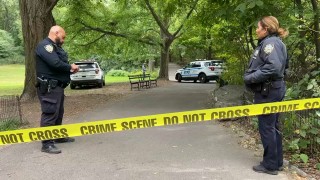
In response to the rising crime, the NYPD has increased its presence in Central Park, with visible measures such as NYPD vans parked near key locations and a giant light shining on the Great Lawn at night, as was revealed in The Post report. However, even these measures have done little to assuage the growing sense of unease among park-goers.
John, a 61-year-old investment banker who has used the park for a decade, noted the change in atmosphere. “An officer recently told my wife, ‘Don’t go in the park alone,’” he shared with The Post. “I don’t ever let her go in the park alone at night, but they were saying even during the day she should be with somebody. It’s freaky. It’s unsettling.” The shift in the park’s safety dynamics has been palpable, transforming what was once a relaxing experience into one fraught with vigilance.
This sentiment is echoed by many frequent park visitors who now find themselves constantly on alert. An actor who lives on the Upper West Side expressed his discomfort with the current state of affairs. “My head is definitely on a swivel in here all the time. You have to protect yourself,” he explained to The Post, declining to give his name out of fear of retribution. “I think you really have to stop a lot of the progressive laws that are in place right now that are really bad.” His comments reflect a growing frustration among some New Yorkers who feel that recent policy changes have inadvertently contributed to the uptick in crime.
The rise in crime in Central Park is not just a matter of statistics; it has a profound human impact, affecting the mental and emotional well-being of those who have encountered these dangers firsthand. SoHo nanny Alexa Makuch, 25, is one such individual who has been deeply affected by a disturbing incident in the park. The Post reported that on July 14, while picnicking with a friend in the Strawberry Fields section, Makuch was flashed by a man who disrobed in front of them in broad daylight. The encounter was so traumatic that Makuch sought therapy to cope with the emotional fallout, according to The Post report. Her story highlights the real and lasting consequences of the increasing lawlessness in what was once considered a safe public space.
Reflecting on the incident, Makuch expressed a deep sense of loss. “In Central Park, you definitely feel like it’s supposed to be an oasis — that’s the whole point of it, and I feel a little bit like that feeling was taken away from me since this happened,” she told The Post. “It’s sad.”
The rising crime in Central Park is not only affecting locals but is also deterring tourists, who contribute significantly to the city’s economy. Tiger Ashtiani, a 24-year-old tourist from Los Angeles, is among those who have been dissuaded from returning to the park. “I’m honestly scared to go to Central Park, which is sad, but when I went, I noticed lots of, like, disheveled-looking people around and people sleeping in tents in some parts, and it didn’t feel totally safe,” Ashtiani told The Post.
Ashtiani’s observations highlight a growing issue within the park: the presence of individuals experiencing homelessness and the increasing sense of disorder in what was once a meticulously maintained public space. This shift in the park’s atmosphere is not only unsettling but also creates an environment where tourists like Ashtiani feel unsafe. “I also feel like there’s lots of corners and hidden areas where bad people could be hiding,” he added, explaining to The Post his reluctance to wear nice jewelry in the park for fear of it being stolen. “I come to New York to have a good time, not a scary time.”
Conor Wright, a visitor from Seattle, echoed these sentiments, describing the surge in crime as “frightening and disturbing.” The report in The Post said that Wright, who had expected crime to be confined to the city’s more notorious neighborhoods, was shocked to learn that even Central Park, a landmark he assumed would be safe, was experiencing such issues. “It’s crazy that it’s even happening here in Central Park, which you’d think would be safe,” he said.
The implications of rising crime in Central Park extend far beyond individual experiences. As John Jay College of Criminal Justice Professor Eugene O’Donnell pointed out, crimes in such a high-profile location are “magnified,” and major incidents can have a significant impact on tourism in New York City, as was reported by The Post. For a city that relies heavily on its reputation as a global tourist destination, the safety of Central Park is a critical issue.
“If you’re the mayor, this is the kind of an issue that you should be on high alert about,” O’Donnell emphasized, while speaking with The Post. The concern is that ongoing crime in Central Park could tarnish the city’s image and deter visitors, who might otherwise spend money on hotels, restaurants, and attractions. The ripple effects of such a downturn could be profound, affecting not just tourism but the broader economy.
O’Donnell, a former prosecutor in Brooklyn and Queens, emphasized that the phenomenon of underreporting is a nationwide issue, not just confined to Central Park. “My guess is people’s instincts are to not report crime at this point,” he told The Post, pointing out that fear, skepticism about the effectiveness of law enforcement, or simply the desire to avoid further complications can lead victims to stay silent. This reluctance to report crimes means that the true scale of the problem in Central Park could be much larger than what is reflected in official data.
This underreporting exacerbates the challenges faced by law enforcement and city officials. Without a complete picture of the crime landscape, it becomes more difficult to allocate resources effectively and implement targeted interventions. Moreover, The Post report observed that the public’s trust in the safety of the park may be further eroded if people perceive that their concerns are not being addressed or acknowledged.
Adding to the complexity of the situation are recent criminal justice reforms, which O’Donnell argues have unintentionally contributed to the surge in crime. Noted in The Post report was that changes to bail laws, for instance, have resulted in more individuals being released onto the streets who, under previous legal frameworks, would have been behind bars or under stricter law enforcement monitoring.
“You’ve got a lot of people at large who, 10 years ago, would not be at large for various reasons, and they’re out there, and we continue to pretend that does not have an impact on public safety,” O’Donnell noted, as he spoke to The Post.
In response to the rising crime rates and the challenges posed by underreporting and criminal justice reforms, the NYPD has stepped up its efforts to ensure the safety of Central Park’s visitors. Indicated in The Post report was that the department has deployed additional officers throughout the park, a move intended to deter criminal activity and provide a more visible law enforcement presence.
Moreover, the NYPD is exploring the use of innovative methods and new technologies to combat crime. Among the strategies being considered are the deployment of drones and the installation of more surveillance cameras throughout the park, as per the information in The Post report. These technologies could provide law enforcement with real-time information and enhance their ability to respond quickly to incidents, potentially preventing crimes before they escalate.
A spokesperson for the NYPD emphasized the department’s commitment to public safety, stating to The Post, “The safety and security of all New Yorkers, including those that visit Central Park, is of paramount concern for the men and women of the New York City Police Department.”
While increased patrols and technological innovations are crucial components of the response to rising crime in Central Park, addressing the root causes of this issue will require a more holistic approach. This includes reexamining the impacts of recent criminal justice reforms and finding a balance that protects public safety while ensuring fairness within the legal system.
