




|
Getting your Trinity Audio player ready...
|
By: TJV Staff
A new political controversy has erupted in New York City, placing Mayor Zohran Mamdani and his administration under intense scrutiny after a series of resurfaced social media posts attributed to his wife, Rama Duwaji, sparked widespread outrage. The revelations, reported on Wednesday in The New York Post, have ignited a fierce debate over personal accountability, political associations, and the broader implications for leadership in a city already grappling with deep ideological divides.
The controversy centers on a collection of posts allegedly made by Duwaji during her teenage years and early adulthood, which appear to express admiration for individuals and groups designated as terrorist organizations. While the authenticity of the posts has not been independently verified by The New York Post, the report has nonetheless prompted a swift and polarized response across political and community lines.
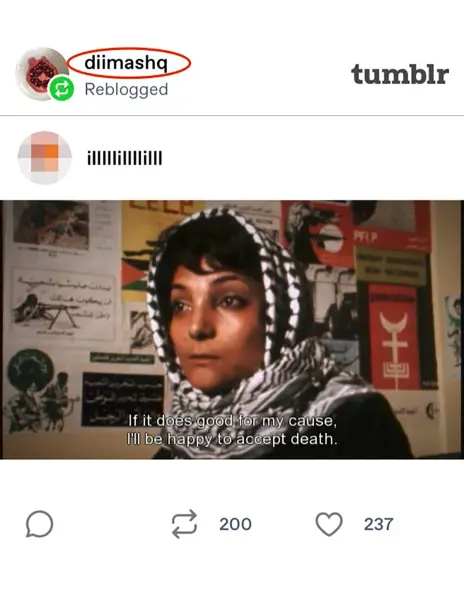
According to The New York Post, the posts were identified on a now-defunct Tumblr account believed to have been used by Duwaji while she was living in the Middle East. The account reportedly contained content praising figures associated with terrorist organizations, including an image of Leila Khaled, a figure linked to airplane hijackings in the late 1960s and early 1970s.
One post allegedly featured a quote attributed to Khaled expressing a willingness to embrace death for a political cause—language that critics have described as deeply troubling given the historical context. Additional posts cited in the report included imagery and slogans expressing solidarity with Palestinian terrorist groups, as well as sharply critical commentary directed at the United States military.
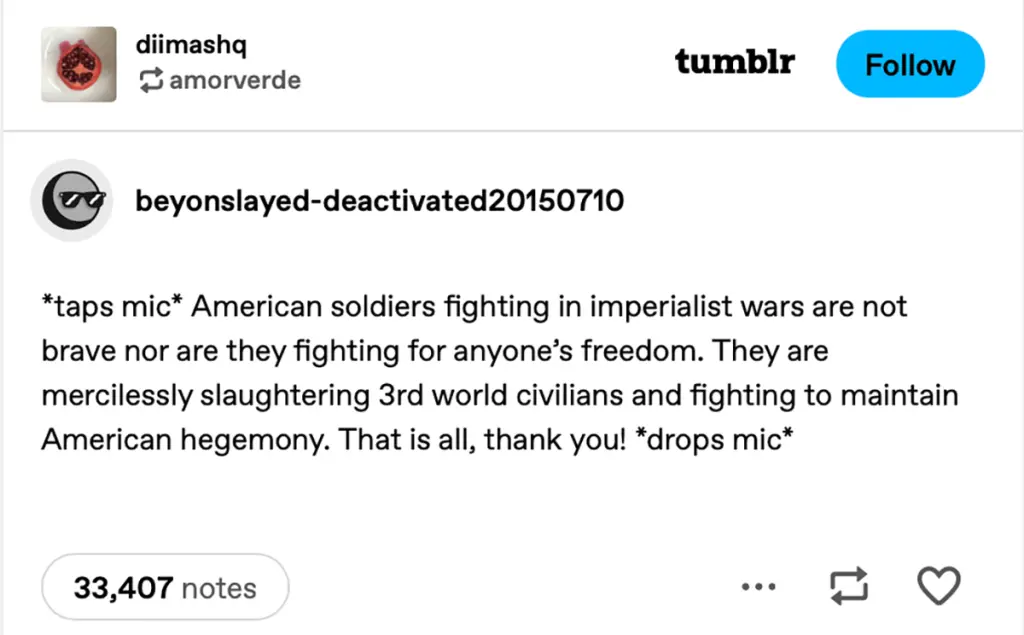
In one such repost, Duwaji is said to have characterized American troops in highly negative terms, accusing them of participating in wars driven by geopolitical ambition rather than the defense of freedom. Another post reportedly attributed responsibility for the emergence of extremist organizations to Western actors, a claim that has been widely contested and criticized.
The report further highlights social media activity from the same period that included controversial remarks about Israel and its legitimacy, as well as the use of racially offensive language in a post reportedly made during her adolescence.
The latest revelations come on the heels of earlier reports, also cited by The New York Post, indicating that Duwaji had engaged with social media content on the day of the October 7, 2023, attacks in Israel. According to those accounts, she “liked” posts that celebrated the events of that day, as well as content disputing widely reported acts of violence.
Taken together, these incidents have contributed to a growing perception among critics that Duwaji’s past online behavior reflects a pattern of views that many find deeply concerning. The cumulative effect has been to intensify scrutiny not only of her actions but also of the mayor’s response.
Mayor Mamdani has sought to distance his administration from the controversy, emphasizing that his wife does not hold any official role within his campaign or in City Hall. In a statement referenced by The New York Post, he argued that she should not be subject to public scrutiny for personal social media activity.
“She has held no formal position on my campaign or in my City Hall,” Mamdani stated, suggesting that the focus should remain on his policies and governance rather than on the actions of family members.
This defense, however, has done little to quell criticism. Opponents argue that the spouse of a major public official inevitably occupies a position of influence and visibility, making their past statements relevant to public discourse.
The controversy has raised broader questions about judgment, accountability, and the standards to which public figures—and those closely associated with them—should be held. For many observers, the issue extends beyond the specific content of the posts to encompass concerns about the values and perspectives reflected therein.
Critics contend that expressions of admiration for individuals associated with violence cannot be dismissed as youthful indiscretion, particularly when they involve widely recognized historical events. They argue that such statements warrant a clear and unequivocal response, both from the individual in question and from those in positions of leadership.
Supporters of the mayor, on the other hand, have urged caution, emphasizing the need to consider the context in which the posts were made and the possibility of personal growth over time. They note that social media activity from years past may not accurately reflect current beliefs or character.
The timing of the controversy has added to its intensity. New York City has been navigating a period of heightened tension, marked by debates over international conflicts, domestic policy, and the rise of antisemitic incidents. In this environment, issues related to Israel and the broader Middle East carry particular sensitivity.
As The New York Post has frequently reported, the intersection of global اevents and local politics has created a complex and often volatile landscape. The resurfacing of Duwaji’s posts has further inflamed these dynamics, prompting reactions from community leaders, advocacy groups, and elected officials.
An additional layer of complexity arises from the question of verification. The New York Post has acknowledged that it was unable to independently confirm the authenticity of the account or the posts in question. The identification reportedly relied in part on facial recognition technology and other investigative methods.
This uncertainty has become a focal point for some defenders of Duwaji, who argue that conclusions should not be drawn without definitive evidence. At the same time, the detailed nature of the report and the specificity of the examples cited have led others to treat the findings as credible.
The situation highlights the challenges of navigating information in the digital age, where historical content can resurface and spread rapidly, often before it has been fully verified.
For Mayor Mamdani, the controversy represents a significant political challenge. As a figure already associated with progressive and often polarizing positions, he now faces additional scrutiny that could impact his administration’s agenda and public standing.
Opponents are likely to use the issue to question his judgment and leadership, while supporters may rally around him in defense of what they perceive as an unfair or disproportionate attack.
The extent to which the controversy will influence public opinion remains uncertain, but its potential to shape the political narrative is undeniable.
Beyond the immediate political ramifications, the episode has sparked a broader conversation about the role of personal history in public life. To what extent should individuals be held accountable for past statements? How should society balance the possibility of growth and change against the need for responsibility and transparency?
These questions are not unique to this case, but they are brought into sharp focus by its high-profile nature and the gravity of the issues involved.
As the controversy continues to unfold, it presents a critical test for Mayor Mamdani and his administration. How he chooses to address the situation—whether through further clarification, engagement with affected communities, or other measures—will play a key role in determining its impact.
For now, the revelations reported by The New York Post have ensured that the issue will remain at the forefront of public discourse. In a city as diverse and dynamic as New York, the ability to navigate such challenges with clarity and integrity is essential.
Ultimately, the episode serves as a reminder of the enduring power of words—both past and present—and the responsibilities that come with public life.

What did you expect from these dirt bags