



|
Getting your Trinity Audio player ready...
|
Critics say New York’s lenient justice system — which gave a violent felon boxing lessons instead of prison time — exposes the moral and policy failures of progressive criminal reform.
By Jared Evan
The murder of 64-year-old church usher Nicola Tanzi in a Brooklyn subway station is renewing scrutiny of New York’s criminal justice system — and the progressive ideology that many say has turned compassion into catastrophe.
Tanzi, a longtime parishioner at St. Dominic’s in Bensonhurst, was remembered by friends as a kind man of faith who greeted fellow worshippers with a smile and a “buongiorno.” His life was cut short last Tuesday when he was brutally beaten inside the Jay Street–MetroTech station.
Prosecutors say 25-year-old David Mazariegos, a repeat offender with 33 prior arrests, punched Tanzi without provocation, then stomped on him repeatedly before stealing his wallet and credit cards. He later used one of the cards to buy a sword in Manhattan, according to court filings. Tanzi died of his injuries.
When questioned by police, Mazariegos reportedly admitted to the attack and to “taking his spirit.” He has been charged with murder and robbery and remains in custody.
Mazariegos’s record includes prior convictions for assault and arson, yet he was repeatedly released back onto city streets under the state’s bail reform laws and alternative sentencing programs.
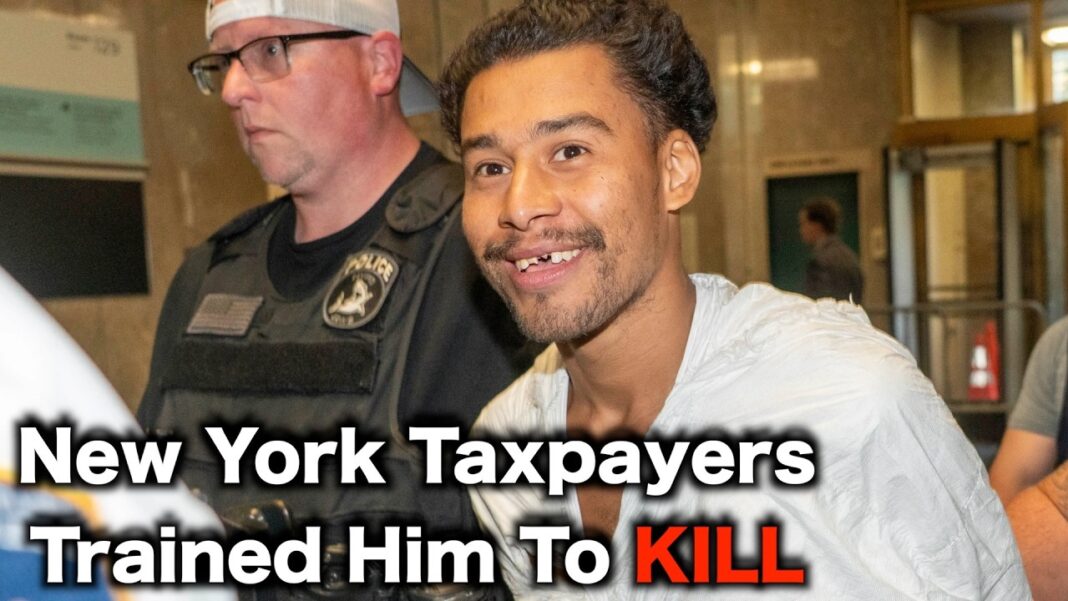
According to The New York Times, Mazariegos had recently participated in “Beyond Boxing,” a taxpayer-funded rehabilitation initiative promoted as an alternative to incarceration. The program, designed to teach discipline and emotional control through sport, instead appears to have given a violent repeat offender professional combat training.
In other words, your tax dollars paid to make this thug more lethal !!
A boxing coach told the Times that Mazariegos “still had anger issues” but credited the program for helping him “work through struggles.” That comment — now viewed in tragic hindsight — has fueled outrage among law enforcement officials and community leaders who say the city’s “soft-on-crime” approach is both naïve and dangerous.
“This isn’t rehabilitation,” said one Brooklyn police source. “It’s weaponization. We’re literally teaching violent offenders to fight while victims like Tanzi pay the price.”
Transportation Secretary Sean Duffy echoed that sentiment online, calling the killing “another tragedy caused by repeat offenders roaming freely” and accusing Governor Kathy Hochul of having “blood on her hands.”
Criminal justice reform advocates have long argued that poverty, not the actual individual’s free will, drive violent crime. But critics say that narrative has hardened into a form of what some call “lethal empathy” — policies that prioritize the offender’s feelings over public safety.
The debate is expected to intensify as Assemblyman Zohran Mamdani, a progressive lawmaker and presumptive front-runner for the 2025 mayoral race, continues to campaign on ending “mass incarceration” and reducing police funding. Opponents warn that his proposals could further erode law and order in a city already struggling with surging recidivism.
Recidivism remains a central issue: Mazariegos’s 33 arrests illustrate what critics describe as a revolving door of criminal leniency, where violent offenders cycle through courts and diversion programs with little deterrence.
“Programs like these sound compassionate,” said one former city prosecutor. “But when a man with three dozen arrests is out training in a boxing gym instead of being behind bars, that’s not compassion — it’s negligence.”
As the city mourns the loss of Nicola Tanzi, his death is emerging as yet another flashpoint in New York’s ongoing battle over justice, safety, and accountability — a tragedy that exposes what happens when reform loses sight of reality.
