



|
Getting your Trinity Audio player ready...
|
By: Jerome Brookshire
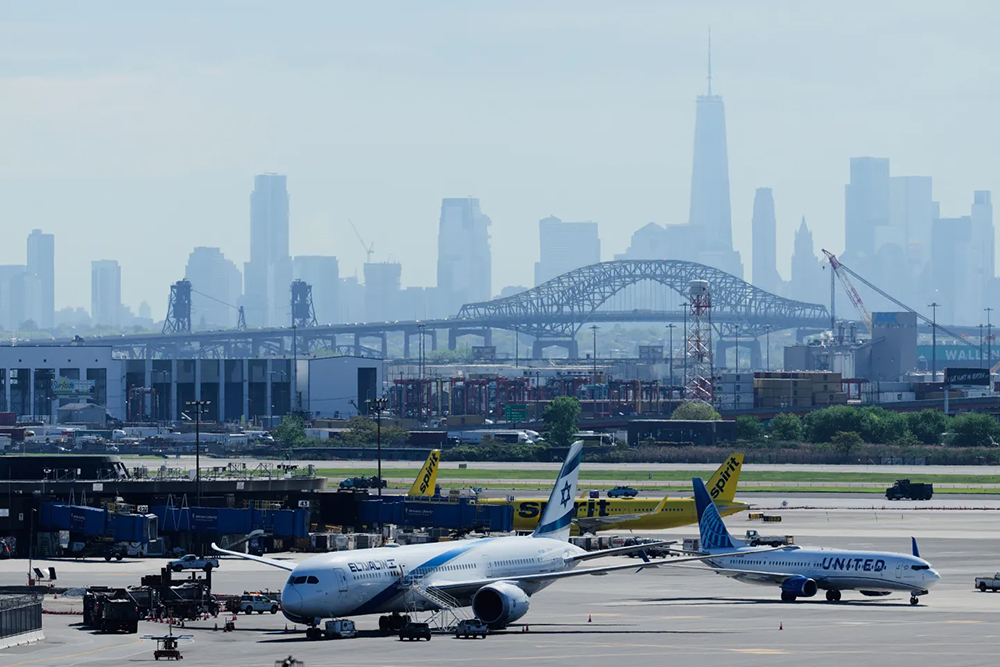
In yet another troubling sign of strain within America’s air travel infrastructure, Newark Liberty International Airport in New Jersey faced significant operational disruptions on Monday, marked by a radio communication failure and staffing shortages. As Fox Business has reported, the events compounded growing concerns over the Federal Aviation Administration’s (FAA) aging technology and workforce limitations, both of which threaten to undermine the safety and reliability of the nation’s airspace.
According to the Fox Business report, the incident began shortly before noon on Monday when Philadelphia TRACON Area C—a critical FAA air traffic control facility—lost radio frequencies at 11:35 a.m. Though the disruption lasted only two seconds, the event followed a much more severe 90-second outage at the same facility just weeks earlier on April 28, which raised alarms across the aviation sector. TRACON Area C is responsible for handling a large volume of air traffic into and out of Newark, one of the busiest airports in the United States.
The FAA confirmed the incident to Fox News, emphasizing that “all aircraft remained safely separated” and that an investigation is underway. Nevertheless, aviation experts and union representatives remain concerned. The National Air Traffic Controllers Association (NATCA), which also spoke with Fox Business, underscored the potential danger of these outages. “Controllers lost radar and communications with the aircraft under their control, unable to see, hear, or talk to them,” the union confirmed, referring to the April incident. “These controllers are the backbone of aviation safety.”
While the brief duration of Monday’s radio loss averted catastrophe, the timing couldn’t have been worse. Just hours later, the FAA implemented a ground delay program at Newark Airport due to staffing shortages. The delay window stretched from 2:07 p.m. to nearly midnight. As reported by Fox Business, this was not an isolated event. Newark has experienced persistent delays and flight cancellations in recent months, frustrating passengers and placing additional stress on airport personnel.
Transportation Secretary Sean Duffy weighed in on the matter via social media, acknowledging the systemic challenges plaguing the FAA. In a post cited by Fox Business, Duffy attributed the increasing number of outages and delays to “old technology,” noting, “If we don’t act, we will start to see these issues across the national airspace.” Duffy announced that a comprehensive plan to modernize the nation’s air traffic control infrastructure would be unveiled in the coming week.
The stakes are high. According to Fox Business, Newark’s status as a critical hub for both domestic and international travel means any disruption has ripple effects across the country. Monday’s staffing issues and technical difficulties forced delays across dozens of inbound and outbound flights. For travelers and airlines alike, the unpredictability and frequency of these disruptions are becoming increasingly unsustainable.
Adding further weight to the situation, NATCA has repeatedly emphasized the human cost of outdated systems and understaffing. “The dedicated, American, hard-working employees who serve as controllers are the foundation of our air traffic control system,” the union stated. Despite their professionalism and round-the-clock vigilance, the demands placed on controllers continue to mount without parallel improvements in technology and staffing support.
The Fox Business report also pointed out that April’s major outage prompted questions about the FAA’s contingency planning and the resilience of the national airspace. Many lawmakers and industry insiders argue that the agency’s reliance on dated equipment—some of which predates the internet era—poses an unacceptable risk in a modern aviation environment increasingly dependent on real-time communication and automated systems.
