



|
Getting your Trinity Audio player ready...
|
Queens Student Arrested Following Alleged Antisemitic Email Threats to Hundreds of Classmates
By: Fern Sidman
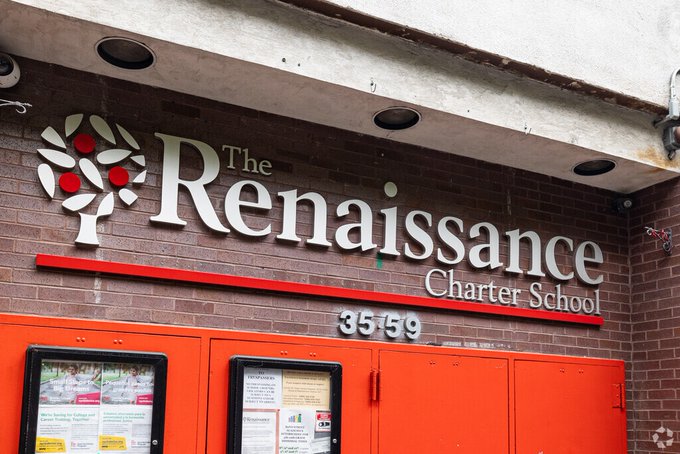
The quiet rhythms of an ordinary school day in Queens were violently interrupted this week when a torrent of digital hatred spilled into the real world, forcing police, educators, parents and students into a moment of collective reckoning. According to a report on Tuesday at VIN News, a 17-year-old student at Renaissance Charter School in Jackson Heights was taken into custody after allegedly using a school email account to distribute antisemitic messages threatening violence to hundreds of classmates. The incident, which prompted the swift involvement of the New York Police Department’s Hate Crimes Task Force, has intensified anxieties about the rise of anti-Jewish hostility in New York City and the fragile boundary between online radicalization and physical harm.
The episode unfolded shortly after midday on Monday, when officers from the 115th Precinct were dispatched following a 911 call reporting a potential bias-related threat at the school. Administrators informed police that an internal email system had been exploited to broadcast a series of antisemitic messages to more than 300 students. VIN News, citing law enforcement sources, reported that the emails contained explicit threats directed at Jews and referenced a specific time at which violence was purportedly intended to occur. Though no physical attack transpired and authorities were able to contain the situation rapidly, the psychological reverberations have proven profound.
The student was arrested on school grounds and later charged with making a terroristic threat and aggravated harassment as a hate crime. As the VIN News report noted, the case was being prepared for arraignment in Queens Criminal Court, with investigators continuing to examine the circumstances surrounding the threats, including how the student obtained access to the email system and whether others may have been involved or influenced. Officials emphasized that the threat was neutralized before any harm could occur, but the very fact that such language was deployed within an educational environment has unsettled a community already grappling with an upsurge in antisemitic incidents.
For the students who received the messages, the episode was not an abstract warning but an intrusion into the presumed sanctity of their daily lives. In the age of constant digital connectivity, the school email inbox—a conduit for homework assignments and administrative notices—suddenly became the vector of fear. Administrators moved quickly to secure the system and alert law enforcement, underscoring the crucial role of institutional vigilance in preventing the escalation of online threats into physical danger. Yet the shock of reading violent language directed at one’s identity lingers long after the offending messages are deleted.
The broader context in which this incident occurred has sharpened its resonance. According to the information provided in the VIN News report, the NYPD has documented a troubling rise in antisemitic hate crimes across the city in recent months, with anti-Jewish incidents constituting a substantial proportion of all reported bias crimes. While New York has long prided itself on its pluralism and cosmopolitan tolerance, recent data suggest that the city’s Jewish residents increasingly find themselves targeted by hostility that ranges from vandalism and harassment to credible threats of violence. The Queens case, occurring within the walls of a school, strikes at the heart of communal anxieties: if young people are absorbing and replicating hateful ideologies, the future of social cohesion is imperiled.
State Sen. Jessica Ramos, whose district encompasses Jackson Heights, sought to reassure constituents while acknowledging the gravity of the episode. In remarks cited in the VIN News report, Ramos expressed relief that no one was harmed and praised the prompt coordination between school officials and law enforcement. Her statement emphasized that Jewish students and families “deserve safety, dignity and protection,” a formulation that resonates far beyond this particular case. The senator’s words implicitly recognized that security is not merely a matter of police response but of cultivating environments in which hateful ideologies find no fertile ground.
Educators at Renaissance Charter School now face the daunting task of restoring a sense of safety among students who have witnessed the digital weaponization of prejudice. Schools are often imagined as sanctuaries where young people can explore ideas under the guidance of responsible adults. When that sanctuary is breached by threats invoking historical patterns of antisemitic violence, the psychological toll can be acute. Counseling resources were being mobilized, reflecting an understanding that the harm inflicted by such threats extends beyond immediate physical danger to the realm of emotional and communal trauma.
The legal implications of the case also merit close attention. Charging a minor with making a terroristic threat and aggravated harassment as a hate crime signals the seriousness with which authorities are treating the incident. Such charges recognize that threats motivated by bias carry a corrosive societal impact distinct from other forms of misconduct. As the VIN News report observed, the involvement of the NYPD’s Hate Crimes Task Force underscores a law enforcement commitment to confronting antisemitism not as isolated misbehavior but as part of a broader pattern that demands specialized expertise and sustained attention.
Yet legal accountability alone cannot address the deeper currents that give rise to such acts. The digital ecosystem in which adolescents now live and socialize is saturated with unfiltered content, some of it explicitly extremist. The anonymity and immediacy of online communication can embolden expressions of hatred that might otherwise remain suppressed. When those expressions migrate into institutional platforms like school email systems, the boundary between virtual rhetoric and tangible threat collapses. VIN News’ report invites a sobering reflection on how easily digital tools can be repurposed for intimidation when safeguards fail.
Community leaders have begun to frame the incident as a call to renewed vigilance and education. Interfaith coalitions in Queens, already active in responding to previous bias incidents, are reportedly exploring joint initiatives to promote dialogue and resilience. VIN News has chronicled similar efforts elsewhere in the city, where grassroots organizations seek to counteract hate by fostering relationships across communal lines. Such endeavors, while incremental, represent an acknowledgment that law enforcement responses must be complemented by sustained cultural work aimed at dismantling prejudicial narratives before they crystallize into threats.
Parents, too, find themselves confronting unsettling questions about the environments their children inhabit, both online and offline. The knowledge that a peer could disseminate violent antisemitic messages within a school community destabilizes assumptions about safety and trust. School administrators are reviewing digital security protocols and considering additional training for students on responsible online conduct. These measures, while technical in nature, point toward a broader imperative: equipping young people with the ethical literacy to navigate digital spaces without succumbing to or propagating hatred.
The Queens incident also reverberates against the backdrop of national conversations about antisemitism and free expression. While the First Amendment robustly protects speech, threats of violence fall squarely outside its shelter. The challenge lies in distinguishing between controversial expression and rhetoric that crosses into intimidation and terroristic intent. VIN News’ coverage of the case highlights how that distinction becomes starkly visible when explicit threats are directed at a particular community, invoking a long and tragic history of persecution.
As the investigation continues, authorities have reiterated that there is no ongoing threat to the school community. Yet the absence of immediate danger does not erase the sense of vulnerability engendered by the episode. The digital echo of the emails lingers as a reminder that hatred, once voiced, cannot simply be unspoken. The VIN News’ report situates this case within a troubling pattern, urging readers to confront the uncomfortable reality that antisemitism remains a potent and adaptive force even in environments dedicated to learning and inclusion.
In the final analysis, the arrest of a single student, while necessary, cannot be the sole measure of justice. The episode at Renaissance Charter School compels a broader reckoning with how prejudice is transmitted, normalized and, at times, enacted by the youngest members of society. It challenges educators, policymakers and community leaders to move beyond reactive measures toward a proactive cultivation of empathy and historical awareness. As the VIN News report observed, the struggle against antisemitism is not merely about responding to threats but about fortifying the moral infrastructure of communities so that such threats find no audience, no platform and no justifi