



|
Getting your Trinity Audio player ready...
|
By: Hal C Clarke
Queens residents and business owners are pushing back against a city plan to install bike lanes on 31st Street in Astoria, calling the proposal a “recipe for disaster” that would harm local commerce and jeopardize safety.
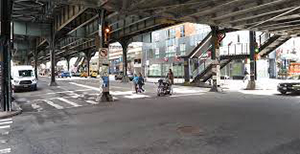
The New York City Department of Transportation (DOT) aims to narrow parking lanes from 13 feet to 8 feet and traffic lanes from 14 feet to 11 feet, while shifting parking lanes away from the curb to make room for new bike paths between 36th and Newton avenues.
Though the plan has strong support from progressive elected officials like Councilwoman Tiffany Cabán, Assemblywoman Jessica González-Rojas, and State Senator Kristen Gonzalez, many merchants argue the changes would make deliveries nearly impossible.
Panos Adamopoulos, co-owner of Pilates Designs by Sylvia, a pilates equipment manufacturer on 31st Street since 1984, said the plan would force the business to close. “We’ll be forced to shut down because we won’t be able to load and unload materials and products,” he told The Post. Adamopoulos emphasized that 16 employees’ livelihoods are at stake. The narrow lanes and relocated parking would force delivery drivers to cross an eight-foot bike lane and a three-foot buffer before reaching the sidewalk, creating hazardous conditions—especially complicated by steel columns supporting the elevated N/W subway line.
King Souvlaki, a food truck at 31st Street and 31st Avenue since 1979, would also be pushed out under the plan. Owner Lampros Tsampas said, “There would be no other space at that intersection for us.” Tsampas rejected suggestions that serving customers from floating parking spaces into bike lanes would be safe.
The DOT justifies the redesign by highlighting the street’s safety record: between 2020 and 2024, 126 vehicle occupants, 33 pedestrians, and 24 cyclists were injured, with two fatalities, making 31st Street “one of the most dangerous streets in Queens,” according to a department spokesperson.
But locals question the safety claims. Astoria native Joseph Mirabella expressed concern for his 90-year-old amputee grandmother, saying the new design would make it harder and more dangerous to get her in and out of the car and cross the street. “The DOT is calling this a safety and accessibility improvement plan—and that’s preposterous,” he said.
The bike lanes would also disrupt the pick-up and drop-off areas used by students at nearby St. Demetrios School. The school joined nearly 50 other local businesses and institutions in signing a June 3 letter to DOT Commissioner Ydanis Rodríguez urging a reconsideration. The letter points to documented incidents of children being hit by reckless cyclists citywide and argues that until the problem is addressed broadly, local communities shouldn’t be expected to absorb the risk.
Public opposition is mounting: a Change.org petition against the proposal has garnered over 4,200 signatures. Signers raise concerns about worsening traffic congestion, increased pollution, and delays in emergency response times.
Nancy Esposito, whose family owns Brothers Supply Corp., an HVAC company near 35th Avenue and 31st Street, warned of a “ripple effect” the redesign could cause. “This is an industrial conduit connecting major bridges and tunnels,” she said. “We’re very concerned for the safety of our community and the wellbeing of our companies because of this plan.”
The DOT responded by saying that redesigns like this have “successfully improved safety and supported local businesses while keeping traffic moving.” Officials noted they have met with dozens of business owners on 31st Street and have adjusted their plans based on feedback.
