



|
Getting your Trinity Audio player ready...
|
By: Fern Sidman
For more than two decades, the mayoral interfaith breakfast in New York City has functioned as a carefully choreographed ritual of civic harmony, a symbolic gathering in which clerics, imams, rabbis, pastors and community leaders assemble beneath vaulted ceilings to affirm the city’s pluralistic ethos. Yet as Zohran Mamdani prepares to host this year’s edition on Friday, the ceremony—long insulated from the more abrasive currents of municipal politics—has become a prism through which the city’s evolving Jewish-political landscape is being refracted. As The Jerusalem Post reported on Thursday, the breakfast will proceed in continuity with tradition, but Jewish participation in the event will look markedly different, exposing a deeper rift over leadership, legitimacy and the meaning of solidarity in an era of surging antisemitism.
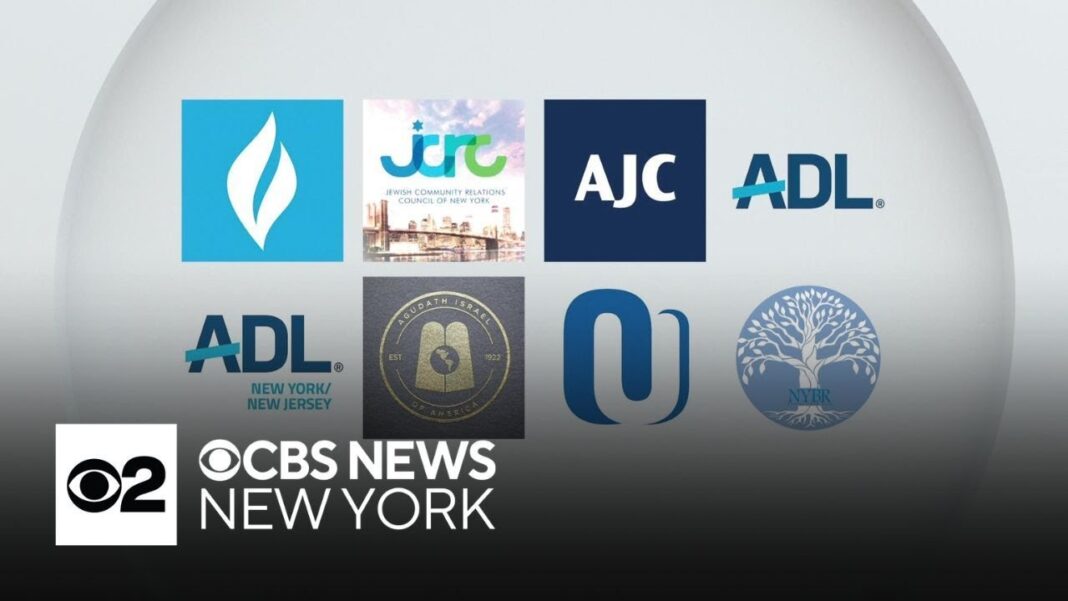
At the center of the shift is the conspicuous absence of several institutional Jewish sponsors that have underwritten the event in recent years. The UJA-Federation of New York, the New York Board of Rabbis, and the Anti-Defamation League—organizations that for decades have represented mainstream Jewish communal leadership in New York—are not sponsoring the breakfast this year. The Jerusalem Post report noted that UJA and the New York Board of Rabbis declined to confirm why they are not participating as sponsors, nor did they clarify whether the mayor’s office approached them about continuing their involvement. City Hall, for its part, did not respond to requests for comment, a silence that has only amplified speculation about whether the rupture is procedural or political.
The ADL’s position, however, has been articulated more forthrightly, albeit with a measure of evolving nuance. Scott Richman, regional director of ADL New York and New Jersey, told The Jerusalem Post that for years the organization had proudly sponsored the breakfast as a forum for bridge-building among the city’s diverse faith communities. This year, he said, the ADL was not invited to attend. “While a breakfast itself does not ultimately matter,” Richman observed, “protecting every Jewish New Yorker does.” His remarks underscored a concern that symbolism cannot substitute for substantive protection at a moment when antisemitic violence is rising. After the story was first published, the ADL clarified that it had declined to sponsor the event before subsequently not receiving an invitation—an ambiguity that itself speaks to the strained and increasingly transactional nature of the relationship between City Hall and one of the country’s most prominent Jewish civil rights organizations.
The Jerusalem Post report situated the ADL’s stance within a longer arc of tension between Mamdani and the organization. The ADL has established a “Mamdani monitor” to track his policies and personnel appointments, reflecting an institutional skepticism about the mayor’s approach to Jewish communal concerns. The relationship has been further complicated by an earlier episode in which ADL leader Jonathan Greenblatt inaccurately accused Mamdani of never having visited a synagogue, an error that nonetheless crystallized the mutual distrust shaping interactions between the mayor and mainstream Jewish advocacy bodies. The breakfast, in this sense, has become a microcosm of a broader estrangement.
While some mainstream organizations have receded from the event, others, representing a more progressive Jewish political orientation, have stepped forward. The Jerusalem Post reported that Jews for Racial and Economic Justice, a left-wing group that has never before co-sponsored the interfaith breakfast, confirmed its participation this year. New York Jewish Agenda, a progressive advocacy organization, is also sponsoring the event, and its outgoing leader, Phylisa Wisdom, is expected to make her first public appearance as executive director of the Mayor’s Office to Combat Antisemitism. The symbolism of that moment is difficult to ignore: the breakfast will not merely convene faith leaders but will also serve as an early public stage for the mayor’s controversial antisemitism czar, whose appointment has already drawn intense scrutiny.
This reconfiguration of sponsors reflects what The Jerusalem Post report characterized as a broader shift in New York City politics under Mamdani’s leadership, in which progressive-leaning Jewish organizations have assumed a more prominent role than they did under his predecessor, Eric Adams. The shift is not simply organizational but ideological, marking a recalibration of which Jewish voices are privileged in municipal spaces of symbolic consensus. For critics, this realignment signals a troubling marginalization of mainstream Jewish institutions that have historically anchored the city’s response to antisemitism. For supporters, it represents a democratization of Jewish representation, making room for voices that align more closely with the mayor’s progressive vision.
The breakfast has thus become a site of selective participation, with Jewish leaders navigating the tension between principled dissent and strategic engagement. Rabbi Marc Schneier, a vocal critic of both Mamdani and his choice of Phylisa Wisdom to lead the Office to Combat Antisemitism, announced that he will decline the mayor’s invitation to attend. The Jerusalem Post quoted Schneier as saying he would not participate in a public forum that, in his view, legitimizes a mayor who “continues to bifurcate Israel from the Jewish community.” He added that he would be “aghast” if organizations such as UJA, the New York Board of Rabbis, and the ADL were to support the breakfast in light of Mamdani’s anti-Zionism.
Schneier’s refusal reflects a moral calculus that prioritizes public accountability over symbolic unity, even at the cost of withdrawing from one of the city’s most visible interfaith rituals.
Yet not all critics of Mamdani are choosing absence over presence. Elliot Cosgrove, the senior rabbi of Park Avenue Synagogue, who publicly opposed Mamdani during the election and endorsed Andrew Cuomo, has indicated that he plans to attend the breakfast. Cosgrove told The Jerusalem Post that he was unaware of the event’s past or present sponsorship arrangements, suggesting that for some religious leaders the breakfast remains an opportunity for engagement irrespective of its shifting political valence. His decision illustrates the diversity of strategies within the Jewish community: some leaders view participation as tacit endorsement, while others regard it as an opportunity to assert communal concerns directly to power.
The Jerusalem Post report noted that other Jewish bodies that have sponsored the breakfast in past years, including the Jewish Community Relations Council of New York and the Sephardic Community Federation, have not publicly clarified whether they are involved this year. Neither organization responded to inquiries, nor did a spokesperson for Mamdani. The absence of transparency has lent the event an air of improvisation, as if the architecture of consensus that once surrounded the breakfast has given way to a more fluid and contested terrain.
To understand the symbolic weight of this moment, it is necessary to recall the history of the interfaith breakfast itself. Established as an annual tradition by former mayor Michael Bloomberg in 2002, the event has typically drawn more than 300 religious leaders from across the city, serving as a ritual affirmation of New York’s religious and cultural diversity. The Jerusalem Post report recounted that the breakfast has not been immune to political dissent in the past. During Bloomberg’s tenure, a group of Muslim leaders boycotted the event amid accusations of police surveillance of Muslim communities, a reminder that even rituals of unity can become flashpoints when trust between communities and City Hall erodes.
Under Eric Adams, the breakfast acquired its own political inflections. Adams made headlines at the 2023 gathering by dismissing the need to separate church and state, a remark that drew criticism from civil liberties advocates. Last year, Adams delivered what observers described as a campaign-style speech, focusing on his personal biography and resilience in the face of criticism. The Jerusalem Post’s coverage of those moments situates the breakfast within a continuum of mayoral self-fashioning, in which the event functions as a stage not only for interfaith dialogue but for political performance.
This year’s breakfast, according to a City Hall press release cited by The Jerusalem Post, will be held at the New York Public Library’s flagship building and will “bring together faith leaders from across the five boroughs to honor the city’s religious, spiritual, and cultural diversity.” Notably absent from the release, however, was any list of sponsoring organizations or speakers, a departure from past practice that has fueled speculation about the extent to which City Hall is seeking to manage the optics of Jewish participation. The omission may reflect a desire to avoid drawing attention to the absence of mainstream Jewish sponsors, or it may signal a recalibration of the event’s branding in light of the new constellation of partners.
The deeper significance of the breakfast’s evolving sponsorship lies in what it reveals about the fault lines within New York’s Jewish community. The Jerusalem Post report framed the moment as one in which mainstream institutions, long accustomed to serving as interlocutors between City Hall and Jewish New Yorkers, find themselves displaced by more progressive groups that share greater ideological affinity with the mayor. This displacement is not merely bureaucratic; it is epistemic, reshaping which Jewish narratives are recognized as representative in civic rituals of inclusion. At a time when antisemitic incidents are surging, the question of who speaks for Jewish New Yorkers in municipal forums is not a matter of symbolism alone; it bears directly on how effectively the city can marshal communal trust in its efforts to confront hate.
For the ADL, the decision to disengage from sponsorship—even amid ambiguity about the invitation process—signals a recalibration of strategy. Richman’s insistence that the protection of Jewish New Yorkers matters more than the optics of a breakfast underscores a broader concern that interfaith symbolism risks becoming performative if it is not anchored in substantive policy commitments. The Jerusalem Post report noted that the ADL’s call on Mamdani to serve the entire Jewish community reflects an anxiety that progressive Jewish partners may be privileged at the expense of those who view Zionism as integral to Jewish identity.
The breakfast, then, has become an index of the city’s moral weather. It reveals the extent to which interfaith rituals, once insulated from partisan contestation, are now entangled in the ideological currents shaping municipal governance. For Mamdani, the event offers an opportunity to project inclusivity even as his relationships with mainstream Jewish organizations remain strained. For Jewish leaders, the choice to attend or abstain becomes a public statement about how to navigate a mayoralty whose commitments on Israel and antisemitism are contested. The Jerusalem Post’s report underscores that there is no consensus strategy: unity itself has become a contested concept.
As religious leaders gather beneath the library’s grand arches, the absence of familiar institutional sponsors will be palpable to those attuned to the city’s communal choreography. Whether the breakfast can still function as a site of genuine bridge-building, or whether it will serve primarily as a tableau of shifting allegiances, remains to be seen. What is clear is that the ritual of interfaith harmony can no longer be disentangled from the politics of representation. In a city where diversity is both a civic creed and a site of contestation, even a breakfast becomes a mirror—reflecting not only the aspiration to coexistence, but the fractures that complicate its realization.

Israel is a tiny Jewish State which includes civil, full religious and protective rights to all its citizens. Arabs also sit in the Knesset, Israel’s governing body but Mandami states he does not support Israel’s right to exist as a “Jewish” state because he is “inclusive.” Yet he keeps his foul mouth shut about Modern Muslim-Majority Countries.
Today, there are over 50 countries where Islam is the majority religion, particularly in Asia (Indonesia, Pakistan, Bangladesh, Malaysia) and Africa (Nigeria, Egypt, Algeria).
The Organisation of Islamic Cooperation (OIC) includes 57 member states, most with Muslim majorities.
Who in their right mind supports anyone who claims to not hate Jews or Israel but merely wants Israel and Jews to be written out of existence???? The Jerry Nadler’s of our world will once again be screaming the loudest when they come for him. Chuck Schumer who loves to say he supports Israel, instead of denouncing Mamdani, was his usual self-coward & whore, calling this lout Mamdani to congratulate him on his “win.” When oh when will we oust our own worst enemies from within, and vote them out. Send them packing.