



|
Getting your Trinity Audio player ready...
|
By; Carl Schwartzbaum
The organizers of a Ridgewood, Queens community garden who once required prospective members to pledge “solidarity” with Palestinians are now suing the City of New York in federal court, claiming they are victims of “egregious viewpoint discrimination,” according to newly filed legal papers obtained by The New York Post.
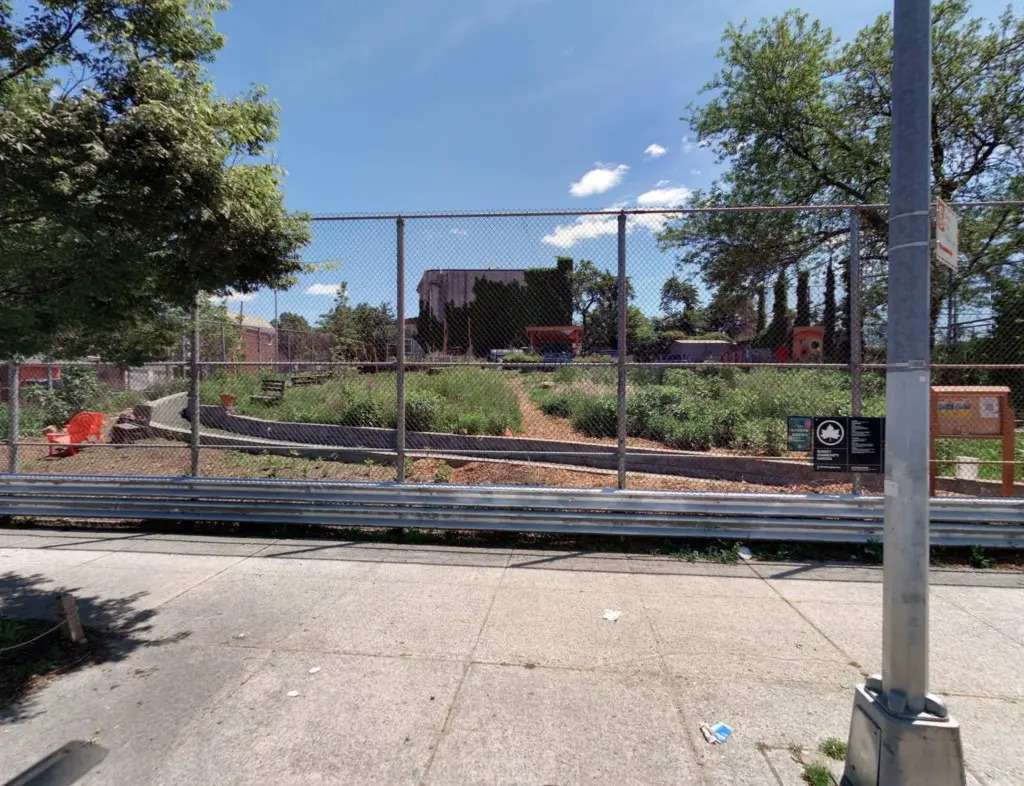
The leaders of the Sunset Community Garden — recently rebranded as Jardin de Santa Cecilia — allege that their license to operate the green space at Onderdonk and Willoughby avenues was revoked this spring as punishment for their political and social views, which they describe as affirming of “Queer, Trans, Black, Indigenous, and People of Color” (QTBIPOC) communities. The federal complaint, filed July 31 in the Eastern District of New York in Central Islip, comes after an earlier state court challenge to the city’s eviction order.
As The New York Post reported in September, the garden first drew widespread criticism after local Jewish residents said they no longer felt welcome due to its leadership’s overtly pro-Palestinian stance and a controversial pledge requirement for membership. The garden’s rules mandated that new members express “solidarity with the oppressed and marginalized people” of Palestine, a policy that critics alleged excluded or alienated certain community members.
The garden also featured a dedicated plot called “Poppies for Palestine,” further underscoring its political messaging. The New York Post report noted that the issue became a flashpoint in the neighborhood, pitting the garden’s leadership against residents who argued that the public space should remain politically neutral and open to all.
In court filings, the Parks Department cited a breach of contract as grounds for terminating the group’s license, setting June 6 as the deadline for vacating the site. Garden leaders quickly responded by suing in state court to block the eviction before shifting their legal fight to federal jurisdiction.
The plaintiffs claim the city targeted them specifically because of their “actual or perceived gender identities, sexual orientation, and/or race,” as well as the QTBIPOC-affirming nature of their activities and programming. They further contend that the loss of the garden has caused them “emotional distress” and the destruction of what they call their “community sanctuary.”
Not all local voices have been sympathetic. Christina Wilkinson, a Ridgewood resident who once worked to secure funding for the space but has since become one of its most vocal opponents, told The New York Post: “We live in a city that prides itself on its diversity, and our public resources shouldn’t be run by people who openly discriminate against any segment of the population. While the plaintiffs go court shopping, it’s time for Parks to take action.”
In their latest court submission, garden leaders allege that The New York Post’s reporting on the controversy fueled online harassment, including threats of violence such as calls to “firebomb” the site or “destroy the garden with poison.” They also claim that in September, one day after The Post published its initial story, six white men entered the garden and “aggressively interrogated and menaced two immigrant stewards of color.”
The NYPD did not confirm whether the alleged incident was reported to police, The New York Post report noted.
In June, organizer Laura Merrick formally changed the garden’s name from Sunset Community Garden to Jardin de Santa Cecilia in honor of Cecilia Gentili, a prominent Latina transgender advocate. The space now features two “altars” dedicated to Gentili, reflecting the organizers’ ongoing emphasis on QTBIPOC-focused themes.
Jonathan Wallace, the attorney representing the garden leaders, did not respond to The New York Post’s repeated requests for comment. The city’s Parks Department similarly declined to comment on the litigation, while a spokesperson for the Law Department confirmed only that the city had been served with the new federal lawsuit.
The case now adds another chapter to a dispute that has intertwined neighborhood politics, identity-based advocacy, and Middle East geopolitics in the unlikely setting of a small community garden. With the federal court filing, the conflict between city officials and the garden’s leadership is set to play out on a new legal stage — one in which the definition of “viewpoint discrimination” and the obligations of operators of public resources will likely be sharply tested.
