



|
Getting your Trinity Audio player ready...
|
Pataki Predicts Hochul Will Hike Taxes Once Election Is Over
By: Arthur Popowitz
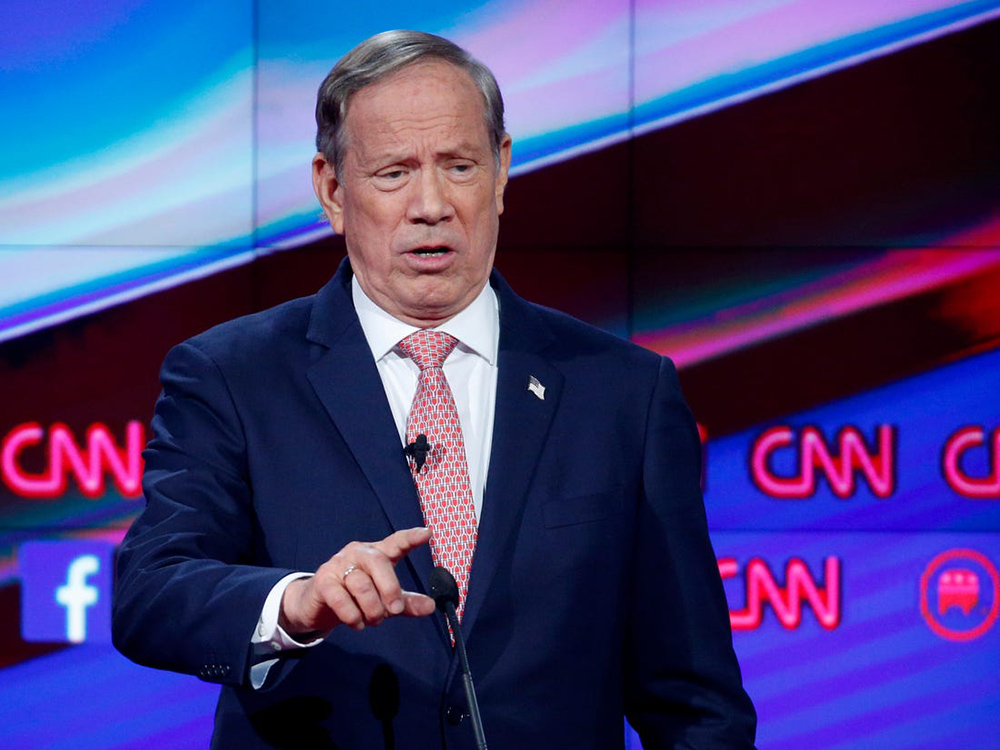
As New York barrels toward another high-stakes election season, a familiar anxiety is resurfacing among voters, business leaders, and fiscal hawks alike: the fear that Albany’s promises of restraint will quietly evaporate once the ballots are counted. That concern was voiced bluntly this weekend by former governor George Pataki, who warned that Governor Kathy Hochul may be preparing yet another post-election reversal—publicly pledging not to raise taxes now, only to approve increases once November is safely in the rearview mirror.
In remarks reported by The New York Post on Sunday, Pataki drew a direct line between Hochul’s current posture and her handling of congestion pricing, a policy saga that has become emblematic of what critics call Albany’s “bait-and-switch” approach to governance. Speaking on 77 WABC’s “Cats Roundtable,” Pataki predicted that Hochul, who is seeking her first full four-year term after assuming office mid-term, will resist the immediate pressure from New York City Mayor Zohran Mamdani to hike taxes on wealthy residents and corporations—but only until the election is over.
“She’s going to tell him ‘No’ between now and November because this is an election year,” Pataki said, according to The New York Post report. “But as soon as November is over, if history with how she acts is any guide, the legislature and she are going to say, ‘OK. Too bad, but, yes, go raise taxes.’ It will be a disaster.”
The warning taps into a deep well of skepticism among New Yorkers who watched congestion pricing follow precisely that trajectory. Hochul famously halted the controversial toll on vehicles entering Manhattan’s central business district in June 2024, a move widely interpreted as an attempt to neutralize voter backlash. Then, after the election, she directed the Metropolitan Transportation Authority to implement the $9 toll anyway. As The New York Post report chronicled, the episode left many New Yorkers feeling misled.
“That’s what happened with congestion pricing: ‘Oh, we’re going to halt congestion pricing,’” Pataki said on the radio program, as quoted by The New York Post. “And then right after the election, we had congestion pricing.” Radio host John Catsimatidis chimed in with a quip that captured the prevailing cynicism, saying it felt like the toll was approved “five minutes” after the 2024 election.
For Pataki, the concern now is that the same political choreography could play out on a much larger scale—this time involving taxes. Mayor Mamdani, whose democratic socialist platform includes aggressive redistribution measures, has called for higher taxes on the city’s wealthiest residents and major corporations to fund expanded social programs. Hochul has so far signaled resistance, emphasizing affordability and insisting she will not raise income taxes. But Pataki argues that such assurances are calibrated to the electoral calendar rather than fiscal conviction.
The New York Post reported that Pataki, a three-term Republican governor who last won statewide office in 2002, views the mere discussion of tax hikes as dangerous. In his telling, the threat alone could accelerate a trend that has already reshaped New York’s demographic and economic landscape: the steady migration of residents and businesses to lower-tax states such as Florida and Texas.
“Not only do we have the second-highest tax burden in the country,” Pataki said, “but now Mamdani is proposing massive tax increases on successful people in New York.” Allowing that agenda to advance, he warned, would be “a catastrophe.” The New York Post report noted that Pataki described himself as “very concerned” and “really worried” about the Empire State’s future.
Those worries extend beyond taxation to spending. Pataki accused Hochul of presiding over a budget he characterized as “out of control,” buoyed by a strong year on Wall Street that has temporarily swelled state revenues. “Wall Street has had a good year, so Albany has money,” he said, according to The New York Post. “What does Hochul do? Massive increases in spending.”
In Pataki’s view, Albany’s reliance on temporary revenue windfalls has masked structural problems and enabled the perpetuation of taxes that were never meant to be permanent. He pointed to “so-called temporary taxes” enacted a decade ago with the promise they would be phased out. “So long as Hochul and the Democrats run Albany, they’re not going to be phased out,” he said. “They’re going to be there forever. My fear is that it’s just going to get worse.”
The critique resonates with a segment of voters who remember Pataki’s own tenure as a period of tax relief and fiscal restraint. As The New York Post has often recalled, Pataki made slashing state income taxes a cornerstone of his administration, arguing that competitiveness and growth depended on keeping New York attractive to high earners and employers. His reemergence as a vocal critic of Hochul underscores how deeply the state’s fiscal direction has become a partisan fault line.
Hochul’s office, however, forcefully rejected Pataki’s characterization. In a statement to The New York Post, a spokesperson drew a sharp contrast between the former governor’s record and Hochul’s agenda. “Unlike Governor Pataki who made devastating cuts to programs New Yorkers depend on like school aid and public transportation,” the spokesperson said, “Governor Hochul’s budget will make record investments in critical services without raising income taxes on any New Yorkers.”
The administration insists that Hochul’s approach is rooted in affordability rather than austerity. The spokesperson emphasized initiatives that Hochul has promoted as evidence of her commitment to easing the financial burden on working families: a substantial child tax credit, a proposal to eliminate taxes on tips, and what the administration describes as a record middle-class tax cut delivering nearly $1 billion in relief to more than 8.3 million New Yorkers beginning this year. These measures, Hochul’s team argues, demonstrate that investment and tax relief need not be mutually exclusive.
Yet critics remain unconvinced. The New York Post report highlighted the skepticism of residents who see a pattern in Albany’s policymaking—one in which controversial measures are paused or softened before elections, only to reemerge once political risk subsides. Congestion pricing looms large in that narrative, not merely as a transportation policy but as a case study in trust.
For many New Yorkers, the issue is less about ideology than credibility. Can voters rely on pre-election promises when recent history suggests that policy decisions may be deferred rather than abandoned? Pataki’s warning taps into that unease, framing the upcoming election as a moment not just to choose leaders, but to decide whether Albany’s assurances carry real weight.
The stakes are high. New York has already experienced significant population loss in recent years, a trend The New York Post has attributed in part to taxes, cost of living, and perceptions of declining quality of life. Businesses, particularly in finance and technology, have increasingly explored or executed relocations to states with lighter regulatory and tax burdens. Pataki argues that even signaling openness to higher taxes could tip the balance for those still on the fence.
Supporters of Hochul counter that the state cannot afford to starve public services or ignore inequality. They argue that investments in education, transportation, and social safety nets are essential to New York’s long-term vitality, and that focusing solely on tax rates obscures the broader picture. The tension between these visions—growth through restraint versus growth through investment—has defined New York politics for decades.
As election day approaches, Hochul appears determined to keep the focus on affordability and stability, resisting calls for sweeping tax hikes while touting targeted relief. Mamdani, for his part, continues to press for a more radical redistribution of wealth, setting up a potential post-election clash within the state’s Democratic power structure. Pataki’s intervention adds a Republican voice to that debate, warning voters to read between the lines of campaign rhetoric.
Whether Hochul ultimately follows the path Pataki predicts remains to be seen. But the former governor’s comments have already sharpened the conversation, forcing the administration to defend not only its policies but its credibility. In a state weary of political reversals, the memory of congestion pricing serves as a cautionary tale—one that could shape voter perceptions long after the snow melts and the campaign signs come down.
As New Yorkers weigh their choices, the question lingers: are today’s tax promises ironclad commitments, or merely placeholders until the polls close? Pataki’s answer, delivered with the blunt certainty of a veteran of Albany’s wars, is clear. And as The New York Post reported, the months ahead will reveal whether that warning was prescient—or simply another chapter in the state’s perpetual tug-of-war over money, power, and trust.
