



|
Getting your Trinity Audio player ready...
|
Park Avenue Synagogue Rabbi Condemns Zohran Mamdani as “Danger to Jewish Security,” Urges Support for Cuomo
By: Jerome Brookshire
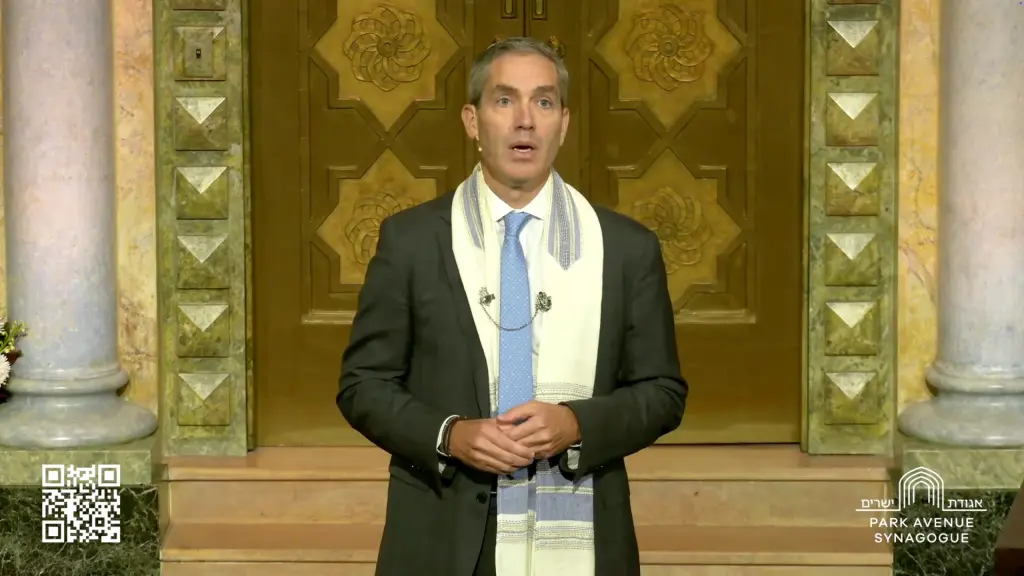
In a rare and impassioned political appeal from the pulpit, Rabbi Elliot Cosgrove of Manhattan’s prestigious Park Avenue Synagogue delivered a blistering critique of Zohran Mamdani, branding the Democratic nominee for mayor “a danger to the security of the New York Jewish community.” His remarks, reported by The New York Post on Monday, have sent ripples through the city’s political and religious circles just days before early voting begins.
“I believe Zohran Mamdani poses a danger to the security of the New York Jewish community,” Rabbi Cosgrove declared during his Saturday sermon at the Upper East Side synagogue, one of the most influential Jewish congregations in the country.
Citing Mamdani’s refusal to condemn the incendiary slogan “Globalize the Intifada,” his public questioning of Israel’s legitimacy as a Jewish state, and his repeated accusations of “genocide” against Israel during last week’s mayoral debate, Cosgrove warned that Mamdani’s rhetoric reflects “a dangerous ideology that undermines Jewish safety and civic solidarity.”
“For these and so many other statements,” he continued, “he is a danger to the Jewish body politic of New York City.”
As The New York Post report noted, Cosgrove’s remarks marked a rare departure from the rabbi’s long-standing tradition of political neutrality. In his 18 years leading Park Avenue Synagogue, he has never publicly endorsed or opposed a mayoral candidate. “It’s not my style to stump from the pulpit,” he later told The Post in a Monday interview. “But when the welfare of the Jewish community is at stake, silence is not an option.”
Addressing congregants just a week before the start of early voting, Rabbi Cosgrove urged them to mobilize politically, casting the mayoral race as a referendum on Jewish security and moral clarity. Speaking before hundreds of worshippers during Shabbat services, he explicitly urged support for former Governor Andrew Cuomo, who is running as an independent, warning that a divided opposition could hand victory to Mamdani.
“A vote for [Republican candidate Curtis] Sliwa, whatever his merits, is a vote for Mamdani,” Cosgrove said, according to The New York Post report. “There is a path to victory. No one should sit this one out. We must turn out to vote.”
The statement resonated strongly with congregants in attendance, many of whom described the moment as both sobering and historic. Park Avenue Synagogue, founded in 1882, is widely regarded as one of the most powerful centers of Conservative Judaism in the United States, with a membership that includes some of the city’s most prominent business, media, and cultural figures.
Among its noted congregants are designer Ralph Lauren, CNN anchor Kate Bolduan, and Broadway actor Ben Platt, according to the report in The Post. The synagogue also famously hosted the funeral of Leon Hess, the late owner of the New York Jets — a reflection of its enduring civic stature.
The New York Post report highlighted that Rabbi Cosgrove’s condemnation follows months of mounting criticism over Mamdani’s stridently anti-Israel positions. The 34-year-old Queens assemblyman, a member of the Democratic Socialists of America, has repeatedly accused Israel of committing “genocide” in Gaza and has vowed to arrest Israeli Prime Minister Benjamin Netanyahu should he ever visit New York.
Mamdani’s refusal to disavow the call to “Globalize the Intifada” — a phrase associated with violent resistance against Israel — has sparked outrage among Jewish leaders and elected officials across party lines. During last week’s televised debate, when asked whether he would condemn the slogan, Mamdani deflected, arguing instead that “resistance takes many forms.”
As The New York Post reported, this exchange, coupled with his prior denunciations of Israel, prompted Cosgrove to take the unprecedented step of publicly urging his congregation to oppose Mamdani. “When someone calls for the export of violent uprising against Jews and denies our people’s right to self-determination,” the rabbi said, “we cannot shrug and call it politics — it is a matter of survival.”
Former Governor Andrew Cuomo, who has styled his independent campaign around the themes of “competence and safety,” quickly acknowledged Cosgrove’s remarks, amplifying them on social media.
“Powerful words by Rabbi @elliot_cosgrove of @parkavenuesyn #SayNoToZo #VoteforCuomo,” Cuomo posted on X, alongside video footage of the rabbi’s sermon.
As The New York Post report observed, the endorsement could lend Cuomo significant momentum among New York’s sizable Jewish electorate, particularly in Manhattan and parts of Brooklyn where concerns about rising antisemitism have become deeply personal. The rabbi’s warning, reported The Post, “appeared to strike a chord with an anxious community already alarmed by anti-Israel activism spilling into local politics.”
The controversy also drew a response from Mayor Eric Adams, who, according to the report in The New York Post, addressed Park Avenue Synagogue congregants on Friday night — one day before Cosgrove’s sermon — and voiced his own concerns about Mamdani’s candidacy.
While Adams stopped short of endorsing a specific candidate, he reportedly told congregants that he “shared their worries” and pledged to remain a steadfast ally of the Jewish community “as a private citizen and fellow New Yorker” once his term ends.
After his speech, Adams spoke privately with Rabbi Cosgrove, a source told The Post. The mayor’s remarks were described as “empathetic and unifying,” acknowledging the fear many Jewish residents feel amid a wave of anti-Israel demonstrations and harassment incidents in recent months.
Park Avenue Synagogue
Park Avenue Synagogue, often referred to as “the cathedral of American Conservative Judaism,” wields enormous cultural and political influence. As The New York Post report detailed, the synagogue’s membership includes leaders from finance, law, the arts, and philanthropy — individuals whose voices often reverberate far beyond its sanctuary.
The rabbi’s sermon, therefore, was not simply an act of spiritual guidance but a political signal — one likely to reverberate through donor circles and civic institutions. Cosgrove’s words, The New York Post wrote, “could reshape the closing days of a heated mayoral race that has become a proxy for the city’s ideological battles over Israel, antisemitism, and free speech.”
The timing of Cosgrove’s remarks could prove pivotal. Early voting begins this Saturday, and New Yorkers have until October 25 to register to vote. Cuomo, Mamdani, and Sliwa are slated to meet Wednesday evening at 7 p.m. for their final debate, hosted by NY1.
According to the report in The New York Post, internal polling shows Mamdani with a narrow but potentially decisive lead, buoyed by strong progressive support in Queens, Brooklyn, and parts of the Bronx. However, analysts note that the city’s Jewish voters — who make up an estimated 13% of the electorate — could swing the race if turnout surges in Manhattan and southern Brooklyn.
Cuomo’s campaign has leaned heavily on his record of supporting Jewish causes during his tenure as governor, including the establishment of New York’s Hate Crimes Task Force and increased funding for security at synagogues and yeshivas. Mamdani, meanwhile, has sought to frame his campaign as a fight against “authoritarian politics,” accusing Cuomo of “fearmongering and division.”
For many congregants, Cosgrove’s sermon crystallized a growing unease over how antisemitic rhetoric has crept into mainstream political discourse. “It’s not about politics,” said one attendee quoted in The New York Post report. “It’s about values. It’s about whether we can trust that whoever leads this city will stand up for us when it counts.”
Cosgrove himself has long advocated for moral engagement in public life but has traditionally refrained from electoral endorsements. His decision to intervene now, The New York Post report emphasized, calls attention to the sense of urgency gripping Jewish communities as antisemitic incidents continue to rise nationwide.
“We must work to preserve the moral fabric of this city,” he told The Post. “New York must remain a place where Jews — and all people — feel safe, respected, and heard.”
Beyond the immediate mayoral contest, Cosgrove’s remarks have reignited debate about the role of faith leaders in politics. Some observers, quoted in The New York Post report, praised him for exercising moral leadership in a time of peril; others cautioned that his comments risk blurring the line between religion and partisan politics.
Yet, for many New Yorkers — Jewish and non-Jewish alike — the sermon reflected a broader anxiety about the city’s future. “This election,” one political analyst told The Post, “has become less about policies and more about trust — who can protect the city’s most vulnerable and restore its sense of shared purpose.”
As the race enters its final stretch, the Park Avenue Synagogue has become an unlikely flashpoint in a contest that now doubles as a referendum on the city’s conscience. Rabbi Cosgrove’s admonition has transformed what was once a local campaign into a national talking point — one that forces both voters and candidates to confront a difficult question: what does moral leadership look like in an age of division?
Whether his words will alter the outcome of the election remains uncertain. But one thing is clear: by speaking from one of New York’s most hallowed pulpits, Rabbi Elliot Cosgrove has reasserted the enduring power of faith, conviction, and moral courage in shaping the civic life of a city still wrestling with its identity.

G_d Bless Rabbi Cosgrove. Finally, someone leads the charge.
The Rabbi needs to speak to the liberal, progressive Jews.