



|
Getting your Trinity Audio player ready...
|
Edited by: TJVNews.com
A striking legal battle is now unfolding high above Midtown Manhattan’s Billionaires’ Row, where the condo board of one of New York City’s most iconic luxury towers—432 Park Avenue—is accusing its developers of orchestrating a “deliberate and far-reaching fraud.” As reported by The New York Times, the board alleges that the developers failed to disclose early and critical structural flaws in the building’s façade that could have long-term consequences for safety and value.
In a lawsuit filed late last month in New York State Supreme Court, the condo board claims that developers CIM Group and Macklowe Properties, along with an engineering firm and the architectural firm SLCE Architects, knowingly concealed the presence of alarming cracks in the tower’s sleek white concrete exterior. According to the board, these cracks were not merely cosmetic but appeared in parts of the façade that also serve as key structural supports.
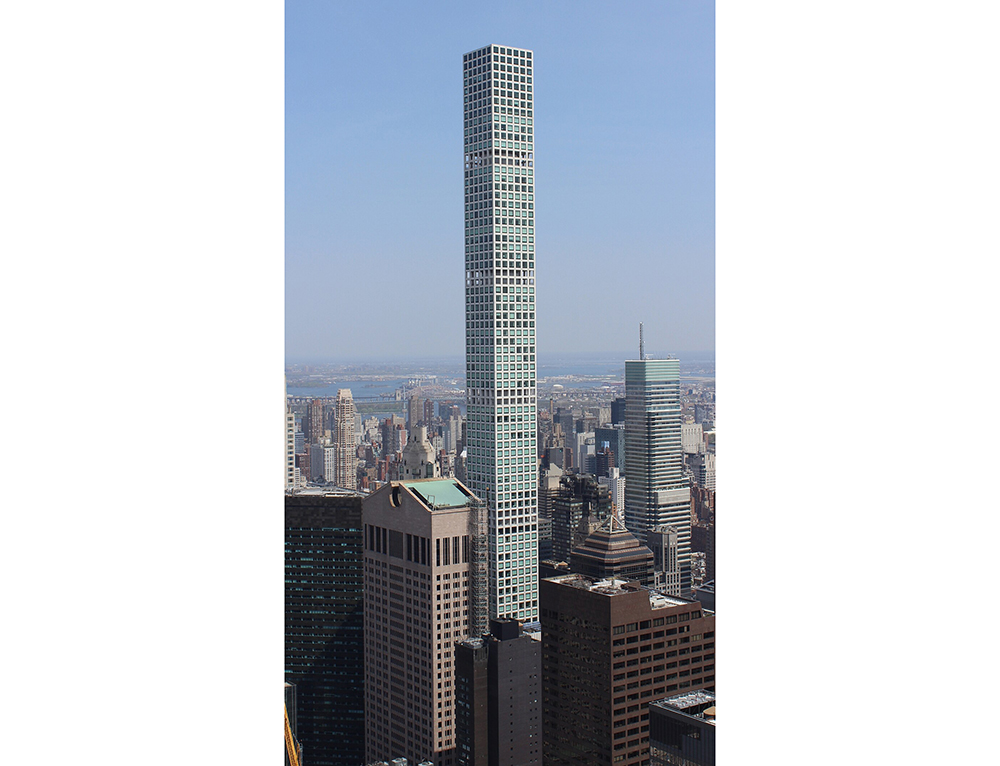
The New York Times report noted that 432 Park Avenue, which rises 1,396 feet above the city, was once heralded as a pinnacle of modern residential design—symbolizing the aspirational heights of the super-rich and the architectural ambitions of the early 21st century. The building opened in 2015 and quickly became one of the most expensive and high-profile residential addresses in the world. But behind the glamour, residents say, lies a web of defects that threaten both the safety and the value of the tower.
According to the complaint, nearly 1,900 individual defects have emerged in the façade alone. The board provided photographs showing visible cracks resembling “vein-like fissures,” as well as patches of missing concrete—some of which have reportedly gone unrepaired for years. The condo board alleges that these issues were downplayed or hidden from prospective buyers and even from city officials, in a concerted effort to preserve sales and avoid costly repairs.
As reported by The New York Times, the lawsuit seeks over $165 million in damages to account for the cost of repairs, legal fees, and the diminished value of the property and its ultra-luxury units. Residents, many of whom paid tens of millions for their homes in the sky, have expressed growing concern about what they see as deception and neglect.
Terrence Oved, an attorney for the condo board, characterized the case not as a matter of construction missteps, but as a calculated deception driven by financial interests. “This matter extends beyond negligence into an alleged calculated scheme, driven by greed, that eroded trust,” Oved said in a statement cited by The New York Times.
The developers and associated firms have pushed back forcefully. A spokesperson for CIM Group told The New York Times that the company “vehemently denies the allegations” and intends to seek dismissal of the case. A lawyer for SLCE Architects, also named in the lawsuit, similarly denied the claims and indicated plans to challenge the lawsuit’s validity. Other defendants have so far declined to comment.
This legal challenge is the latest in a series of controversies surrounding 432 Park Avenue, which in recent years has faced negative headlines about swaying, creaking, and faulty plumbing—issues that have been quietly simmering beneath its high-sheen exterior. As The New York Times reported previously, several prominent residents, including billionaires and high-profile investors, have grown disillusioned with what they now see as a flawed trophy asset.
432 Park Avenue is part of a trend of so-called “supertall” residential towers—slender skyscrapers that have reshaped the Manhattan skyline. These vertical marvels are often marvels of engineering but have also prompted questions about how speed, design experimentation, and luxury marketing may at times outpace safety, livability, and transparency.
When 432 Park opened its doors in 2015, it was more than a building—it was a global symbol of opulence. Designed by the late star architect Rafael Viñoly, the supertall tower boasted sweeping Central Park views and attracted international elites, celebrities, and oligarchs. Jennifer Lopez and Alex Rodriguez briefly owned a $15.3 million apartment, while Saudi retail tycoon Fawaz Al Hokair reportedly acquired a penthouse. According to the report in The New York Times, the tower was projected to bring in over $3 billion in total value, with many units purchased through anonymous shell companies.
But behind the glittering façade, a much less glamorous truth was taking shape. The latest lawsuit, filed by the building’s condo board in State Supreme Court in Manhattan, follows a 2021 legal action in which residents sought $160 million in damages. That earlier case was sparked by a bombshell New York Times exposé detailing a series of problems: flooding that caused multimillion-dollar damage, elevators repeatedly stuck between floors, noise from trash chutes described as sounding like “garbage bombs,” and structural swaying due to the building’s slim profile.
The new suit, as reported by The New York Times, was built on a meticulous forensic investigation: over seven million documents reviewed and 100 days of depositions conducted. The findings suggest that serious structural issues—most notably, persistent cracking in the building’s concrete façade—were present from the very beginning and that the developers failed to disclose these problems to buyers or the city.
At the center of the new claims is the building’s signature white concrete exterior, which, according to the lawsuit, plays a dual role: aesthetic veneer and structural support. The design called for an extraordinarily strong and stiff concrete mix that could support 96 stories of vertical weight while resisting high winds that batter supertall towers. Andreas Tselebidis, the engineer credited with formulating the concrete mix, reportedly described the project as “the greatest challenge ever requested by a ready-mix producer.” However, according to The New York Times, cracks began appearing during mock-up tests and continued to emerge in vertical support columns throughout the structure after construction.
Notably, the suit alleges that the architectural team at Viñoly’s firm had repeatedly raised concerns about these cracks—concerns that developers allegedly dismissed or minimized. These defects, the condo board claims, have now led to 1,900 specific failures in the building’s envelope, some of which have gone unrepaired for years.
According to the lawsuit, cracks began appearing as early as 2012, well before the building’s grand opening in 2015. A field report dated December 17, 2012, cited by The New York Times, explicitly cautioned, “It is difficult to know the impact of cracking in a fully loaded building. It is imperative that the concrete consultant review these conditions and advise.” The next day, Silvian Marcus of WSP, the structural engineering firm behind the tower—and now a defendant in the case—wrote to developers urging them to “hold the pour” until they had a “valid” white concrete mix.
Yet, as The New York Times reported, the developers proceeded anyway. In January 2013, despite the unresolved concerns about the concrete mix’s integrity, construction forged ahead. The lawsuit states that cracks began to appear immediately—even during the initial pouring phases. By that point, the concrete supplier was allegedly still “experimenting with design mixes,” three months into façade construction, without fully understanding or addressing the root causes of the cracking.
The consequences, the lawsuit alleges, were catastrophic: “thousands upon thousands of cracks” began forming in what was then the tallest residential tower in the world. Efforts to address the defects were fragmented and, according to the suit, insufficient. Four separate consultants were hired, each proposing possible solutions—coatings, patching techniques, and alternative mixes—but many of those recommendations were ultimately ignored due to “potential schedule, cost and aesthetic impacts,” the lawsuit claims.
In April 2016, a consultant’s report documented 1,893 construction defects—over half of which were deemed “life safety items,” as reported by The New York Times. The list included everything from large voids and unfilled cracks to mysterious spalls and other serious structural deficiencies. Thousands more cracks, the suit claims, were simply patched over during construction with no meaningful repair strategy.
The alleged negligence didn’t stop with the engineering failures. The lawsuit further accuses members of the development team of intentionally misrepresenting the extent of the problems to New York City’s Department of Buildings. In New York, architects and engineers are legally obligated to report “immediately hazardous conditions” at construction sites. Yet, The New York Times reported that a spokesperson for the Department of Buildings confirmed that no such notifications were ever submitted for 432 Park Avenue.
Perhaps most damning is the charge that key disclosures made to prospective buyers—and filed with the New York State Attorney General’s office—were deliberately altered. Originally, marketing materials stated that the concrete façade’s density “will prevent water penetration.” That language was revised in 2013 to read that the concrete and “properly sealed windows have been designed to prevent water penetration.” The shift in wording, the lawsuit implies, downplayed the severity and known limitations of the building’s primary structural materials at a time when cracks and leaks were already a known issue.
The New York Times report noted that this latest legal salvo follows a 2021 lawsuit from the building’s condo board seeking $160 million in damages. That earlier suit detailed complaints from residents about flooding, faulty elevators, swaying, and noise disturbances. The current complaint seeks an even larger sum—over $165 million—for what the board describes as long-term, systemic failures that were knowingly concealed.
The now-deceased architect Rafael Viñoly, who designed 432 Park Avenue, had reportedly raised concerns during the design and construction process about the façade’s vulnerabilities. His firm, along with WSP and other key players, are now named in the new legal action.
The revelations continue a troubling trend in the New York luxury real estate market. As The New York Times has highlighted in broader reporting, 432 Park Avenue is not alone. Other “supertall” towers—including 1 Seaport and Brooklyn Tower—have faced allegations of structural issues, poor planning, and financial instability. These buildings, once the pride of a gilded age in urban design, now risk becoming cautionary tales of how speed, profit, and image overtook the foundational values of engineering and transparency.
For residents who bought into the promise of perfection—often paying tens of millions of dollars for the privilege—the current legal battle represents a bitter reckoning. Their investment was not only financial but aspirational. Today, as The New York Times report pointed out, 432 Park Avenue is less a monument to luxury and more a case study in overreach and underdelivery.