



|
Getting your Trinity Audio player ready...
|
By: Hadassa Kalatizadeh
As the Big Apple’s office buildings continue to struggle with vacancies, a disparity has become apparent favoring new buildings that offer amenities.
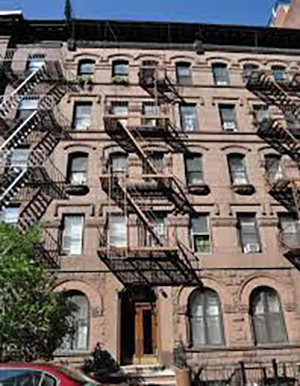
As reported by Crain’s NY, the buildings faring the worst in the current recovery phase are the old, small no-frills buildings, known as Class C. Class A buildings, which are the tall new shiny towers with fancy lobbies and gyms have less vacancies and are recovering nicely. Class B buildings, which are a step lower, older but renovated, somewhat smaller, are faring somewhere in the middle. It’s the Class C buildings suffering the most vacancies, as companies across the board look to downsize and cut costs and as some continue with hybrid work options.
Even in a strong market, these old buildings had a hard time competing. As commercial real estate continues to lag, these Class C buildings now face an existential threat. New York City Mayor Eric Adams has expressed interest in converting these obsolete office buildings into much needed housing. Manhattan office vacancies are still at 20 percent years after the pandemic, and the majority of these vacancies are at the old eye-soar buildings. “I’ve never seen it this bad, and I just don’t see things improving anytime soon,” said David Berley, 84, chairman of Walter & Samuels, who specializes in investing in Class C buildings and whose Manhattan portfolio is loaded with Class C buildings, some of which have vacancy rates as low as 50%. “Buildings have vacancy levels that they have never had before, so converting to residential makes sense,” Berley said. “Residential is so much hotter.”
Since these buildings are already empty and the city is scrambling to add housing to the city, why not take the opportunity to make the conversions? Although the Class C criteria are not formal, there are roughly over 1,000 of these buildings scattered across Manhattan, mostly on side streets. As per Crain’s, there are several hundred of them across Midtown, particularly in the Garment District and to the west of Fifth Avenue. Currently, the block at West 37th Street, is being considered for rezoning, to allow former manufacturing buildings to be converted into apartments. Many of these buildings have turned dark as a result of vacancies, and a lot of their owners have therefore had to default on loans.
A lot of these less attractive buildings are owned by small shell companies, having been acquired decades ago. Many of these have such high debt that any such project would become a great difficulty. Many buildings, however, are owned by savvy investors who could do well with conversions, and who may have opted to upgrade the buildings on their own. Berley’s Walter & Samuels is far from the only firm to specialize in these buildings. Adams & Co. Real Estate, which began in 1920, also purchased some two dozen Class B and Class C buildings in the 1950s, together with partners.
Adams’ executives say its hardly time for the extinction of Class C buildings, which rent out for about $40-per-square-foot. Small tenants, with three or four employees, including specialized accounting firms and boutique architecture firms, still need low priced, modest office space, said Adam’s Principal David Levy. He said that even if these companies were to expand it wouldn’t be a drastic change into a Class B building.
