



|
Getting your Trinity Audio player ready...
|
By: Andrew Carlson
As New York City prepares to mark the somber 24th anniversary of the September 11 terrorist attacks, law enforcement officials are tightening security measures following reports of a potential threat to the city’s most critical arteries: the East River bridges and tunnels linking Manhattan and Queens.
Police Commissioner Jessica Tisch confirmed on Tuesday that the NYPD is actively investigating the threat, which involves the possibility of explosives being placed in or around the city’s transit infrastructure. On Tuesday, the New York Daily News reported that the potential danger, while not yet corroborated, has been deemed serious enough to warrant a surge in police presence across key entry points.
Commissioner Tisch, speaking from One Police Plaza, emphasized the city’s heightened sensitivity to threats around this time of year. The weeks surrounding the anniversary of 9/11, the annual United Nations General Assembly, and the Jewish High Holidays traditionally bring an uptick in intelligence chatter and reported threats.
“Based on threat reporting, which increases this time of year around the anniversary of 9/11, UN General Assembly, and the Jewish High Holidays, we are monitoring threats against critical infrastructure, including bridges and tunnels connecting Queens and Manhattan,” Tisch explained, according to the report in the New York Daily News.
While Tisch did not elaborate on the precise origin of the threat, two sources familiar with the investigation told the paper that investigators are examining possible ties to Iran. They emphasized, however, that further analysis was needed to confirm the credibility of that connection.
The reported threat specifically raised the possibility of explosives being placed within a tunnel or on a bridge. Such a scenario strikes at the heart of New York’s vulnerabilities: its dependence on sprawling, interconnected infrastructure that carries millions of commuters daily.
As the New York Daily News report noted, the East River crossings — which include the Queens-Midtown Tunnel, the Brooklyn, Williamsburg, Manhattan, and Queensboro Bridges, as well as the RFK Triborough Bridge — are among the city’s busiest chokepoints. Any disruption would not only threaten lives but paralyze economic and civic life in New York’s largest boroughs.
The specter of explosives targeting bridges or tunnels immediately evokes the darkest days in the city’s history. Since 2001, law enforcement agencies have treated these sites as among the most coveted targets for terrorist organizations.
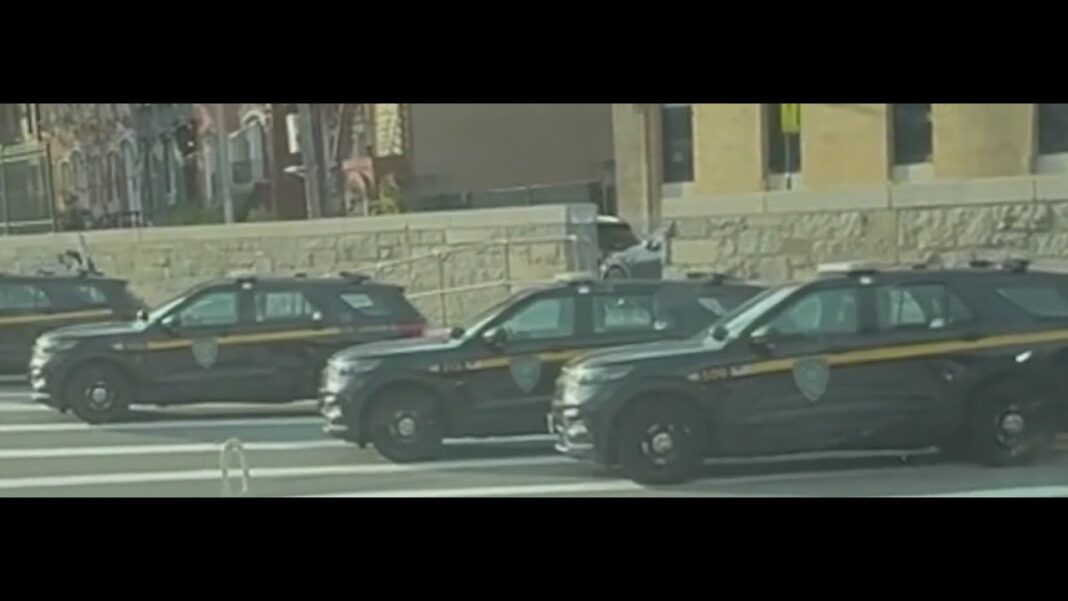
Tisch made clear that, regardless of whether the threat is ultimately substantiated, the city will act decisively to protect its residents. “Out of an abundance of caution we are surging resources,” she said. “And you can expect to see an increase in police presence at critical infrastructure locations.”
According to the information provided in the New York Daily News report, New Yorkers can expect visible patrols of uniformed officers, K9 units trained in explosives detection, random vehicle checkpoints, and expanded surveillance at the city’s major crossings. In addition, counterterrorism officers are being deployed in larger numbers at transit hubs including Penn Station and Grand Central Terminal, which serve as vital feeder systems to the city’s bridges and tunnels.
The Metropolitan Transportation Authority (MTA), which oversees several of the targeted crossings, has joined forces with the NYPD to bolster defenses. MTA Chief Security Officer Michael Kemper confirmed the partnership: “MTA Police are working with the NYPD and other law enforcement partners to ensure presence in appropriate locations, as we continue to monitor the situation.”
Kemper’s remarks echoed what The New York Daily News has long reported about New York’s counterterrorism posture: that interagency cooperation is the bedrock of the city’s resilience against threats. Federal agencies, including the FBI and Department of Homeland Security, are also understood to be monitoring the threat closely.
The potential danger comes as New Yorkers once again brace for the annual remembrance of September 11, 2001. For many residents, the threat of violence directed at the city’s infrastructure is not hypothetical but seared into collective memory.
The New York Daily News, which provided exhaustive coverage in the immediate aftermath of the 2001 attacks and in the decades since, emphasized how anniversaries of that day often trigger spikes in security alerts. Officials remain cautious not to dismiss any threat as unfounded.
“Every September, our city remembers what can happen when vigilance lapses,” a retired NYPD counterterrorism officer told the paper. “We learned the hard way that warnings ignored can have catastrophic consequences. That’s why every piece of intelligence gets scrutinized, especially now.”
The suggestion that Iran could be linked to the threat adds another layer of geopolitical complexity. While officials cautioned against jumping to conclusions, the possibility reflects longstanding tensions between Tehran and Washington — and Tehran’s ties to regional terrorist groups.
The New York Daily News report noted that, in the past, Iranian-linked operatives have been suspected of plotting attacks on U.S. soil, including foiled schemes targeting New York. Still, officials were careful to stress that no definitive connection had been established in the present case.
City officials are walking a fine line between transparency and preventing panic. Tisch’s decision to go public with the information, even while acknowledging that the threat remains under investigation, calls attention to the NYPD’s attempt to reassure New Yorkers that no precaution is being spared.
“This is not a time for complacency,” Tisch said. “It’s a time for vigilance. And we want New Yorkers to know that we are out in force to protect them.”
Her remarks were consistent with the NYPD’s post-9/11 strategy, which The New York Daily News has often highlighted: confronting threats head-on, even at the risk of alarming the public, in order to deter would-be attackers and instill confidence in the city’s security apparatus.
For New Yorkers, the security surge is a familiar ritual. Each September, residents see heavily armed officers patrolling transit hubs, vehicle checkpoints along bridges, and boats patrolling the city’s waterways. Yet the reminder of the city’s enduring vulnerability remains sobering.
“I was driving through the Queens-Midtown Tunnel this morning, and you can’t help but think about it,” one commuter told The New York Daily News. “You just hope the police are on top of it, because these tunnels are our lifeline.”
The looming anniversary of 9/11, coupled with fresh intelligence pointing to possible explosives targeting New York’s infrastructure, has once again tested the city’s resilience. While investigators continue to assess the credibility of the threat, officials have made it clear that no risks will be taken.
As The New York Daily News reported, Commissioner Tisch’s message was unambiguous: New Yorkers will see an increased police presence, hear more sirens, and experience tighter security checks in the coming days. It is the city’s way of remembering its past, confronting its present, and protecting its future.
