



|
Getting your Trinity Audio player ready...
|
By: Carl Schwartzbaum
As the specter of drone-based threats grows more complex in the post-9/11 security landscape, the NYPD is preparing to deploy an advanced new technology that may transform how the city defends itself from aerial intrusions. According to a report on Saturday in The New York Post, Deputy Mayor of Public Safety Kaz Daughtry has revealed that the city is in serious talks with Maryland-based American Robotics to purchase a tactical drone interception system designed to detect, track, and disable hostile unmanned aircraft midflight.
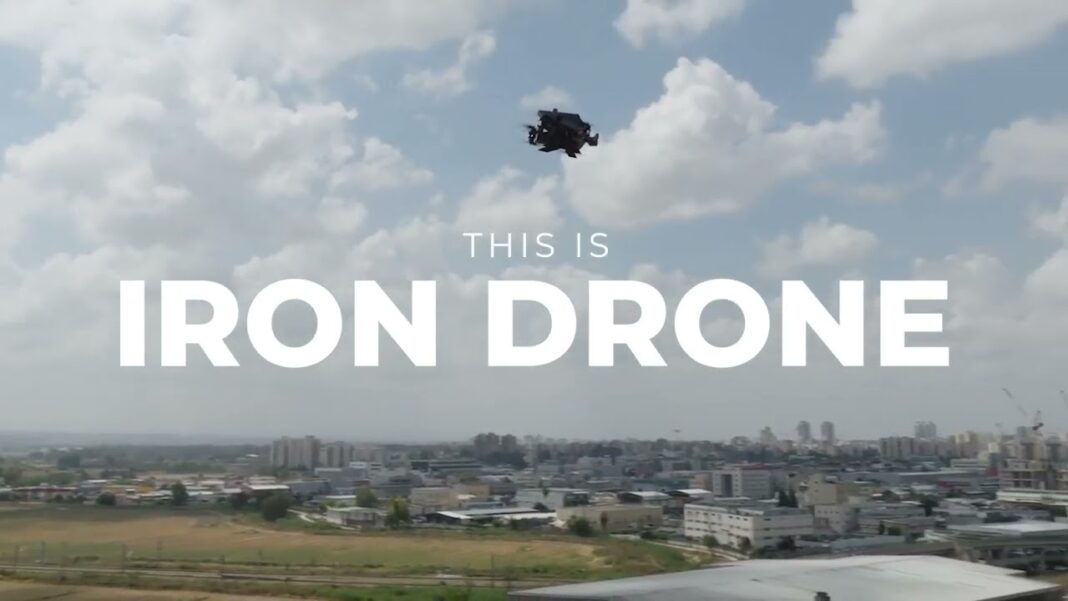
The initiative, still awaiting federal clearance, would mark a significant milestone in municipal counter-drone efforts in the United States. The portable system under consideration — dubbed the Iron Drone Raider — functions by deploying lightweight interceptor drones that pursue and ensnare rogue devices with a high-tensile mesh net. Once ensnared, a parachute deploys to safely guide the drone to the ground, minimizing risk to civilians and property.
“We could station it anywhere throughout the city,” Daughtry told The New York Post, noting its portability and ease of deployment at major events such as parades or protests. “The system has a counter-drone detection mechanism. It locates the rogue drone, launches an interceptor, wraps it in a net, and safely lands it,” he explained.
Priced under $200,000 per unit, the Iron Drone Raider utilizes ground radar to detect incoming threats and allows trained personnel to engage suspect drones with the press of a button, American Robotics CEO Eric Brock told The Post. Although Brock declined to name current clients due to security concerns, he confirmed ongoing collaborations in the Middle East, including with the United Arab Emirates.
As The New York Post reported, similar technologies — albeit without the parachute — have been deployed by Ukrainian forces to combat Russian reconnaissance drones on the battlefield, showcasing the system’s real-world efficacy.
Yet, for now, the NYPD remains constrained by federal law. Only national agencies currently hold the legal authority to physically neutralize airborne drones. Daughtry, alongside NYPD Chief of Department John Chell, has been actively lobbying the Trump administration to alter that framework. “I’m hearing that the administration is open to it,” Daughtry told The Post, signaling cautious optimism about possible regulatory changes that would empower cities to better safeguard their own airspace.
Daughtry, who oversees New York City’s fleet of 150 NYPD drones, has emerged as a leading advocate for integrating drone technology into routine law enforcement operations. Under his guidance — and with the support of Mayor Eric Adams and Police Commissioner Jessica Tisch — drones have rapidly become a fixture in the city’s public safety infrastructure.
Earlier this year, NYPD drones were deployed to monitor anti-Trump demonstrations, helping law enforcement anticipate crowd movements and allocate personnel strategically. “There were drones all over the place,” Daughtry said, referring to the Skydio X10s that hovered over the protests. These drones, which can climb to altitudes of 800 feet (though NYPD keeps them at 400 to avoid air traffic), have proven essential for both surveillance and deterrence. “When people are committing acts like vandalism, or they’re about to do something, we can bring the drone down real close so they know that we’re watching them,” he added.
The department’s drone strategy is currently in its third and final phase, Daughtry revealed. The program began by positioning drones on the rooftops of police precincts in high-crime areas and evolved to using drones as first responders to 911 calls. The current phase will embed drones in patrol vehicles, allowing officers to deploy aerial surveillance immediately — without waiting for a helicopter from Floyd Bennett Field. “They can just open their trunk, put the drone up, turn it on and they can run. The drone will launch itself,” Daughtry told The New York Post.
While NYPD’s vision is groundbreaking, it is also part of a larger trend across the city. The FDNY now uses drones to monitor beaches for struggling swimmers, and the Office of Emergency Management employs them to create real-time maps during disasters. Together, these initiatives signify a quiet but powerful technological shift in how New York approaches public safety.
Still, the evolution has not been without resistance. When Daughtry first proposed drone integration in 2022, even some within the NYPD were skeptical. “They told me that we would never be able to have drones in the city,” he recalled. “Guess what? Now we’re using them all over the place.”
As New York continues to brace for evolving security threats — from lone-wolf actors to technologically advanced adversaries — The New York Post report noted that the city’s investment in counter-drone technology may become not just innovative, but imperative. With systems like the Iron Drone Raider potentially coming online and a culture of drone readiness taking hold, the NYPD appears determined to ensure the Big Apple’s skies are as protected as its streets.
