



|
Getting your Trinity Audio player ready...
|
By: Fern Sidman
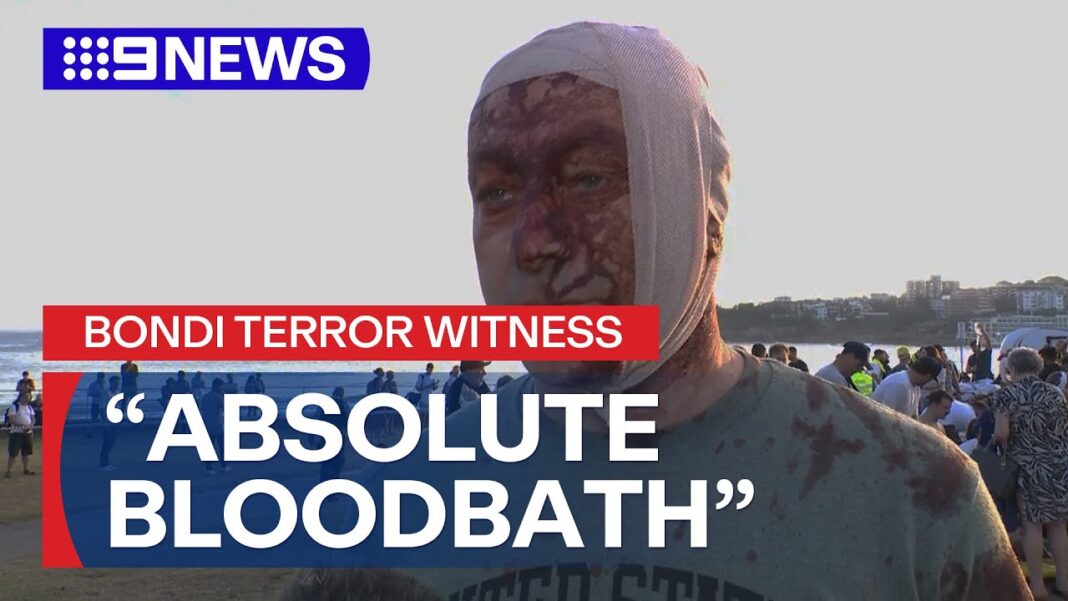
As dusk settled gently over the East River on Sunday and the lights of the Upper East Side flickered on, members of New York City’s Jewish community gathered not in celebration, but in solemn remembrance. Candles were lit, prayers were whispered, and tears were shed during a vigil honoring the 15 people murdered in a mass shooting at a Chanukah menorah-lighting ceremony on Sydney’s Bondi Beach—an attack that has reverberated painfully across continents and communities.
As reported on Sunday by The New York Daily News, approximately 100 people assembled Sunday evening along the Carl Schurz Park Promenade at East 86th Street and East End Avenue. What had originally been planned as a joyful first-night Chanukah celebration was swiftly transformed into a vigil once news broke of the massacre in Australia, where Jewish families had gathered to usher in the Festival of Lights and instead were met with terror and bloodshed.
For many in attendance, the tragedy was not an abstract headline from afar, but an intensely personal wound.
“We’re all reeling. Our hearts are shattered,” said Rabbi Ben Krasniaski, director of Chabad of the Upper East Side, addressing the crowd in remarks quoted by The New York Daily News. “It’s an attack on all of us. We take this very personally.”
According to Australian authorities, 42 people were injured in addition to the 15 killed when gunfire erupted at the iconic Sydney beach during the public menorah lighting. The victims, officials confirmed, included a rabbi with ties to Brooklyn’s Crown Heights, a Holocaust survivor, and a 12-year-old girl—lives extinguished at what was meant to be a moment of communal warmth and religious pride.
“They were attacked because they were Jewish and cut down in the prime of their life at the first Chanukah gathering in the world,” Rabbi Krasniaski said, his voice resolute yet heavy with grief, as reported by The New York Daily News.
The symbolism of the attack—striking Jews as they celebrated a holiday commemorating survival against oppression—was not lost on those gathered in Manhattan. Chanukah, after all, is a festival rooted in defiance: the refusal to abandon faith, identity, or hope even when confronted by overwhelming force.
That historical resonance shaped the tone of the vigil. Alongside sorrow ran a current of unmistakable determination.
“If our enemies think that we are going to cower and we are going to cancel our public menorah lightings, they have no idea who they started up with,” Rabbi Krasniaski declared, according to the report in The New York Daily News. “They have no idea what the Jewish people are.”
He framed the response to the violence not as retreat, but as escalation—of light, kindness, and visibility. “This will only create an avalanche of light and wholesomeness and kindness and goodness that will overwhelm the darkness,” he said. “It hits home very strongly.”
For Krasniaski, the tragedy struck with particular force. His son-in-law is from Sydney, and his family was present at Bondi Beach during the attack. “So it’s very personal,” he acknowledged quietly.
That sense of personal connection was echoed throughout the crowd, many of whom spoke of relatives, friends, or colleagues living in Australia—or of a shared emotional bond forged through Jewish identity itself. As The New York Daily News report observed, the vigil was as much about collective mourning as it was about reaffirming communal solidarity.
Toward the conclusion of the vigil, a single candle was lit on a large menorah, its flame trembling slightly in the winter air. The act was both restrained and profound: a quiet assertion that even in mourning, Jewish ritual endures.
Donuts and latkes—traditional Chanukah foods fried in oil, symbolizing the miracle of light lasting beyond expectation—were passed among attendees. The juxtaposition of these familiar comforts with the raw grief of the occasion underscored the complexity of the moment: sorrow intertwined with continuity, anguish balanced by resolve.
Anthony Bennett, a 55-year-old marketing consultant from the Upper East Side, stood in the crowd eating a latke with his son. He said they had come not for the food or even the ceremony, but to make a statement.
“We came because of what happened in Australia,” Bennett told The New York Daily News. “The rabbi sent out an email saying, ‘You know, you can hide under your covers, or you can show you’re proud in being Jewish.’ We wanted to come out. It wasn’t for the latkes.”
His words captured a sentiment repeated throughout the evening: visibility as resistance, presence as protest against fear.
Among the most harrowing accounts shared at the vigil came from Rabbi Menachem Creditor of UJA, whose organization co-hosted the gathering. Creditor revealed that his brother-in-law, Arsen Ostrovsky, was among those injured in the Sydney attack.
“He is one of the leaders of the Australian Jewish community,” Creditor said, as reported by The New York Daily News. “He just moved there two weeks ago with his family—my sister and their two daughters—from Tel Aviv.”
The family had gone to Bondi Beach to celebrate Chanukah with what Creditor described as a large, joyous gathering for families. The violence erupted without warning.
“He took a step away from them and heard what he thought were balloons bursting,” Creditor recounted. “He realized it was gunshots, and he stood up to look for his family and was shot in the back of his head.”
By what Creditor described as a miracle, the bullet grazed Ostrovsky’s skull rather than killing him. He remains hospitalized but is expected to recover. “Thank God he’s recovering,” Creditor said.
The story drew gasps and murmurs from the crowd—an intimate illustration of how narrowly life and death can be separated in moments of terror, and how many families are now left grappling with trauma that will not easily fade.
As The New York Daily News has reported, the Bondi Beach massacre has intensified anxieties within Jewish communities far beyond Australia, particularly in New York City, which is home to the largest Jewish population outside Israel.
That concern was voiced plainly by Shmuel Kramer, a 32-year-old attendee who used the vigil as an opportunity to call on New York’s political leadership—especially as a new mayoral administration prepares to take office.
“As a new administration takes office, Jewish Americans are watching closely, especially Jewish New Yorkers,” Kramer said, according to The New York Daily News report. “We expect real protection, real accountability, and zero tolerance for rhetoric that fuels hate.”
His remarks reflected a broader unease about the normalization of antisemitic language and imagery in public discourse, and the fear that such rhetoric can metastasize into real-world violence.
“We will stand openly and proud and without fear,” Kramer added, echoing the defiant tone that permeated the vigil.
Like many speakers that evening, Kramer situated the present moment within the long arc of Jewish history—a narrative marked by repeated attempts at erasure, and repeated survival.
“History has already tested us,” he said. “Hitler didn’t erase us. Stalin didn’t silence us, and Hamas won’t break us. This is the real story of Chanukah we’re living now: a people who refuse to disappear or hide.”
That invocation of historical endurance resonated deeply with attendees, particularly in light of reports that one of the victims in Sydney was a Holocaust survivor—a stark reminder that even those who outlived the twentieth century’s greatest horrors are not immune to hatred in the twenty-first.
As The New York Daily News report noted, the presence of such victims among the dead has amplified the sense of moral urgency surrounding the attack, transforming it from a singular tragedy into a symbol of an alarming global trend.
The Carl Schurz Park gathering was modest in size, but its significance extended far beyond the promenade where it took place. In cities around the world, Jewish communities are grappling with similar questions: how to remain visible without becoming vulnerable, how to mourn without surrendering joy, and how to demand protection without retreating into fear.
In New York, those questions carry particular weight. The city’s Jewish population is vast and diverse, its synagogues and schools deeply woven into the urban fabric. As The New York Daily News reported, increased security measures have already been implemented at Jewish institutions across the five boroughs in response to the Sydney attack and other recent incidents.
Yet for those gathered Sunday night, the answer was not found solely in police presence or political assurances. It was found in the simple, ancient act of lighting a candle.
As one flame flickered against the darkness along the East River, it illuminated not only faces etched with grief, but a collective resolve that refuses to be extinguished. The vigil was, in many ways, an embodiment of Chanukah’s enduring message: that even a small light, when protected and shared, can defy overwhelming darkness.