



|
Getting your Trinity Audio player ready...
|
NYC’s Casino Race: High-Stakes Bids, Local Pushback, and Uncertain Odds
By: Russ Spencer
As the race for New York City’s coveted casino licenses intensifies, eight high-profile development proposals are vying for the chance to reshape the gambling landscape of America’s largest metropolitan region. Each proposal, submitted in recent days for state review, promises an infusion of billions in investment, the creation of thousands of jobs, and a boost in tax revenue for New York State’s treasury. Yet, as the Associated Press (AP) reported on Thursday, the path to securing one of the three available licenses is proving far more complex than mere financial projections and glossy renderings suggest.
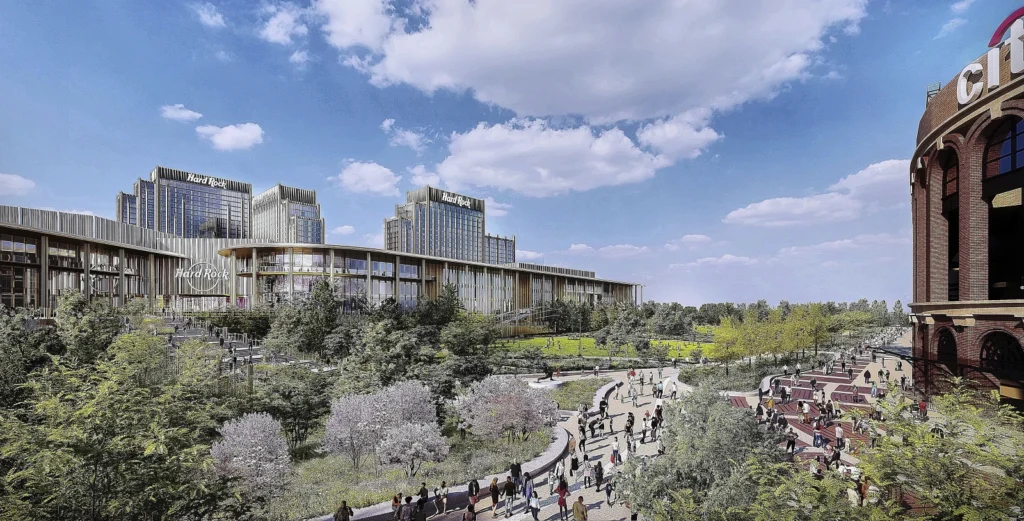
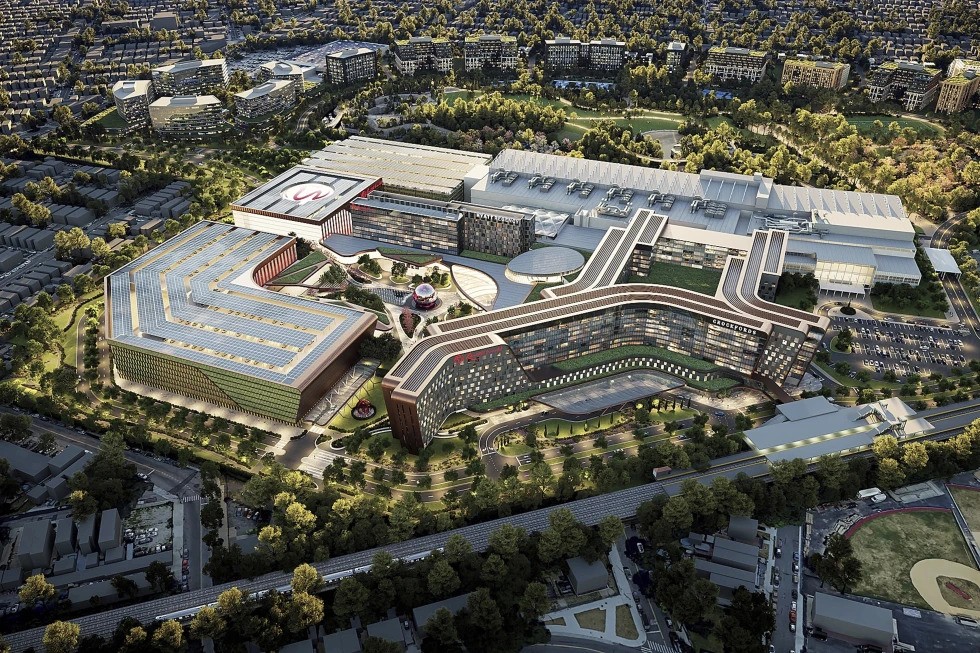
Among the aspirants are marquee projects including a Caesars Palace in Times Square, a sprawling casino-resort adjacent to Citi Field in Queens, and a Hard Rock-branded complex on Coney Island’s iconic boardwalk. However, one contender — Bally’s proposed casino on a Bronx golf course once operated by the Trump Organization — has already encountered a formidable roadblock, possibly eliminating it from the race before formal bidding even concludes.
As the AP report noted, Bally’s Corporation acquired the former Trump Golf Links at Ferry Point in 2023 with high hopes of transforming the property into a $4 billion casino resort, complete with a 500-room hotel and a 2,000-seat event center. The agreement included a provision to pay President Donald Trump’s company an additional $115 million should the casino license be secured — a detail that attracted widespread attention though it was not cited among the official objections raised by city lawmakers.

Earlier this week, the New York City Council dealt a significant blow to Bally’s aspirations, denying the necessary rezoning change amid mounting concerns from local residents. According to the AP report, council members, both Democratic and Republican, voiced skepticism about the environmental impact of the project and its potential disruption to the surrounding Bronx neighborhood.
In the wake of the council’s decision, Bally’s representatives remained silent on their future plans for the site. While some industry observers speculated that Bally’s might revise its proposal or seek alternative locations, the AP report emphasized the significant setback this poses for the company’s downstate ambitions.
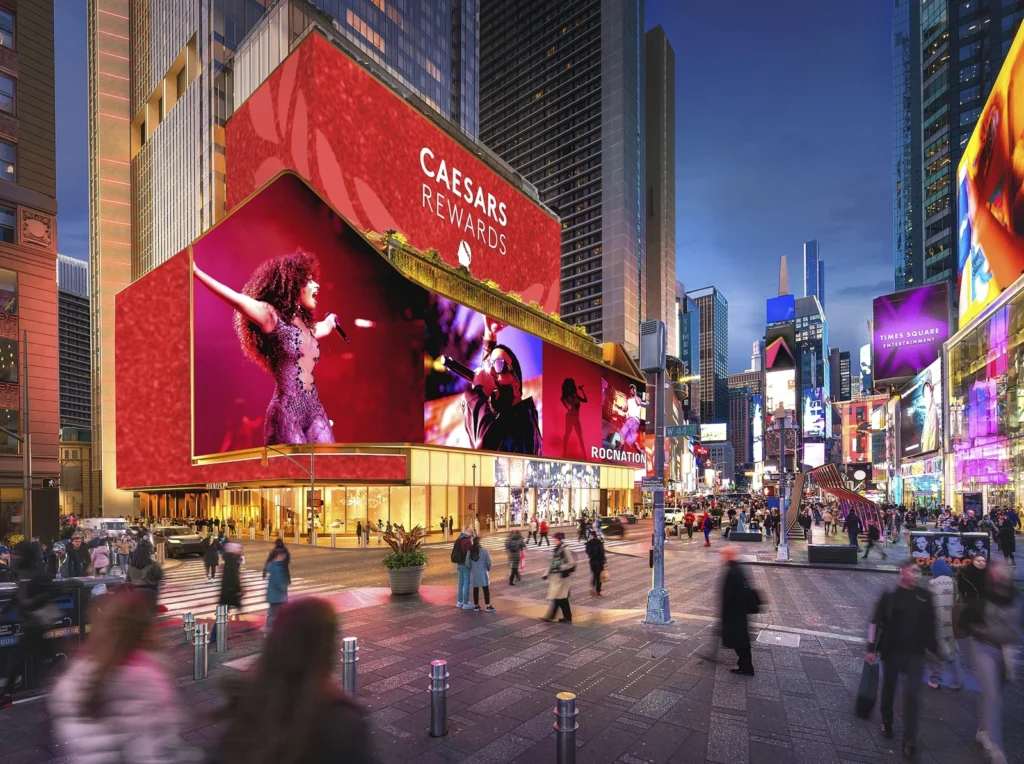
Of all the proposals under consideration, none has ignited as fierce a public debate as the planned Caesars Palace in Times Square. Positioned in the heart of Manhattan’s entertainment district, the $5.4 billion proposal has pitted prominent industry players, labor unions, and community organizations against each other in a battle for public opinion.
The Broadway League — a powerful trade group representing the theater industry — stands firmly opposed to the Times Square casino. The League argues that a casino could siphon off tourists from Broadway theaters, threatening the economic viability of a sector still recovering from the devastating impact of the COVID-19 pandemic.
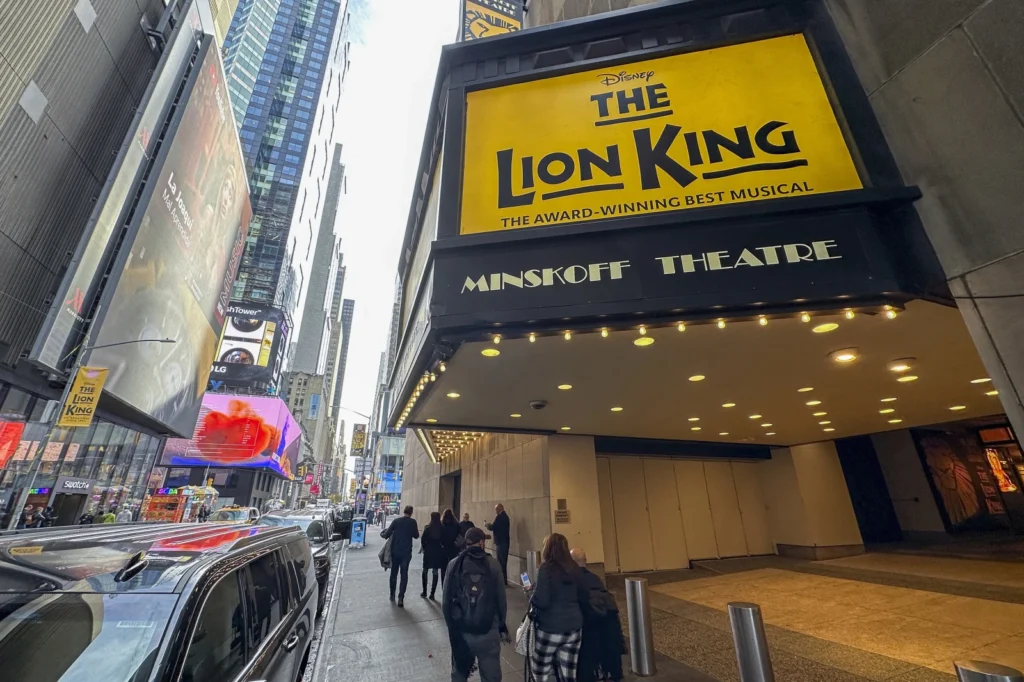
In response, the project’s developers have gone on a public relations offensive. The AP reported that the developers have promised to renovate an existing skyscraper housing the Minskoff Theatre — home to Broadway’s long-running hit The Lion King — arguing that the casino would, in fact, invigorate the theater district by attracting new visitors. Moreover, they’ve enlisted rapper and entrepreneur Jay-Z’s Roc Nation to curate entertainment offerings at the venue, aiming to broaden its appeal.
Adding further intrigue to the proposal, the developers announced a $250 million community investment plan. Highlights include a comprehensive public safety strategy developed by former NYPD Commissioner Bill Bratton and a proposed multimillion-dollar civil rights museum — a commitment that helped secure the endorsement of civil rights activist Reverend Al Sharpton.
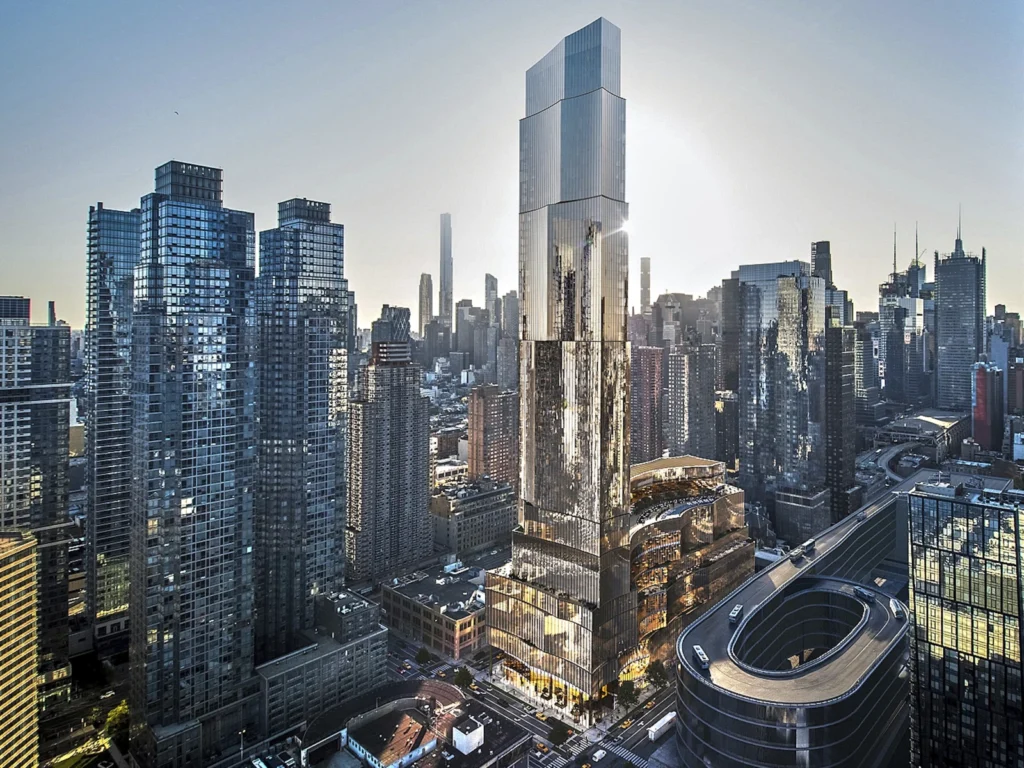
Nevertheless, as the AP reported, skepticism lingers among community groups, with both supporters and opponents staging dueling rallies in Times Square. Even with high-profile endorsements, the project faces an uphill battle to win over local advisory committees and skeptical city lawmakers.
While Times Square dominates headlines, the AP report reminded readers that two other Manhattan-based casino proposals are also on the table — one on the West Side near the Jacob K. Javits Convention Center and another on the East Side. Both sites offer strategic proximity to transportation hubs and major event venues, which could be attractive to business travelers and tourists.

However, as casino industry analysts told the AP, both proposals face substantial challenges. The primary concern stems from potential opposition by residents wary of increased congestion, rising real estate prices, and the cultural impact of introducing large-scale gambling operations into residential areas. These local dynamics could prove decisive as community advisory committees begin their formal reviews.
Across the East River, Brooklyn’s Coney Island has become another focal point of the city’s casino debate. Developers of “The Coney” have proposed a $3 billion resort complex that would include a casino, hotel, 2,400-seat arena, and convention center. However, the plan has stirred significant opposition from community leaders and local organizations.
Opponents, including organizers of the famed Mermaid Parade, argue that the casino would encroach upon the boardwalk’s historic amusement district and potentially restrict access to public beaches. The AP report highlighted concerns that the project could alter the unique character of Coney Island, a neighborhood known for its quirky attractions and community-driven events.
Developers, for their part, have countered that the project will be constructed entirely on privately owned land and will not impact adjacent public areas, including the amusement rides. The developers have maintained a firm stance, insisting the casino would deliver much-needed economic revitalization without compromising public access or cultural heritage.
While community opposition and local politics present immediate hurdles, the AP report also drew attention to broader questions about market sustainability. With the proliferation of casinos across the northeastern United States — from Connecticut’s Mohegan Sun and Foxwoods to Atlantic City’s long-standing establishments and Pennsylvania’s Wind Creek Casino — some experts question whether New York City’s market can absorb three full-scale casinos without saturating the industry.
Sam Chandan, a professor at NYU’s Stern School of Business, told the AP that while New York City possesses the density and tourist appeal to support casinos, the challenge lies in avoiding market cannibalization. “The question isn’t whether New York City can support casinos, but whether three full-scale properties can achieve their ambitious revenue projections without cannibalizing each other,” Chandan said.
John Holden, a business professor at Indiana University specializing in gambling law, echoed similar sentiments while speaking with the AP. Holden emphasized that location and market positioning would be key factors in determining long-term viability, particularly given the rise of online gambling platforms.
Against this backdrop of fierce competition and community skepticism, some industry consultants have suggested that New York State may ultimately opt for a more conservative strategy — awarding two of the three available licenses to existing racetrack casinos, known as racinos.
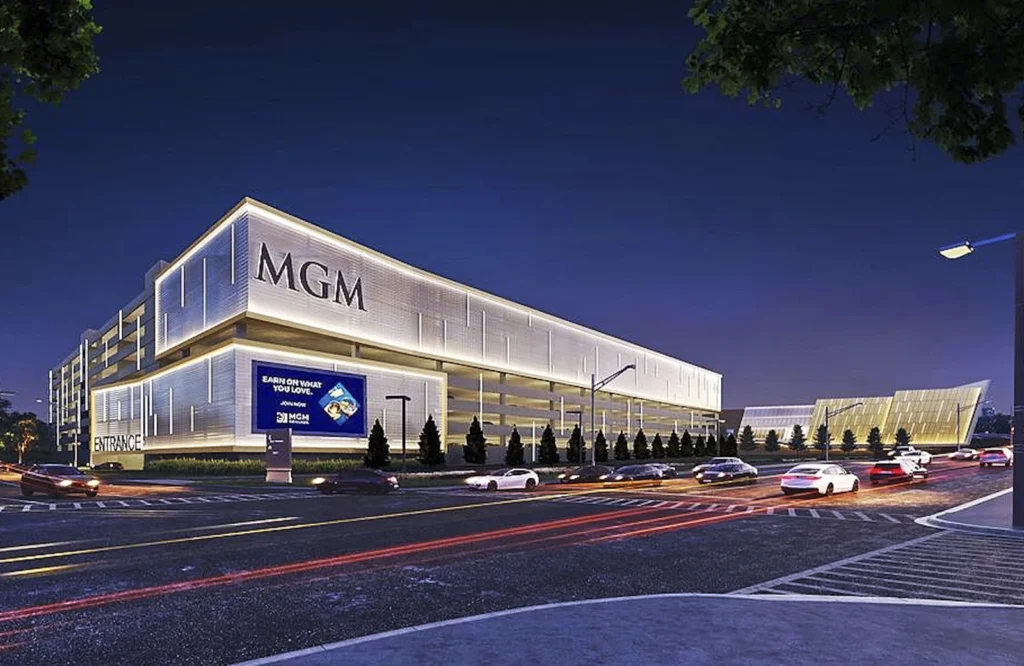
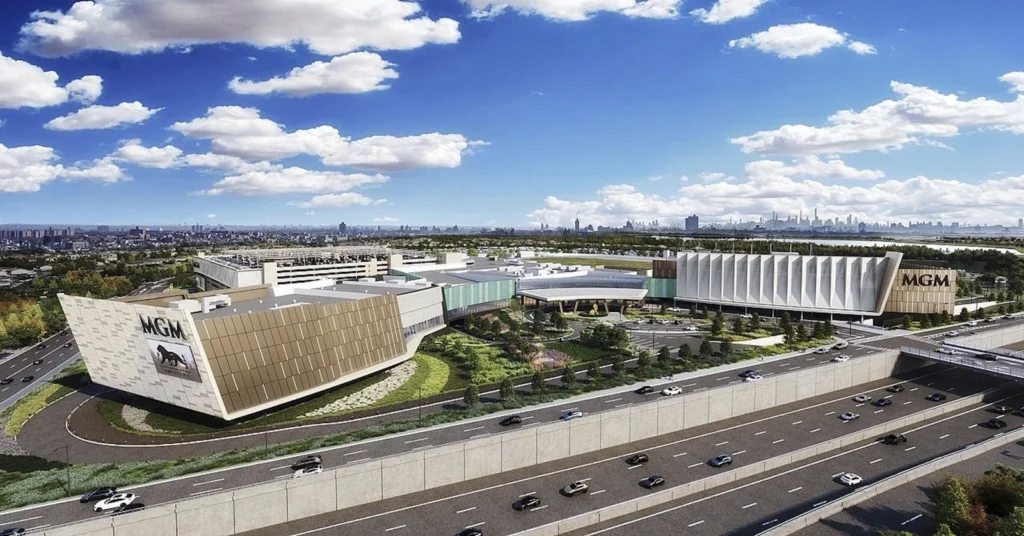
Both MGM Resorts and Resorts World have submitted expansion proposals for their respective racinos in Yonkers and at Aqueduct Racetrack in Queens. MGM’s $2.3 billion plan would enhance its Empire City Casino at Yonkers Raceway, while Resorts World, owned by Malaysia’s Genting Group, has put forward a $5.5 billion proposal to transform its Queens facility.
Alan Woinski, a New Jersey-based gambling consultant, told the AP that these racinos hold a significant advantage because of their established infrastructure and track record. Unlike new casino projects, which could take years to build, racino expansions could begin within months — allowing the state to reap financial benefits much sooner.
New York State’s Gaming Commission intends to award up to three downstate casino licenses by December. However, before any final decisions are made, each proposal must pass through the scrutiny of local community advisory committees — a process designed to ensure that neighborhood voices are heard before state-level approvals.
The competition remains wide open, with billions of dollars at stake and profound implications for New York City’s urban landscape, cultural institutions, and economic future, as per the AP report. Whether the city’s foray into full-scale casino gambling will fulfill the ambitious promises of its backers or succumb to the combined weight of community opposition, political hurdles, and market realities remains an open question.
