



|
Getting your Trinity Audio player ready...
|
By: Hal C. Clarke
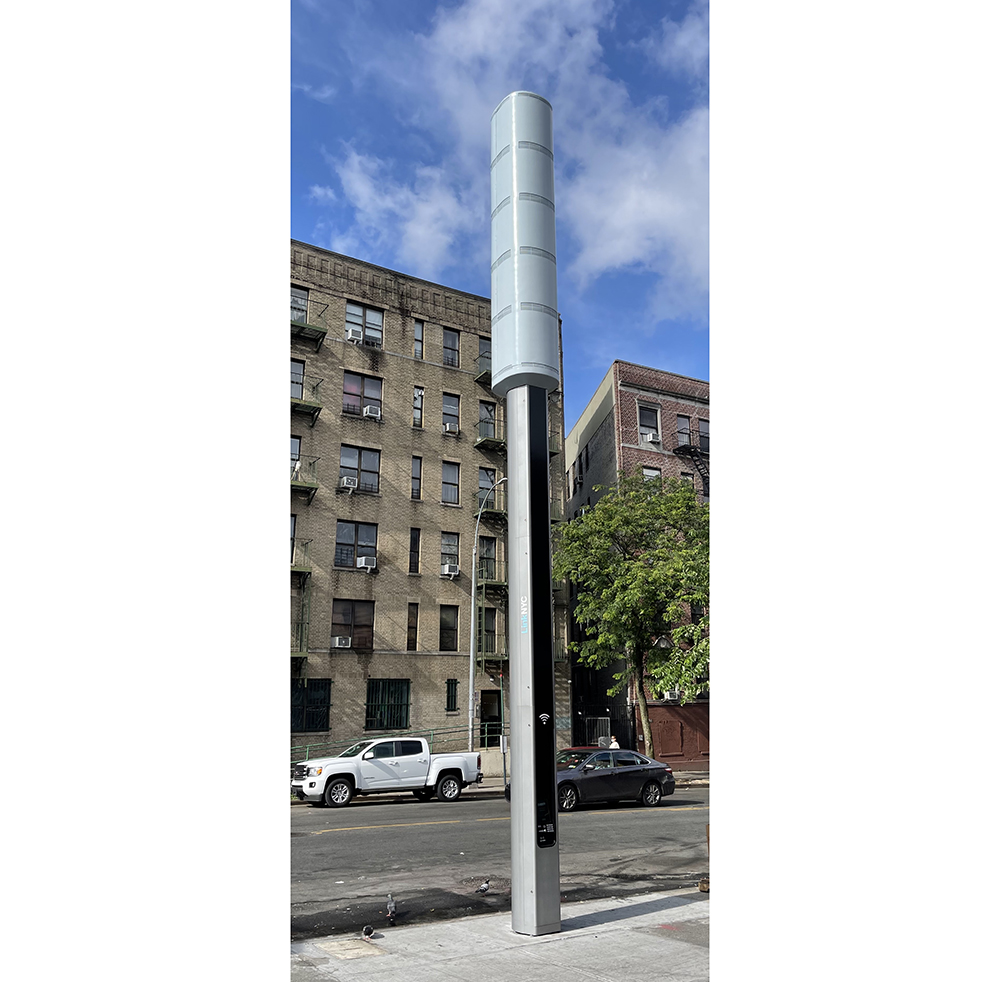
A recent poll conducted in New York City reveals strong support for the installation of 5G cell phone antenna towers, often referred to as “smart poles,” throughout the city. The survey, carried out by Harris X Poll for LinkNYC, aimed to gauge public sentiment regarding these towers and their potential impact on Wi-Fi service and cellular coverage, NY Post reported.
The survey presented participants with a description of the new Link5G smart pole, highlighting its role in enhancing 5G cellular coverage and providing free Wi-Fi connectivity in the areas where these poles are placed. The poll found that 76% of respondents expressed support for having these smart poles in their neighborhoods, while only 12% were opposed, and another 12% were uncertain about their stance.
When asked about the likelihood of using the free Wi-Fi if a Link5G smart pole were to be installed in their neighborhood, approximately 74% of respondents indicated that they would likely utilize the service. Meanwhile, 18% stated they were unlikely to use it, with the remaining respondents unsure.
Participants were also asked to provide their perspective on the potential benefits of the Link5G smart poles for their neighborhood and community. Results showed that 61% of respondents believed the 5G towers would provide needed benefits, while 18% believed they would not add value, and the rest remained undecided.
The city plans to install approximately 2,000 of these 5G poles throughout New York, with some already in place. However, there are vocal opponents, particularly in neighborhoods such as the Upper East Side and Soho. Critics argue that these towers are unattractive and do not fit the character of their historic neighborhoods.
Residents of Carnegie Hill on the Upper East Side are set to join Rep. Jerrold Nadler and other lawmakers to protest the 5G towers and suggest alternative solutions. Alex Bores, an Assembly member, released a report recommending more community input, the use of existing infrastructure for 5G installation, and more aesthetically pleasing designs in line with neighborhood character.
Nadler expressed his concerns about the current 5G tower plan and called for a reevaluation of their impact under the National Historic Preservation Act. The controversy has also reached public figures like former Knicks basketball star John Starks, who objected to the installation of one such structure near his car dealership in Queens.
The poll revealed that the strongest supporters of 5G service were residents of the Bronx and Manhattan, millennials, parents, black men, and Democrats. Conversely, the most significant dissenters came from Staten Island, middle-income residents, and seniors.
Some potential solutions have been proposed to address the concerns of those opposing the 5G towers. For example, a company called Comptek has suggested smaller, more elegant poles that can be attached or connected to lampposts, better blending into the urban landscape than the current 32-foot-high antenna towers.
LinkNYC, a service provided by CityBridge under a franchise agreement with New York, conducted the online survey to assess the mobile wireless and internet needs of New Yorkers and measure awareness and support for Link5G smart poles.
According to the consortium behind the survey, the results indicate widespread support for the 5G towers, with protesters representing a small minority. They argue that the deployment of these smart poles is crucial to improving broadband access and technological leadership in the city.
