



|
Getting your Trinity Audio player ready...
|
By: Jared Evan
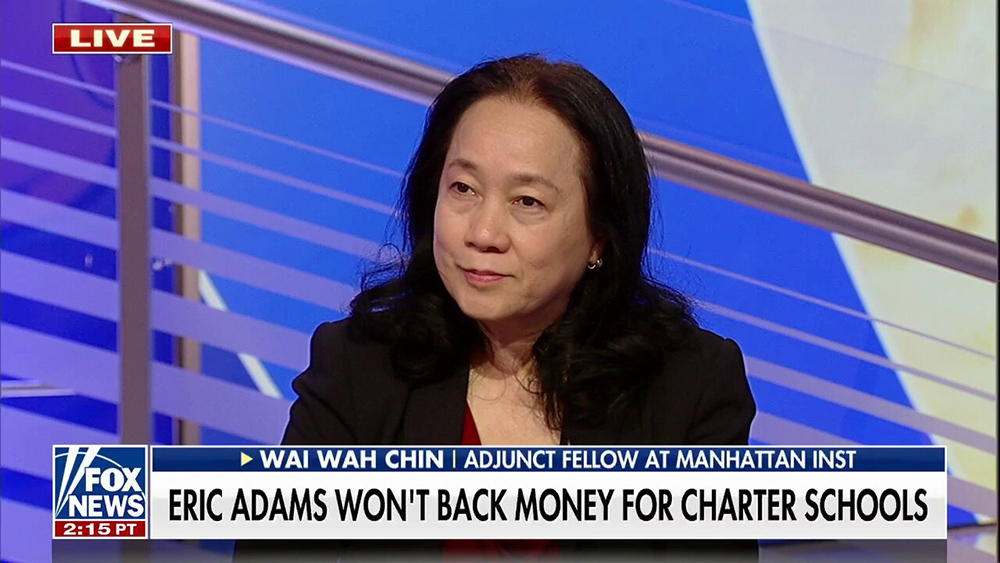
A New York City mother of four played a pivotal role in the movement to end affirmative action in college admissions, ultimately leading to the Supreme Court’s significant decision to abolish race-based acceptance policies, The NY Post reported.
The story shows how organized, sensible, and peaceful activism can change the laws of the land.
While left leaning media has downplayed this story of a regular person who literally helped change a nationwide practice, the actions of Wai Wah Chin are historical and deserve their rightful place in American folklore and history.
The historic ruling in June, championed by conservative activist Edward Blum and his organization Students for Fair Admissions, overturned decades of precedent that had allowed universities to consider race in their admissions decisions.
Edward Blum’s fight against affirmative action, which he contended unfairly discriminated against Asian-American and white students, came to fruition with the help of Wai Wah Chin, a Chinese American mother who had been advocating for equality in city high schools for years. In 2014, Blum initiated two cases against Harvard University and the University of North Carolina, both of which reached the Supreme Court.
Wai Wah Chin’s grassroots activism focused on maintaining the Specialized High School Admissions Test (SHSAT) for New York City’s elite public schools, which was threatened by a 2018 proposal from then-Mayor Bill de Blasio. Despite her efforts being concentrated on high schools, Chin’s connections and efforts enabled her to introduce Blum to 10 plaintiffs who had been rejected by Harvard, constituting 20% of the 50 plaintiffs in the case against the prestigious university.
Chin’s influence extended beyond her immediate involvement. She organized rallies for Students for Fair Admissions and played a pivotal role in the turnout for events related to the legal proceedings, including a rally before the district court trial in Boston in 2018 and another at the Supreme Court during oral arguments in 2022.
Blum acknowledged Chin’s contribution in helping him communicate more effectively with rejected applicants and their families, thus strengthening his lawsuits. Her insights also helped contextualize the affirmative action issue for the justices, revealing that the problems at Harvard were not isolated incidents but part of a broader trend.
Chin’s success was evident in her efforts to preserve New York’s specialized high schools, which relied solely on the SHSAT for admission. Far left extremist former Mayor De Blasio’s proposal to eliminate the test, aiming to enhance diversity, faced strong opposition and was ultimately abandoned. The specialized high schools continued to enroll a significant number of students of Asian descent, despite Asians comprising just 17% of the city’s public-school students.
Edward Blum emphasized that the New York City case held immense significance in the movement to address race and ethnicity in legal contexts, indicating that it had a far-reaching impact on the conversation surrounding affirmative action.
Affirmative action, while well-intentioned, has faced criticism for its ineffectiveness and unintended consequences. One primary argument against it is that it often leads to a form of reverse discrimination. Critics contend that by prioritizing certain racial or ethnic groups in college admissions or employment, affirmative action can disadvantage individuals from other backgrounds, particularly Asian-Americans and white Americans, creating an unfair playing field. This approach contradicts the principle of equal opportunity and merit-based selection.
Moreover, opponents argue that affirmative action doesn’t effectively address the root causes of inequality and underrepresentation. Instead of tackling systemic issues like inadequate educational resources and socioeconomic disparities, it focuses on superficial diversity metrics.
