



|
Getting your Trinity Audio player ready...
|
By: Jeff Gorman
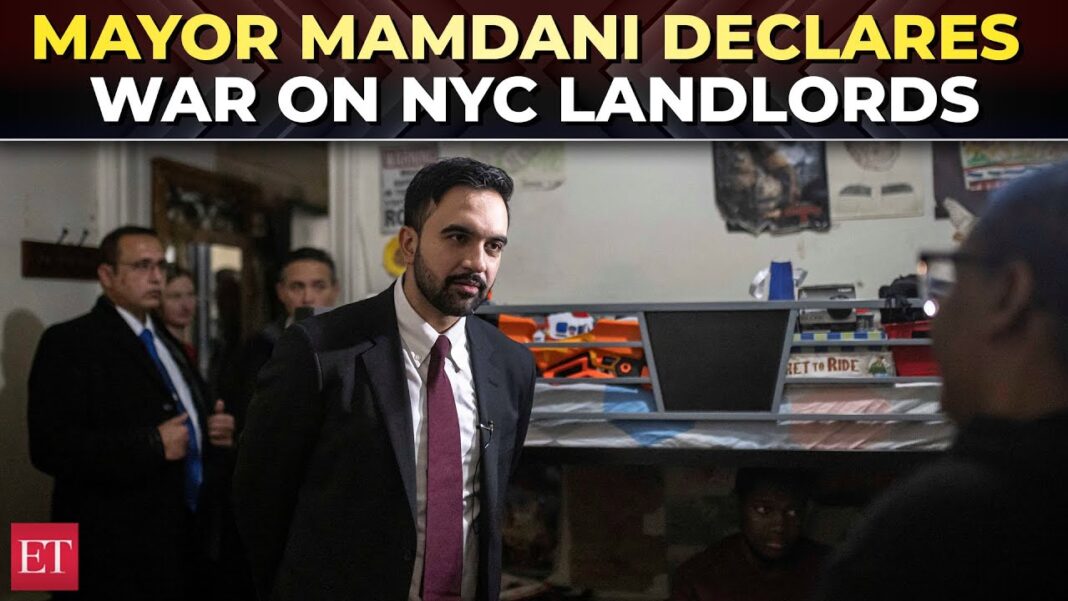
New York City’s housing politics have always thrived on paradox. Few, however, are as stark—or as economically combustible—as the one now unfolding between Mayor Zohran Mamdani’s pledge to impose a “rent freeze” and the sobering reality of rising property-tax assessments. According to an exclusive report that appeared on Monday in The New York Post, homeowners and landlords across the five boroughs are bracing for a financial squeeze that threatens to ripple outward to millions of tenants who never imagined they would pay the price for a promise meant to protect them.
On one side of the ledger stands Mamdani’s signature campaign vow: to halt increases for roughly one million rent-stabilized apartments whose annual adjustments are set by the mayor-appointed Rent Guidelines Board. On the other side stands the City Department of Finance’s newly released preliminary assessment rolls—documents that quietly foreshadow a significant jump in property-tax bills for the fiscal year beginning July 1, 2026.
The collision of these two forces, building owners warn, is not merely awkward policy choreography. It is an economic contradiction.
“You can’t have your cake and eat it, too,” Humberto Lopes, chief executive of HL Dynasty and the Gotham Housing Alliance, told The New York Post. “You can’t say you want to freeze the rent and then raise my property taxes.”
Last week, the Department of Finance unveiled its tentative property-value assessments for Fiscal Year 2027, setting off alarm bells in real-estate circles. The report makes clear that while tax rates themselves are not being increased, the soaring market value of the city’s housing stock will inevitably translate into higher bills.
According to figures highlighted by The New York Post, the numbers are anything but modest:
Class 1 properties—one- to three-family homes—saw assessed values climb by an average of 4.7%.
Staten Island homes led the way with a 5.1% increase.
Class 2 properties, which include co-ops, condos and rental apartment buildings, jumped by an average of 6.2%.
In Brooklyn, a borough that helped deliver Mamdani his electoral base, assessments on co-ops and apartment buildings surged a staggering 11.1%, the highest in the city.
Commercial properties rose by 5.8%, with Bronx commercial real estate spiking 11%.
Office buildings increased 4.2%, while retail buildings climbed 5.9% citywide and 7.6% in Brooklyn.
“These higher assessments mean one thing: higher property-tax bills,” a spokesperson for Homeowners for an Affordable New York told The New York Post. “Mayor Mamdani promised to make the city more affordable; yet under his watch, the city is quietly hiking taxes that property owners will inevitably pass on to tenants.”
For owners of rent-regulated buildings, the arithmetic is particularly unforgiving. Lopes, who owns more than 100 properties, laid out the dilemma in concrete terms for The New York Post. A 20-story rent-regulated building he owns at 446 Senator Street in Bay Ridge is slated to see its tax bill rise from $78,000 to $91,000 under the new assessments.
“Right now, you’re increasing the expenses to my building,” Lopes said. “You want to freeze the rent? Freeze the property taxes or lower them.”
The same squeeze extends to small homeowners. Lopes owns three three-family houses on Coffey Street in Red Hook and estimates their combined taxes could jump from $35,151 to roughly $38,000.
“In Red Hook. Is that crazy?” he asked in remarks relayed by The New York Post.
The implications are straightforward: if rents on regulated units cannot rise to cover escalating costs, owners will be forced to compensate by increasing prices on market-rate apartments—or by cutting back on maintenance and improvements. Either way, tenants lose.
Critics have begun to describe the assessment surge as a stealth mechanism that undermines the mayor’s affordability rhetoric. As the Homeowners for an Affordable New York spokesperson put it to The New York Post, “Rising assessments are an invisible rent hike for every tenant in New York, and ordinary homeowners are being squeezed, too.”
Indeed, even renters in non-regulated apartments—who receive no protection from a rent freeze—may find themselves absorbing the cost indirectly. Landlords facing higher tax bills will inevitably look for revenue wherever the law allows.
The tension highlights a structural flaw in the city’s approach to housing: costs are rising on every front, yet political solutions tend to address only one variable at a time.
Compounding the problem is New York State’s Rent Stabilization Law of 2019, which sharply curtailed landlords’ ability to raise rents on vacant apartments. As The New York Post has reported, small property owners filed a lawsuit last fall arguing that the law makes it economically unfeasible to rent out empty units.
The case of brothers Pashko and Tony Lulgjuraj has become emblematic. They told the court that a vacant apartment in their building is capped at $700 per month, a figure so low that renting it out would produce years of losses.
Their predicament is not isolated. Census Bureau data from 2024, cited by The New York Post, revealed more than 26,000 “zombie units”—rent-regulated apartments sitting vacant because owners cannot afford to lease them under existing caps.
If Mamdani succeeds in imposing a broader rent freeze, landlords argue, that number could rise dramatically, further constricting supply in a city already starved for housing.
Faced with growing criticism, the Mamdani administration has sought to downplay the significance of the assessment report. Spokesperson Dore Pekec insisted to The New York Post that the city has not increased property-tax rates.
“No, the City has not increased property taxes [rates] since January 1st — the last mayor to do so was [Mike] Bloomberg,” Pekec said. “This annual preliminary report is simply an assessment of property values.”
She added that Mamdani intends to push for reforms to what he calls a “broken property-tax system,” arguing that assessed value is only one factor used to calculate final bills and that statutory caps limit extreme increases.
City Hall also noted that the assessments reflect new construction and broader economic changes, not a deliberate policy choice to raise taxes.
Still, Mamdani’s own rhetoric has complicated his defense. During the mayoral campaign, he vowed to shift the tax burden away from “overtaxed” homeowners in the outer boroughs and onto “more expensive homes in richer and whiter neighborhoods”—a promise that resonated with progressive voters but alarmed real-estate stakeholders.
He also pledged to seek changes in state law that would stop treating co-ops and condos like rental properties for tax purposes, an idea aimed at smoothing disparities but requiring Albany’s approval.
For now, however, those reforms remain hypothetical, while assessment notices are very real.
As The New York Post has reminded readers, the Department of Finance will send every owner a Notice of Property Value (NOPV) detailing market and assessed values. Those notices provide an opportunity—albeit a narrow one—to challenge the city’s calculations.
Owners of Class 2, 3 and 4 properties have until March 2 to file an appeal with the city Tax Commission; Class 1 owners have until March 16. The final assessment roll will be certified in May, and tax bills for Fiscal Year 2027 will be generated in June.
The city also administers a range of abatements and exemptions for seniors, veterans, people with disabilities and clergy, and offers payment plans for those unable to pay in a lump sum. But such programs, as The New York Post report observed, provide relief at the margins rather than addressing the structural mismatch between rising costs and frozen rents.
At the heart of the debate lies an uncomfortable truth: housing policy is a zero-sum game. If rents are held artificially low while taxes and maintenance costs climb, someone must absorb the difference.
For Mamdani, the political appeal of a rent freeze is obvious. For landlords and many homeowners, the economic consequences are equally clear.
“Freezing rents while letting property taxes rise is like squeezing a balloon,” one real-estate analyst told The New York Post. “The pressure doesn’t disappear. It just moves somewhere else.”
New York has long wrestled with the tension between protecting tenants and sustaining a viable housing market. The coming fiscal year may test that balance as never before.
If the assessments stand—and if Mamdani pursues his freeze—the city could witness an unintended cascade: deteriorating buildings, shuttered units, and rising rents for the very tenants the policy was meant to help.
As The New York Post has chronicled, the issue is not merely bureaucratic. It is deeply personal, affecting everyone from Staten Island homeowners watching their bills climb to Brooklyn renters who may soon face higher charges despite living in “affordable” neighborhoods.
The mayor’s challenge, therefore, is not simply to deliver on a campaign slogan but to reconcile competing realities. Without meaningful tax reform—or new subsidies to offset costs—the promise of a rent freeze may prove to be less a shield for tenants than a spark for higher prices across the city.
In New York, there is no such thing as a free lunch. And, increasingly, no such thing as a free rent.