



|
Getting your Trinity Audio player ready...
|
By: Marty Raminoff
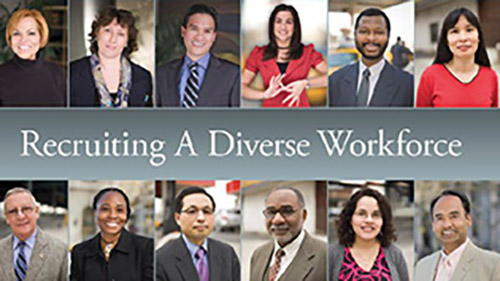
New York State has more non-whites than ever in its professional workforce, as reported by Crain’s NY. Federal data from the Equal Employment Opportunity Commission through 2021 shows that New York state’s professional class of workers have a lower percentage of whites than previously. Gauging the different rungs of professionals, including the highest levels, the data found that the percentage of non-white employees ticked up by about 4 percent between the years 2017 and 2021.
The Federal commission receives employee demographics annually from companies that have more than 100 staffers, as those private firms are required to report the race, ethnicity, sex and job category of their workforce through the submission of a form each year. The data showed that in 2021, professionals who reported being African American, Hispanic, Asian, American Indian, Alaska Native, Native Hawaiian or Other Pacific Islander or two more races accounted for 38.7 percent of the work force in NYS. In 2017, that reported number of non-white professionals was at 35.3 percent, with the increase over the four-year period seeming mostly steady.
The general definition of ‘professional workers’ for this study is employees who typically need a bachelor’s degree for their jobs. Examples include: lawyers, accountants, nurses, teachers, and business or financial services workers. To help put the data in perspective, it is useful to note that approximately 45 percent of the New York state’s population is non-white, as per the U.S. Census Bureau.
As per Crain’s, there was a lower percentage overall of non-white managers and executives revealed in the data, but there was a more notable increase in non-white in these positions between 2020 and 2021 than in the previous three years. As per Crain’s, this may be a result of the diversity initiatives that many large companies rolled out in 2020, at which time non-white employees who had been at their jobs for many years received promotions. The diversity, equity, and inclusion (DEI) initiatives were in a big way pushed forward by the George Floyd incident and the ensuing calls for social justice.
Non-whites accounted for 28.9 percent of first or mid-level officials and managers in 2017, and the percentage of diverse workers in this category rose to 32.4% in 2021, as per the federal data. Executives and senior-level officials, which is just two rungs below a CEO, included 21.5 percent non-white employees in 2021, up from making up 17.08 percent of the category in 2017, with a slightly steeper 1.8 percent climb between the years 2020 and 2021.
“Companies need to commit to addressing bias and dismantling bias within their institutions, and really taking a hard look at what dynamics are at play that create barriers to advancement,” said Lanaya Irvin, president at nonprofit Center for Talent Innovation. “I do think that this has been a call to action, and the corporate community and CEOs have been visible and vocal and making statements denouncing racism and standing up to injustice,” she said, referencing the 2020 initiatives. “But I think the hard work happens when you do the work internally so that you have the right to make those statements.”
