



|
Getting your Trinity Audio player ready...
|
By: Meyer Wolfsheim
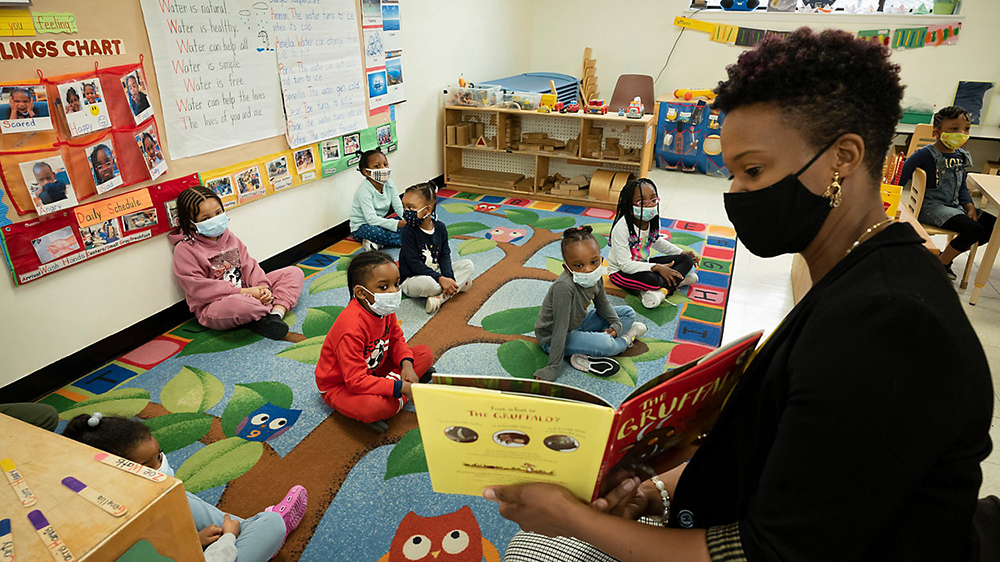
New York’s heavy-handed approach to regulating child care has landed the Empire State near the bottom of the national rankings, according to a new analysis that argues Albany’s rules are driving up costs for families without improving safety or quality. As the New York Post reported, a study by the right-leaning Archbridge Institute ranked New York as the second-worst state in the country for burdensome and expensive child care center regulations, trailing only Vermont.
The report urges state leaders to rethink their strategy. Instead of expanding taxpayer-funded programs championed by Democratic Gov. Kathy Hochul and New York City Mayor Zohran Mamdani, Archbridge argues the state should slash red tape and ease regulatory barriers that make child care harder — and more expensive — to provide. As the New York Post reported, the group says excessive regulation ultimately hurts parents by limiting competition and raising prices.
Archbridge’s “child care freedom” index evaluates states on a range of rules governing center-based care, including child-to-staff ratios, maximum group sizes, required annual training hours, and educational requirements for directors and lead teachers. States that impose higher educational thresholds and tighter supervision rules scored worse in the rankings, the Post noted.
New York earned a dismal score of 1.87, placing it well behind other large states. Florida ranked fifth, Texas ninth, and California came in at No. 13. One major factor dragging New York down was its strict child-to-staff ratios — eight children per staff member for 4-year-olds and nine-to-one for 5-year-olds. By comparison, Florida allows ratios of 15-to-1 for 3-year-olds, 20-to-1 for 4-year-olds, and 25-to-1 for 5-year-olds, according to the analysis cited by the New York Post.
Edward Timmons, vice president of policy at Archbridge, said New York should abandon what he called “fiscally reckless” plans to offer free child care and instead focus on loosening regulations to boost supply and competition. As the Post reported, Timmons argued that allowing staff to supervise more children and increasing maximum group sizes would expand options for parents without sacrificing safety. Research, he said, shows these rules don’t meaningfully improve care quality but are closely tied to higher costs.
Not everyone agrees. Bronx Assemblyman Michael Benedetto, who chairs the Assembly’s education committee, cautioned that regulations exist for a reason, especially when caring for very young children. “It’s a smart thing to look at regulations,” Benedetto told the Post, “but we want our children to be safe and we want to educate them,” calling it a delicate balancing act.
The stakes are high. As the New York Post reported, child care already costs many New York City families more than $20,000 a year, among the highest rates in the nation. Meanwhile, Hochul has unveiled a $4.5 billion, multi-year plan to phase in universal child care statewide. Her proposal includes a “2-Care” program for all 2-year-olds in the city and an expansion of pre-K and early childhood programs elsewhere, eventually serving 100,000 additional children.
