



By: Hellen Zaboulani
Luxury designers are expecting a slowdown in demand.
As reported by the Wall Street Journal, Michael Kors, Coach and Ralph Lauren continued to see healthy sales in the recent quarter. Still, they are predicting a downtrend in the U.S. and China in the near future. The lowered expectations relate to inflation, the strong dollar, and China’s continued strict COVID-19 restrictions. The apparel companies lowered their guidance for their current fiscal years, leading to a drop in their stock prices.
Tapestry, the multi-national NYC-based parent company which owns the Coach, Kate Spade and Stuart Weitzman brands, lowered its revenue expectation from $6.9 billion, down to $6.5 billion to $6.6 billion. Its stock price fell on Monday morning to $34.77 per share, down from $35.66 per share on Friday. The company said it expects North American sales to slow by a low single-digit percentage for the remainder of the fiscal year, which ends in July. It posted a modest uptick in sales in the most recent quarter, which ended on Oct. 1.
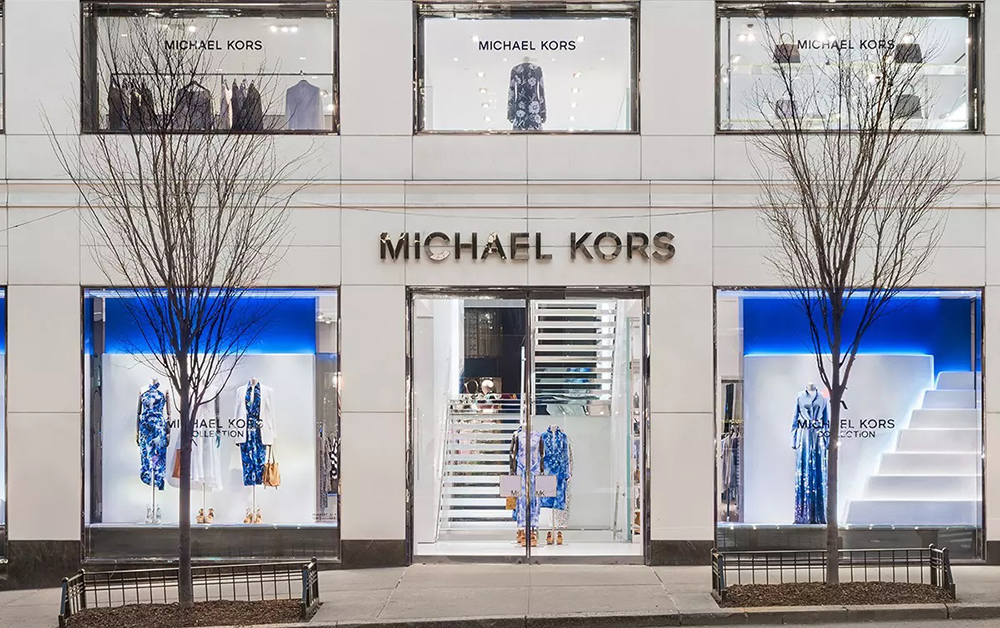
As per the WSJ, similarly, Capri, which also owns the Michael Kors, Versace and Jimmy Choo brands, lowered its expectations. It is now projecting $5.7 billion in revenue for the full year, down from an earlier estimate of $6.1 billion. The company stock price fell 1.84% per share. The luxury retailer blamed the shortfall on the strength of the dollar, which works to slow its sales outside the U.S.
The company also pointed to a slowdown in China, where the zero-Covid policy led to a decline in sales. “In terms of wholesale, we have seen some slowing in that channel over the last few weeks in particular,” Capri Chief Executive John Idol said Wednesday. “The consumer is probably being a little more cautious.” He added that many parts of the China are now in a lock down, leading Tapestry’s China sales to decline 11 percent in the most recent quarter.
The company, however, expressed general optimism, saying they seem to have passed the supply chain disruptions, which had hindered sales over the past two years. “We feel really good about the quality of the inventory and believe we’re in a great position for the holiday,” said Thomas Edwards, Capri’s finance chief. “This compares to last year when we really didn’t have the inventory that we wanted or needed. So we feel like we’re in a much, much better position.”
In the U.S., inflation continues to be a main concern, even though in October inflation numbers eased a little, coming off the four-decade high, the WSJ reported. Consumers are still paying higher prices for a wide range of goods, compared to last year. As a result of the higher costs, U.S. consumers curbed their spending on luxury goods in recent months, as per credit-card data from Mastercard Inc., Citigroup Inc. and BofA Securities Inc. Spending over the summer and into September fell compared to the same time last year, after having double-digit percentage gains for much of 2020 and 2021.