



|
Getting your Trinity Audio player ready...
|
By: Jordan Baker
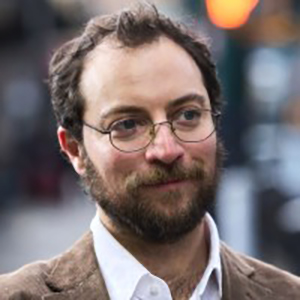
A Democratic Socialists of America–backed challenger hoping to knock off one of former Mayor Eric Adams’ closest allies in Albany is marketing himself as a champion of the working class — while quietly downplaying a background critics say is anything but blue collar, as the New York Post first reported.
David Orkin, a 34-year-old lawyer affiliated with the George Soros-backed immigrant advocacy group Make the Road New York, is running in the June Democratic primary against Assemblywoman Jenifer Rajkumar in Queens’ 38th Assembly District. Orkin has pitched himself as a grassroots, working-class alternative who would advance Mayor Zohran Mamdani’s socialist agenda in Albany, the New York Post reported.
But that carefully crafted image leaves out some key biographical details.
As the New York Post reported, Orkin grew up not in a struggling New York household, but in Rockville, Maryland — a wealthy Washington, D.C., suburb — and is the son of Dr. Bruce Orkin, a prominent colorectal surgeon whose career reads more like an elite résumé than a working-class struggle story.
Dr. Orkin’s professional background includes a long tenure at George Washington University Medical Center, where his LinkedIn profile boasts of treating “patients from the White House, Congress, Supreme Court and many embassies,” according to records cited by the Post. He is now a clinical professor and residency program director at the Carle Illinois College of Medicine.
Property records reviewed by the New York Post show Dr. Orkin and his wife own a Chicago condo valued at nearly $1 million, along with a second condo in Kissimmee, Florida, worth close to $400,000.
Despite that upbringing, David Orkin has leaned heavily into progressive identity politics on the campaign trail. While launching his run, he described himself as the “proud son of a Mexican immigrant mother whose Jewish grandparents fled pogroms,” framing his candidacy around heritage and activism rather than his own socioeconomic reality, as the New York Post reported.
His academic path also raises eyebrows among critics of the DSA playbook. Orkin earned his undergraduate degree from Vassar College — one of the country’s most expensive and ideologically left-leaning schools — before graduating from CUNY Law School in 2022. While at Vassar, Orkin wrote a senior thesis focused on “whiteness” at a Poughkeepsie farmers market, an exercise critics mock as textbook ivory-tower activism disconnected from everyday concerns, the New York Post reported.
Rajkumar’s seat has become a prime target for the DSA, which has been aggressively recruiting challengers to unseat moderate Democrats across New York. Rajkumar, the first Indian-American elected to state office in New York, has frequently clashed with far-left lawmakers and was closely aligned with Adams during his mayoralty — a relationship that earned her the nickname “the Lady in Red,” as the New York Post reported.
Community leaders say Orkin fits a familiar pattern: affluent, highly educated activists parachuting into diverse districts while claiming to speak for working families.

Read this article written by Joshua Hoffman
From: Future of Jewish
Sent: Wednesday, November 5, 2025 4:09 AM
Subject: New York City has officially lost its mind.
By Joshua Hoffman
It finally happened.
New York City, once the beating heart of American economics, creativity, and common sense, has elected Zohran Mamdani, a Far-Left anti-Israel (really, antisemitic) populist whose campaign was bankrolled and backed by the Council on American-Islamic Relations.
Google the Council on American-Islamic Relations, and the first result you’ll see is an invitation to “Explore Islam.” Dig a little deeper, and you’ll find that in 2014, the United Arab Emirates designated the Council on American-Islamic Relations as a terrorist organization for its alleged ties to the Muslim Brotherhood.
In 2008, the Council on American-Islamic Relations was named by the U.S. Department of Justice as an “unindicted co-conspirator” in the trial of the Holy Land Foundation for Relief and Development, which was convicted of terror-financing for Hamas. The Council’s Philadelphia chapter instructs teachers to avoid terms like “Islamic terrorists” when discussing 9/11 — despite the terrorists being directed by Al-Qaeda, a pan-Islamist militant organization led by Sunni jihadists.
And this is the “council” whose support just helped put a man in Gracie Mansion.
For more than a century, New York was the living embodiment of the American dream. It was the place where you could arrive with an accent, a suitcase, and a will to work, and end up running a company, a newspaper, or a borough. The city rewarded hustle, not handouts. It was messy, competitive, merciless — and that was its beauty. Everyone was equal at the starting line, but what you made of yourself was up to you. It was a city built on grit and merit. Today, the same city has voted to punish both.
That New Yorkers would elect someone aligned with Islamist political movements less than three decades after 9/11 is nothing short of astonishing. A city that once vowed never to forget has apparently done just that. For years, American liberals mocked conservatives as the ones who “vote against their own interests.” After this election, that talking point should be retired permanently. There is no greater example of a people turning against their own memory, their own safety, and their own common sense.
Mamdani’s election isn’t just a political shift; it’s a psychological one. It’s the moment the city stopped believing in itself. New York’s DNA has always been about ambition: the dreamer who opens a corner store, the immigrant who becomes a landlord, the artist who turns a cramped studio into a career.
Mamdani’s socialism mocks that story. It tells people that success is theft, that wealth is evil, that envy is justice. It replaces enterprise with entitlement. And history couldn’t be clearer about where that leads. We’ve seen it in Venezuela, in Cuba, in every socialist experiment that promised equality and ended in despair. Socialism doesn’t work. It never has. It never will. You don’t need a PhD to see that, just a library card.
And yet, Mamdani’s campaign was cheered like a revival meeting. Free childcare. Rent-controlled apartments. Free subway rides. Free everything. It’s a toddler’s view of economics: the belief that if you shout “Mine!” loud enough, someone else will pay for it.
But that’s not how the world works. Nothing is free. Someone pays. Always. The question is who. And under socialism, the answer is always the same: the people who still believe in working, building, and saving. The city’s remaining middle class — what’s left of it — will foot the bill until they, too, leave.
It’s not just that New York has lost its mind; it’s that it’s lost its grip on reality. Crime is rising, the subways are filthy and unreliable, small businesses are suffocating under regulation and rent. And instead of fixing the basics, the new mayor is promising utopia. The police are demoralized, the tax base is shrinking, and the city’s answer is to double down on ideology. It’s like watching a patient bleed out while the doctors debate the meaning of blood.
And let’s talk about the Jewish piece of this — because we have to. I’m not even worried about “Jewish New York.” If the city wants to elect an “anti-Zionist” — which, let’s be honest, is just a polite term for an antisemite — so be it. The Jews will be fine. We’ve been here before. We’ll find another home. Miami is booming. Tel Aviv is thriving. Dallas still knows how to build. In fact, Dallas has more recently become a major draw for big financial firms that were born and raised on Wall Street, in large part because of Mamdani’s election.
The irony is painful, though: A city built in large part by Jewish immigrants has now elected a man who despises Jews and the Jewish state. When anti-Israel politicians go after AIPAC, it’s not a critique of politics; it’s an attempt to silence Jewish Americans whose voices defend the world’s only Jewish state.
Not to mention the nearly 600 Israeli-founded companies in New York City, which have created more than 27,000 jobs, generating an estimated $12.4 billion in direct value to the city’s economy and $17.9 billion in total gross economic output¹. Israeli innovation has made the city more dynamic, more prosperous, more future-oriented.
Yet the same city just elected a mayor who openly supports the Israel boycott movement, a campaign designed to cripple the Jewish state economically. The disease in New Yorkers’ minds does not merely corrupt moral judgment; it leads societies to act against their own interests. When a society becomes infected with moral hysteria, it begins to destroy itself in the name of virtue.
The real losers in this election aren’t the Jews and Israelis, though. They’re the New Yorkers who still believe the city can be saved by overly taxing success and subsidizing dependency. They’re the artists who will wake up one morning and realize their rent-controlled apartment is surrounded by chaos. They’re the small business owners who will drown under the weight of “free” programs they’re forced to fund. They’re the subway riders who will discover that when you make something “free,” it usually stops working. Every time a city tries this experiment, it ends the same way: The well-off leave, the poor suffer, and the middle class disappears.
No one is questioning that New York City is expensive. Cities like New York, San Francisco, and London have tight land use and zoning laws that restrict new construction, keeping supply low. They attract businesses, immigrants, creatives, and high-income professionals — everyone wants to be there, so prices rise. When there’s more demand for housing and amenities than there is supply, every square foot becomes more valuable. (It’s called supply and demand, basic economics.)
Cities on islands (like Manhattan) literally can’t expand outward. Limited land equals higher land values. The more jobs, headquarters, and career ladders a city offers, the more people are willing to pay to live there. High wages in finance, tech, entertainment, and law often drive up prices — because locals can afford to bid higher rents and home prices. The city’s role as a global economic hub gives it pricing power that smaller cities don’t have.
(Side note: I personally know two Mamdani voters — the same two who moved to and helped gentrify Brooklyn, and now think rent control will save them from themselves. You can’t make this stuff up.)
And cities like New York command high prices simply because of their reputation and lifestyle. People pay for the idea of New York (culture, history, prestige, energy, food, access, and global recognition). The more a city offers — theaters, restaurants, nightlife, universities, waterfronts, parks — the higher its “quality of life” score and the more people are willing to pay.
You know what other city is outrageously expensive? Tel Aviv. It’s one of the most expensive cities in the world, as a matter of fact. But you don’t see Tel Avivians electing pro-Hamas ideologues because the cost of living is high. In Tel Aviv, we work hard, get educated, try to find decent-paying jobs, build businesses, and live within our means. And if some of us still can’t afford it, guess what? People here do what grown-ups do: They move somewhere more affordable.
Unfortunately, what’s happening in New York is part of a broader cultural insanity: the idea that achievement is oppression and grievance is virtue. American society used to admire those who built. Now parts of this society idolize those who protest. The city that once made heroes of inventors now makes heroes of agitators. The energy that once fueled innovation now fuels outrage. The city that invented the skyscraper is now led by people who want to level everything in sight.
And so, the exodus will continue. The businesses will head to Florida or Texas. The artists to Nashville or Austin. The Jews to Miami or Tel Aviv. The city won’t collapse overnight; it will just quietly empty out. What remains will be a hollow museum of what once was: a city that traded its hustle for hashtags, its grit for grievance, and its mind for ideology.
New York hasn’t just lost its mind. It’s lost its melody: the rhythm of ambition, faith, and freedom that once made it sing. What remains is populism masquerading as justice, and decay disguised as progress.
From: Future of Jewish
Date: Thu, Dec 4, 2025 at 4:06 AM
Subject: Mamdani’s smile is actually a very scary mask.
By Joshua Hoffman
Mamdani’s smile is actually a very scary mask.
The smile tells you that, even if you have every good reason to worry, you must not dare to. What looks like warmth and charisma is actually a tool to disarm scrutiny.
Joshua Hoffman
Dec 4
Mamdani’s smile is actually a very scary mask.
The smile tells you that, even if you have every good reason to worry, you must not dare to. What looks like warmth and charisma is actually a tool to disarm scrutiny.
Joshua Hoffman
Future of Jewish is the ultimate newsletter by and for people passionate about Judaism and Israel. Subscribe to better understand and become smarter about the Jewish world.
New York City Mayor-Elect Zohran Mamdani ran for office promising voters free everything — with a gaping smile that concludes every empty sentence.
Then he asked them to give him $4 million to fund his transition team. In a fundraising video, Mamdani claimed that he only had $1 million to keep paying his “incredible team.” At his victory speech last month, people who campaigned long and hard for him expected free drinks; they were charged $15 for a single beer.
The cracks are already starting to show (if they weren’t already before), but his smile keeps getting bigger.
Mamdani has brought on 400 people to his transition team across 17 committees including a committee on community organizing, on worker justice, and on immigrant justice. Despite the claims that Mamdani needed millions of dollars to go through tens of thousands of resumes, the “team” is mostly drawn from his political allies in the Democratic Socialists of America, antisemites in disguise, and other questionable folks who were already involved in his campaign.
He ran a campaign on habitually calling President Trump a fascist, then built a transition team that includes some of the most extreme figures in New York City politics. For example, Mamdani’s “public safety” committee includes Alex Vitale, the author of “The End of Policing,” which calls for eliminating the police, legalizing many crimes, and using social services to deal with other offenses. Vitale had claimed that “police are violence workers,” described police as “the natural enemy of the working class” and urged that “if you don’t want racism and violence, don’t get the police involved.”
Unsurprisingly, for the transition team of a politician whose signature issue was validating Islamic violence and hatred against Jews through moral inversion, Mamdani’s transition team stands out for the sheer number of members who hate Jews. That includes Hassaan Chaudhary, a fellow Indian Muslim who headed up Muslim outreach for Mamdani, who had praised Iranian dictator Mahmoud Ahmadinejad for his call to eliminate Israel, and used “Jew” as an insult.
Also on the Mamdani transition team is ousted Women’s March leader Tamika Mallory, who’s celebrated wild antisemite Louis Farrakhan, and accused Jews of being behind slavery.
Mamdani’s legal committee includes Tahanie Aboushi, a BDS supporter, close friend of another antisemite Linda Sarsour, and “Palestinian” “civil rights” lawyer whose father was sentenced to 22 years in prison. As Middle East Forum noted, she was involved in an organization that a Hamas front group tried to direct funds to.
Another member of the legal committee is Ramzi Kassem, who’s claimed that 9/11 was due to the “resentment these terrorists felt towards the United States” as a result of “our country’s policies” and that “the legacy of 9/11 ought to be recounted primarily through the stories of Muslims the world over who have largely paid the price of American power and prosperity.” Kassem’s clients included Ahmed al-Darbi, an Al Qaeda terrorist and the brother-in-law of one of the hijackers who flew a plane into the Pentagon, and who was himself a key figure in the bombing of an oil tanker. “Terrorism is but one of many reactions to oppression and dispossession and not their cause,” Kassem has argued.
The deeper problem is that none of this is accidental or incidental. Mamdani is not an outlier. He is an example of a broader pattern: a coordinated, ideologically driven strategy to capture local offices and turn them into platforms for national and international activist causes.
The Democratic Socialists of America, and the activist networks surrounding it, have realized that municipal offices — small, overlooked, low-turnout — provide the perfect entry point. They build campaigns around emotionally charged identity messaging, foreign-policy crusades that have nothing to do with local governance, and promises of “free everything” that feel good and poll well among politically disengaged voters. Mamdani is simply the latest, and perhaps the most theatrically polished, version of this model.
His actual record reflects the same strategy. While he branded himself as the champion of transit and housing affordability, far more of his legislative energy has gone into symbolic anti-Israel resolutions, internationalist messaging, and activist-driven political theater. He has spent far more time attacking foreign governments than improving the basic functioning of the one he was elected to serve. This is not an oversight; it is the worldview of local office as a megaphone rather than a job.
His transition team reinforces this pattern. Transition teams reveal priorities, not personalities. Mamdani did not seek out experienced administrators, urban planners, transit experts, economists, or people with a record of delivering services in a city of 8.5 million people. He sought out the same activists, ideologues, and factional allies who fueled his campaign. This is not “community representation.” It is consolidation — turning the mechanics of governance into an extension of the campaign war room. The question is not why the transition team looks like this. The question is why anyone expected anything else.
And because this is a movement, not an individual, you can already see what comes next. Expect efforts to defund or structurally weaken the New York City Police Department through “budget realignment.” Expect symbolic anti-Israel resolutions drafted to inflame tensions while doing nothing to improve the life of a single New Yorker.
Expect city funds to be redirected toward activist-aligned nonprofit organizations under the banner of “justice.” Expect ambitious-but-impossible transit and housing promises to fade quietly once the numbers hit the wall. And expect constant political theater: unregulated protests and other political demonstrations throughout the city, messaging bills that cannot pass, and a mayoral office used as a staging ground for national and international ideological battles.
Through all of this, the press will celebrate his “movement,” community leaders will be afraid to criticize it, and New Yorkers will be told that any concern about extremism or dysfunction is evidence of bigotry or bad faith. That is precisely why Mamdani smiles. Because the smile tells you that, even if you have every good reason to worry, you must not dare to. The smile tells you everything will be fine, even when you know many things are going to get worse, especially for Jewish New Yorkers. The smile tells you that questioning any of this makes you the problem.
The more he smiles, the more he gaslights, manipulates, distorts, misleads, and makes any objection to his team’s extremism, incompetence, and double standards somehow your moral failure — simply for noticing. It’s the 60-something-year-old Britain-born lady who, just a few weeks ago, told Muslims obnoxiously blasting prayers in Britain’s streets that she is tired of their anti-British behavior, and then is promptly arrested by the police for saying out-loud what so many born-and-bred Brits fundamentally believe.
This idea that Mamdani is some new, sexy, shiny object that we should all “give a fair chance” is nonsense. He is not new; his values and politics are not new; his worldview is not new. We know exactly where this is all headed because the history of socialism, the Red-Green Alliance, and quasi-progressive politics is robust.
But what fools so many people is Mamdani’s smile. It’s the disguise that makes disastrous ideologies look and feel appealing, the gloss that hides the wreckage underneath, and the pleasant veneer that convinces reasonable people to ignore every warning sign they should already know by heart.
It softens the edges of extremism, it turns radicalism into something palatable, and it tricks decent, well-meaning New Yorkers into believing that this time will be different for no good reason.
It’s the political anesthetic that numbs the public long enough for the damage to be done, long enough for the machinery of ideology to lock into place, long enough for him to call the destruction “progress.”
It’s a mask, but this isn’t Halloween where the mask comes off at midnight. It’s a mask that asks for your unconditional trust while hiding the very reasons it doesn’t deserve it.
Mamdani’s smile was never about free public transit or childcare. It’s a get-out-of-jail-free card to lie to New Yorkers’ faces, to build a government staffed by ideologues, and to turn New York City into a playground for activist fantasies while ordinary residents pay the price.
Part of the mystery, at least to those of us watching all of this unfold with clear eyes, is how so many otherwise intelligent people can be fooled by something as thin as Mamdani’s smile.
Psychologists have long documented that smiles trigger automatic trust responses. We are wired to interpret a smile as warmth, safety, and non-threat. Before we even process a person’s words, our brains have already made a snap judgment: friendly equals trustworthy. In business, in sales, in politics — this is one of the oldest persuasion shortcuts in the book. A smile buys people’s attention long enough for the message to slip through unchallenged.
But smiles don’t just generate trust; they also scramble our moral instincts. When someone is peddling radical, hostile, or extremist ideas with a soft tone and a polished affect, it creates emotional dissonance. The friendly presentation and the dangerous content clash. Most people, uncomfortable with the contradiction, unconsciously resolve it by siding with the pleasant emotion rather than the unpleasant truth. It is far easier to think, “Surely someone who smiles like that doesn’t mean harm,” than to confront the fact that charm can be weaponized.
This is where the halo effect kicks in. A confident, relaxed, charismatic smile leads people to assume a whole constellation of virtues that aren’t actually there — intelligence, nuance, moral clarity. In politics this effect is amplified, because charisma is so often mistaken for competence, and polish for principle. Mamdani has mastered this contrast: Present antisemitic rhetoric in a tone so soft and polished that many people simply cannot compute the danger. They expect antisemites to look like mobs brandishing swastikas and yelling Nazi catchphrases, not well-groomed “progressives” with Instagram-ready grins.
And this is the most insidious part: Modern antisemitism thrives in exactly this format. It rebrands itself through academic vocabulary, social-justice framing, and charismatic spokespeople who package hostility as compassion. A smile becomes camouflage. It launders extremist ideas into acceptability because it breaks the stereotype of what hate “should” look like. Many people want to see themselves as open-minded and fair, and so when someone smiles and speaks the language of “justice,” they suppress their discomfort to preserve that self-image. The smile doesn’t just disarm them; it recruits them.
And, so, people aren’t fooled despite the mask; they’re fooled because they want the mask to be real. They want to believe that a charismatic newcomer represents hope rather than risk, transformation rather than turmoil, progress rather than regression. Hope is an intoxicant, and Mamdani knows how to bottle it with precision.
For many voters, especially those who conflate radicalism with authenticity, the smile alone is enough to override everything else. The extremism doesn’t register as extremism. The contradictions don’t land. The incoherence doesn’t matter. The smile smooths it all over. It becomes the delivery system for the idea that anyone who objects is not concerned, but compromised; not cautious, but complicit; not thoughtful, but prejudiced.
In that sense, the smile works because it reassures people that they’re not endorsing nonsense; they’re endorsing “progress.” It tells them that his ideological crusades are acts of courage rather than acts of division. It flatters them into believing that they are the ones helping to write “the next great chapter.”
All because of a counterfeit smile.