



|
Getting your Trinity Audio player ready...
|
By: Andrew Carlson- Jewish Voice News
The final wagers have been cast, the lobbying blitz has hit its crescendo, and the future of downstate New York’s gaming landscape now rests in the hands of five state gaming commissioners who must decide, at long last, which vision of casino-fueled economic transformation will shape the region for decades to come. On Monday, the New York State Gaming Facility Location Board will vote on awarding up to three coveted full-scale casino licenses in the downstate area — a decision that has attracted an extraordinary level of political pressure, corporate maneuvering, real-estate speculation, and community-level anxiety.
As The New York Post has reported for months, the once-crowded field of eleven applicants has dwindled to only three survivors. But the narrowing of the race has not brought clarity. The board is under no obligation to award any of the licenses, a statutory provision that introduces an element of unpredictability to a process already roiled by controversy, competing economic narratives, and fierce pushback from anti-casino activists. Nevertheless, the Hochul administration has 1.5 billion reasons — literally — to hope for three winning bids.
Under the state’s structure, each license requires an upfront fee of $500 million, money that would instantly flow into Albany’s deficit-burdened coffers. In addition, license winners must commit to at least $500 million in capital investments for their projects, a stipulation that transforms casino licensing from a mere regulatory process into a catalytic moment for regional development.
As The New York Post report of Saturday emphasized, the stakes are almost operatic in scale: tens of thousands of potential jobs, billions in private construction spending, and the possibility — or the threat, depending on one’s point of view — of Las Vegas-style resort complexes embedded in the dense urban matrix of New York City.
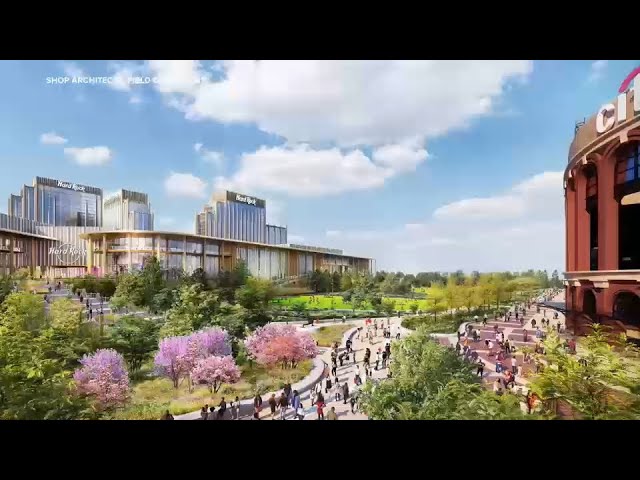
At the top of the remaining field sits Steve Cohen, billionaire hedge-fund titan and owner of the New York Mets, whose $8 billion vision for a sprawling entertainment and casino complex next to Citi Field has captured the imagination of some Queens residents and the ire of others. Partnering with Hard Rock International, Cohen’s proposed “Metropolitan Park” would transform 50 acres of asphalt and parking lots into a constellation of gaming floors, a state-of-the-art concert venue, green spaces, restaurants, and hospitality offerings.
As The New York Post report noted, Cohen’s plan is both the most ambitious and the most polarizing. Supporters see an economic bonanza for Queens — construction jobs, permanent employment, tourism, and the revitalization of a neglected area. Critics warn of increased traffic congestion, social costs associated with gambling, and the specter of over-commercialization in a neighborhood still struggling with affordability and infrastructure strain.
The second major contender, Bally’s Corporation, is pursuing a dramatically different kind of gamble: a $4 billion casino resort on the site of the former Trump Organization–owned golf course at Ferry Point in the Bronx. Bally’s acquired the course in 2023 and renamed it Bally’s Golf Links at Ferry Point, but the company’s aspirations for the site go far beyond golf. Their plans envision a casino complex integrated into the existing waterfront, designed to bring high-scale tourism and dining options to one of the city’s most economically disadvantaged boroughs.
In an interview with The New York Post, Bally’s chairman Soo Kim expressed unshakable confidence. “Our chances look pretty good,” he asserted. “We put our best effort out there. I don’t think we have any weak spots.” The company’s bid carries a unique financial twist: as part of its acquisition deal, Bally’s agreed to pay the Trump Organization an additional $115 million if it secures a casino license. Predictably, critics have seized upon this provision to argue that granting this license would indirectly enrich a former president. Kim dismissed such critiques outright. “Trump gets a fair deal. The Bronx gets a great deal,” he told The New York Post, framing the arrangement as a pragmatic element of real-estate negotiation rather than a political landmine.
Meanwhile, Resorts World, already a significant footprint in the city’s gaming landscape, is seeking authorization to expand its existing facility at the Aqueduct racetrack in Queens. Their proposal — estimated at $5.5 billion — aims to upgrade the racino into a full-scale casino resort. Unlike the other contenders, Resorts World already operates in New York, offering slot-style parlor games, which many observers believe gives the company an operational advantage in the eyes of regulators. They understand the terrain, the market, and the regulatory environment.
Representatives for both the Cohen-Hard Rock partnership and Resorts World declined to comment to The New York Post ahead of the Gaming Facility Location Board’s vote — a silence that only intensified speculation.
Governor Kathy Hochul stands to gain significantly from the awarding of three licenses. As The New York Post report highlighted, the upfront $1.5 billion licensing windfall represents one of the fastest ways to plug gaping holes in the state budget, even as long-term gaming revenue projections remain uncertain. But Hochul must balance fiscal urgency against growing grassroots opposition from an eclectic coalition of neighborhood activists, urban planners, clergy leaders, and legislators who fear that the promised economic benefits mask deeper social harms.
Casino opposition has historically followed predictable patterns — concerns over gambling addiction, crime, and community displacement — but the current wave includes critiques unique to New York’s dense urban geography. Residents worry about traffic snarls around the Whitestone Expressway near Citi Field, the ecological impact on Bronx wetlands adjacent to Ferry Point, and the strain on already overburdened subway arteries serving Queens and the Bronx.
The political implications are equally fraught. Casino licenses represent not just construction jobs and gaming floors but potent engines of patronage, union support, real-estate valuation, and campaign fundraising. As The New York Post reported, casino developers have hired armies of lobbyists, many with deep ties to city and state leadership, ensuring that the process is as much about power as it is about gaming.
One of the most intriguing dynamics shaping Monday’s vote is the fact that the board is under no obligation to award any licenses at all. That procedural flexibility gives commissioners extraordinary discretion — and heightens the sense of uncertainty hanging over all three proposals. But fiscal pressure weighs heavily on Albany. Few analysts believe the state can afford to walk away from $1.5 billion in immediate revenue and billions more in private-sector investment.
As The New York Post noted in its recent coverage, Hochul’s unofficial expectation is clear: three licenses, three winners, and immediate cash infusion into a government facing a confluence of budgetary demands — from Medicaid and migrant spending to transit system reforms and education mandates.
No matter which proposals ultimately prevail, the decision will reshape downstate New York’s economic and cultural landscape for generations. It will determine not only where casinos operate, but how three communities evolve and how the state positions itself in the Northeast’s increasingly competitive gambling market.
Queens may emerge as a dual-casino borough, with Resorts World and a new Hard Rock–Cohen complex redefining its entertainment economy. The Bronx could experience its most significant infusion of private capital in decades if Bally’s vision materializes. Or — in a scenario less likely but still possible — the board could grant one or two licenses while deferring the third, prolonging the battle and keeping the region in suspense.
For now, the applicants wait, the neighborhoods speculate, and the state calculates the immense financial and political ramifications of awarding billions in opportunity with a single vote.
As The New York Post report framed it, the casino race is no longer just a development battle. It is a referendum on New York’s economic future — a moment of decision that will test the state’s appetite for risk, its willingness to embrace transformative (and controversial) development, and its capacity to balance economic expediency with community preservation.
The bets are in. Now the state must decide who wins — and at what cost.