



|
Getting your Trinity Audio player ready...
|
By: Carl Schwartzbaum
In a city that thrives on outdoor summertime chaos — from playground squeals to splash-pad showdowns — one Manhattan tech entrepreneur is calling for a significant change to a seasonal staple: the humble water balloon, as was reported in The New York Post on Saturday.
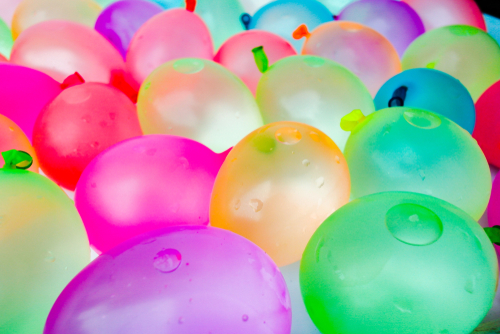
Di Di Chan, a 40-year-old Noho-based tech founder, is campaigning to have so-called “single-use” water balloons banned in New York City parks and playgrounds. Her Change.org petition, which has gathered around 200 signatures, urges the Department of Parks and Recreation and the City Council to take legislative action to curb what she views as a mounting environmental and safety hazard.
“Every summer, New York City parks — especially popular playgrounds and splash pads — become littered with broken plastic water balloon pieces. It may seem like harmless fun, but the impact is serious,” Chan’s petition states, according to the report in The New York Post.
Her proposed remedy? A switch to reusable water balloons — thicker rubber or silicone models equipped with magnetic closures — alongside an educational signage campaign to inform the public about the environmental dangers of leftover plastic balloon debris.
Chan’s petition argues that single-use water balloons present two primary threats: one to the environment and another to public safety. As per The Post report, she claims, without citing specific studies, that broken balloon pieces pose a risk to wildlife, particularly birds and squirrels that may ingest the colorful shards. She also warns that the debris creates “choking and tripping hazards” for young children romping around parks and water features.
“This isn’t just about banning something — it’s about building better habits,” Chan asserts in the petition, invoking what some critics have called a vaguely Orwellian tone.
But Chan’s background isn’t in public health or environmental science. She’s the co-founder of FutureProof Retail, a tech firm specializing in frictionless shopping technology — essentially enabling line-free checkout and mobile order-ahead capabilities for retailers. While her entrepreneurial credentials are evident, her expertise in urban environmentalism is less clear. The New York Post report noted that Chan could not be reached for comment, and it remains uncertain whether she is a parent herself or simply an advocate of park cleanliness.
Reaction to the proposal has been mixed — and in some corners, fierce.
Josh Malone, the inventor of the widely popular Bunch O Balloons toy, pushed back forcefully against the idea of a ban. Speaking to The New York Post, Malone emphasized personal responsibility over municipal prohibition.
“Water balloons provide a way to play and cool off outdoors during heat waves,” Malone said. “If you are playing in a public place, you should clean up any mess and leave the park the way you found it. Same as cleaning up after a pet or after eating a popsicle — also activities that shouldn’t be banned.”
Critics of Chan’s campaign argue that the city’s increasingly heavy-handed approach to recreational regulation may be bordering on the absurd. “What’s next?” mused one parent interviewed by The Post. “Outlawing sidewalk chalk because it’s messy?”
Still, Chan’s petition is not entirely without precedent. Similar measures have been proposed or enacted in smaller municipalities across the country, particularly in environmentally sensitive areas near bodies of water, The Post report said. But bringing that level of restriction to America’s largest city — especially in the dog days of summer — presents a far more complex social and political challenge.
For many New Yorkers, water balloon fights are a cherished rite of summer, offering children an affordable and joyful way to beat the heat. The city’s playgrounds and splash pads become aquatic battlegrounds from Memorial Day to Labor Day. The Post reported that while the Department of Parks and Recreation does not regulate water balloon usage per se, general rules about littering and public cleanliness do apply.
Chan’s proposal includes not only a ban on single-use balloons, but also suggests volunteer-based cleanup efforts and community-sponsored swaps where children could trade in disposable water toys for eco-friendlier alternatives. While noble in theory, implementation may prove logistically daunting, especially given the city’s stretched parks budget and staff.
Furthermore, reusable water balloons—while less environmentally damaging—pose their own challenges. They are significantly more expensive than disposable varieties and require consistent cleaning to prevent mold and bacterial buildup, which could ironically introduce new health concerns.
At its heart, Chan’s petition seems less about policy and more about symbolic action. In the age of eco-conscious consumerism and viral social campaigns, the call to eliminate single-use plastics — even in the form of children’s toys — echoes a broader movement, the report in The Post observed. Whether that movement gains momentum in a city known for its skepticism of overregulation remains to be seen.
For now, the only things flying in city parks are rubber missiles, not City Council resolutions. But if Chan has her way, the days of spontaneous water balloon battles in NYC playgrounds may be numbered — replaced by a quieter, cleaner, and perhaps slightly less fun alternative. As the New York Post report aptly put it: one woman’s campaign to clean up summer fun may just be the wet blanket of the season.
