



|
Getting your Trinity Audio player ready...
|
NJ Gov Murphy “Waffles” on Parental Rights as Trans Kids Rights in School Districts Upheld
Edited by: TJVNews.com
A contentious battle revolving around parental rights and transgender children’s identity is brewing in New Jersey, with the state’s attorney general set to face off against three school districts in court next week, as was reported by the New York Post. The issue has brought to the forefront a clash between school policies and state guidelines, creating a heated debate that has implications far beyond the classroom walls.
At the heart of the dispute are new policies adopted by three school districts which serve 18,000 students, including Middletown, the Monmouth County town where Garden State Governor Phil Murphy resides. The Post report noted that these policies require schools to inform parents if their children express a desire to change their gender identity, pronouns, name, use different restrooms, or participate in different gendered sports teams. The school districts’ approach directly contradicts New Jersey state guidelines, which emphasize that schools are not obligated to notify parents about a student’s gender identity or expression, according to the Post report.
The New Jersey state guidelines, say “there is no affirmative duty for any school district personnel to notify a student’s parent or guardian of the student’s gender identity or expression,” as was reported by the Post.
Speaking to the Post, concerned parents asid that they are totally in favor of the disclosure policy. Caterina Skalaski, a mother of 3 from Middletown, New Jersey, aired her feelings on the topic at a heated school board meeting on the policy on June 20th wearing a shirt emblazoned with an emphatic message: “Leave the Kids Alone.”
“I do not, will not ever co-parent with the government,” Skalaski told The Post.
“If Murphy wants to co-parent then he should pay up and split some bills for my kids. He wasn’t present in the delivery room when they were born,“ she intoned.
She also told the Post, “I firmly believe that teachers choosing to withhold this type of information about my child is morally wrong,” and noted that the school needs parental permission to administer medicine, watch a movie or give a specific snack. She added, “But they won’t come to us when it matters most?”
The Post also reported that Skalaski, whose children range from second to seventh grades, claimed many pro-trans demonstrators at the meeting did not have an association with Middletown, a kindergarten through 12 district on the Jersey Shore with approximately 9,000 students across 16 schools.
The controversy has ignited strong opinions on both sides. Proponents of the disclosure policy argue that parents have a right to be informed about such significant changes in their child’s life, as was evidenced in Skalaski’s remarks to the Post. They view the policy as a matter of parental involvement and protection of students’ well-being.
Also on board with Skalaski was Laura Abt, a Middletown mother of two, who also spoke in favor of the change, according to the Post report.
“Everyone says this is a political battle between the left and the right. I’m not a political activist. I’m a mother trying to protect my two kids,” Abt told the Post. “This isn’t anti-trans legislation. This is about parents’ rights.”
However, critics, including the state of New Jersey, express concerns that forcibly outing transgender students could lead to mental health risks, increased suicides, and potential harm to students, according to the Post report. The state’s attorney general, Matthew Platkin, filed lawsuits against Middletown and two K-8 districts, Manalapan-Englishtown and Marlboro, that adopted similar guidelines that same night, the Post reported. Both are in Monmouth County. Platkin alleged that “outing” these students against their will could be harmful, the report added.
“‘Outing’ these students against their will poses serious mental health risks; threatens physical harm to students, including risking increased suicides; decreases the likelihood students will seek support; and shirks the District’s obligation to create a safe and supportive learning environment for all,” Platkin alleges in the lawsuit, as was reported by the Post.
The legal battle is indicative of a broader trend seen across the United States, where parental involvement in school-related matters has intensified, often fueled by the heightened awareness and influence parents gained during Covid-19 lockdowns, the Post report noted. The issue of transgender students’ rights and parental rights is just one facet of a larger debate that has seen parents rally for school reopenings, pushback against critical race theory in curricula, and calls for changes in school board representation.
The case has also drawn attention to the complexities surrounding transgender students’ rights and mental health, the Post report said. The school districts involved argue that their policies are crafted to prioritize students’ well-being and to prevent potential risks. They cite the involvement of experts and organizations in the development of their guidelines.
The court hearing scheduled for next week will determine whether the state’s attorney general can prevent the three school districts from implementing their policies. As was reported by the Post, both sides have agreed not to implement the policies until the case is heard, ensuring that no parents are informed about their transgender children under the new guidelines in the interim.
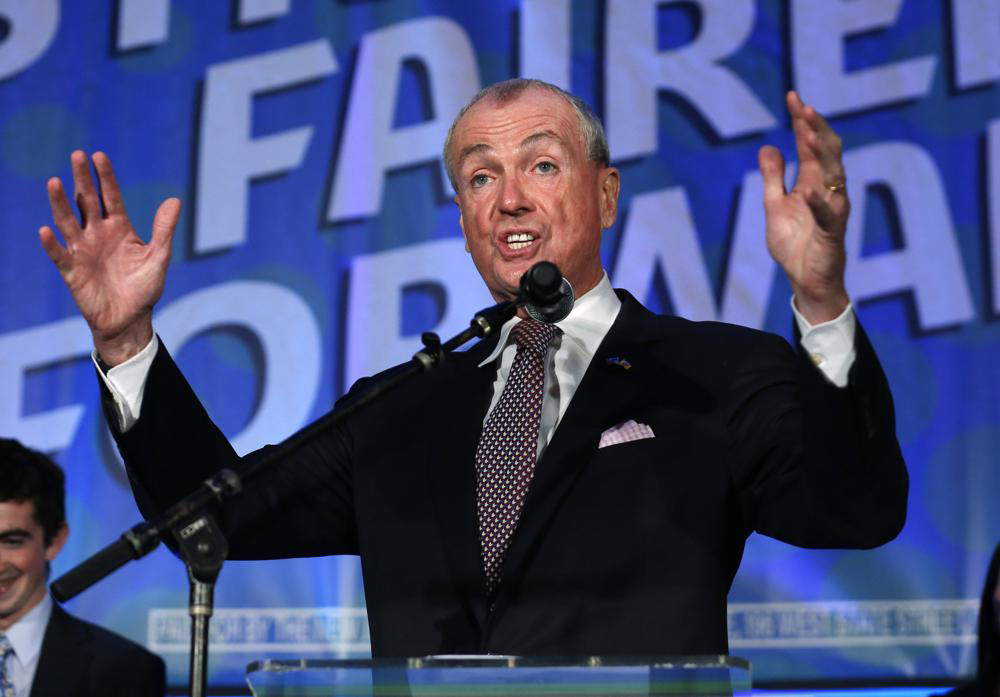
Governor Murphy, who characterized the dispute as a “culture war,” emphasized the importance of balancing parental rights with the well-being of transgender students, according to the Post report.
During an appearance on CBS News’ “Face the Nation” last month, the Post reported that the Garden State governor said, “Obviously, parents are the- the existential reality in the upbringing of any child without question. But let’s not violate the constitutional and civil rights of precious young folks in many cases, who are coming to grips with life as they grow up and grow older, let’s be respectful of that.” All of Murphy’s children have graduated from high school.
As the legal battle unfolds, it continues to fuel discussions around parental involvement, the rights of transgender students, and the evolving dynamics between parents, schools, and students’ personal choices. The outcome of this case will likely have implications for similar debates taking place in other parts of the country.