



|
Getting your Trinity Audio player ready...
|
Newark Airport Hit by Another FAA Radar Outage, Airlines Slash Flights Amid Ongoing System Failures and Staffing Shortages
Edited by: Ariella Haviv
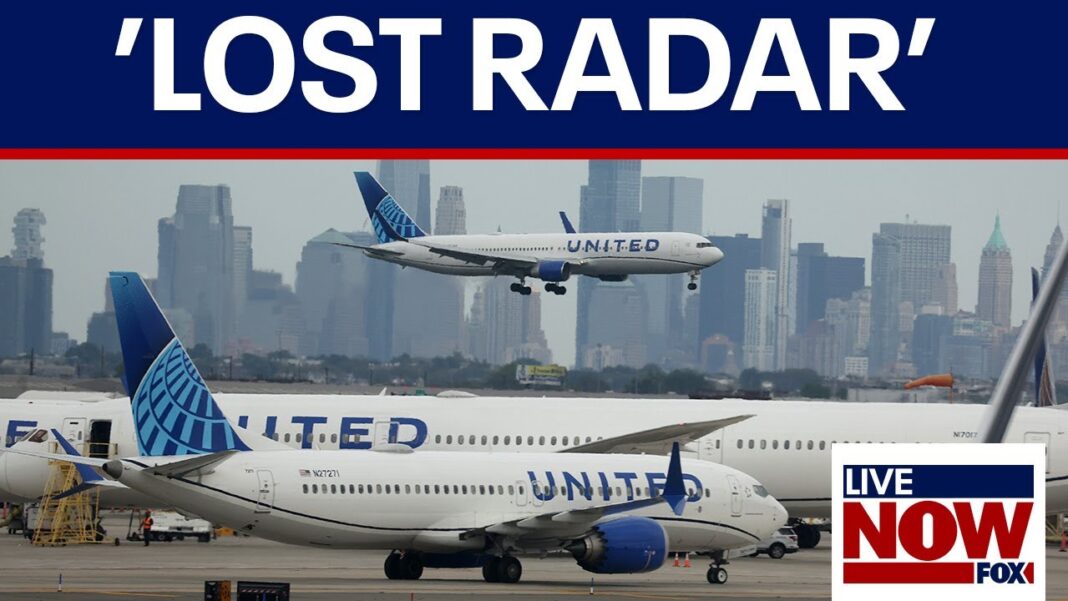
A second air traffic control outage in just days struck Newark Liberty International Airport early Friday morning, sparking fresh outrage among travelers, airline executives, and federal lawmakers. As reported by Fox Business on Friday, the Federal Aviation Administration (FAA) confirmed that radar and radio communications systems guiding aircraft in and out of Newark airspace failed again, this time for approximately 90 seconds at around 3:55 a.m. ET.
Though brief, the disruption is the latest in a string of concerning system failures affecting the Philadelphia TRACON Area C, a key regional control center overseeing some of the nation’s busiest skies. According to the report on Fox Business, this outage mirrored a similar failure last week that led to widespread delays, canceled flights, and mounting criticism of the FAA’s technological infrastructure and staffing levels.
In audio captured by LiveATC.net and cited by Fox Business, one air traffic controller was heard telling a FedEx pilot, “Our scopes just went black again,” before urging, “If you care about this, contact your airline and try to get some pressure for them to fix this stuff.” Another controller warned a private pilot to stay at or above 3,000 feet near Morristown in case of another outage, pointing to the deeply precarious state of communications and radar in the region.
The FAA confirmed that the latest outage was triggered by a telecommunications and software failure, the same root cause behind last week’s disruption. “There was a telecommunications outage that impacted communications and radar display at Philadelphia TRACON Area C,” the agency told Fox Business. “The outage lasted approximately 90 seconds.”
Speaking to reporters Friday morning, White House Press Secretary Karoline Leavitt acknowledged the glitch and emphasized that both the Department of Transportation (DOT) and FAA are working urgently to resolve the issue. “DOT and the FAA are working to address this technical issue tonight to prevent further outages, as well as install new fiber from Newark Airport to Philadelphia,” Leavitt said, adding that the work is expected to be completed by the end of summer.
Despite assurances from federal officials, the latest failure adds to concerns about the resilience and modernity of America’s air traffic control infrastructure. According to the information provided in the Fox Business report, critics are questioning whether the FAA is adequately staffed and equipped to manage the increasingly complex demands of modern air travel—especially in high-density airspaces like the New York–New Jersey corridor.
New Jersey Congressman Josh Gottheimer (D-N.J.) minced no words when addressing the repeated radar failures and staffing shortfalls at Newark Airport. “There was yet another outage in the last hours—another 90-second outage of radar and radio in the region. That’s the second time in a matter of days,” he told reporters on site, as reported by Fox Business.
Gottheimer highlighted the broader economic impact of delays at Newark, noting, “This airport is a key hub for our economy in the region. Twenty percent of America’s GDP runs through this region.” He also urged the FAA to take drastic corrective action, including reallocating personnel and raising pay incentives. “We must immediately move more air traffic controllers from other parts of the country to this short-staffed region. We should pay these air traffic controllers whatever it takes to get them there—bonuses, overtime,” he said.
Gottheimer’s criticism comes amid heightened scrutiny of the FAA’s readiness to handle disruptions and its ability to modernize outdated systems. As the Fox Business report pointed out, the radar outage combined with ongoing runway construction at Newark has created a “perfect storm” of logistical bottlenecks.
With no end in sight to the radar outages or staffing shortages, airlines have begun slashing flights to minimize cascading delays. United Airlines CEO Scott Kirby told customers that the previous outage led to “dozens of diverted flights, hundreds of delayed and canceled flights, and, worst of all, thousands of customers with disrupted travel plans.”
To stabilize operations, Kirby announced that United would cancel 35 round-trip flights per day from its already reduced Newark schedule. “It’s disappointing to make further cuts to an already reduced schedule at Newark, but since there is no way to resolve the near-term structural FAA staffing issues, we feel like there is no other choice in order to protect our customers,” Kirby said, as reported by Fox Business.
American Airlines echoed the frustration in a statement to Fox Business, noting that “The challenges in Newark have led to delays and disruptions for airlines and their customers—including American—and demonstrate the urgent need to staff up and modernize our air traffic control system.”
These disruptions are already impacting travel at a crucial time. With summer approaching, both leisure and business travel are expected to surge, putting even greater pressure on already strained airport systems.
While temporary fiber upgrades and stopgap staffing measures are underway, the broader concerns remain. As the Fox Business report emphasized, the FAA’s infrastructure—some of which dates back decades—is showing signs of systemic fatigue. Experts suggest that without congressional funding and sweeping reform, similar failures could become routine.
Aviation analysts speaking to Fox Business warned that radar failures in high-traffic airspaces like Newark are not just logistical nightmares—they’re potential safety risks. Though the FAA insists there was “no operational impact” from Friday’s outage, many in the industry see that assessment as overly optimistic.
In the coming weeks, all eyes will be on the FAA, the DOT, and the Trump administration as they attempt to reassure both the public and airline executives that air travel remains safe and reliable.
For now, travelers using Newark should expect continued delays and remain in close contact with their airlines. And, as one anonymous controller told pilots in Friday’s air traffic audio, “If you care about this, make some noise.”
 |
ReplyReply allForward
|
