



|
Getting your Trinity Audio player ready...
|
New Jersey Transit Strike Ends After Three Days, But Public Frustration Remains
By: Jerome Brookshire
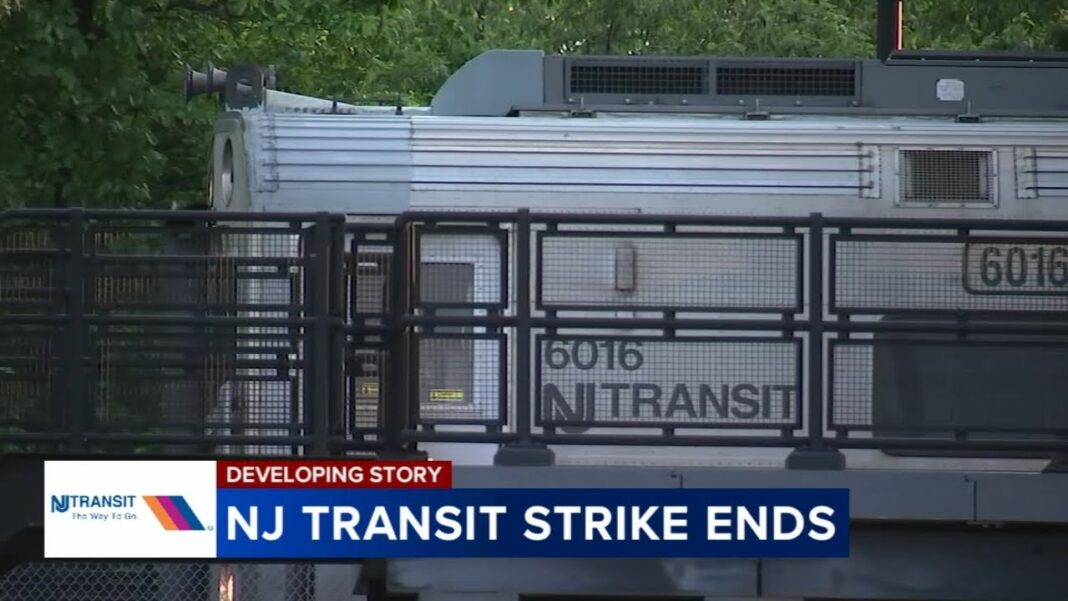
After three days of halted service, mounting commuter frustration, and urgent political pressure, New Jersey’s first statewide transit strike in more than four decades came to an end Sunday evening, following a breakthrough agreement between New Jersey Transit (NJ Transit) and the Brotherhood of Locomotive Engineers and Trainmen (BLET). As reported by The New York Times, trains are expected to resume full service by Tuesday morning, while Monday will see the continuation of NJ Transit’s contingency plan relying on chartered buses and PATH rail connections.
The abrupt strike, which began at 12:01 a.m. Friday, paralyzed NJ Transit’s commuter train network—one of the largest in the nation—affecting approximately 350,000 daily riders and exposing the region’s heavy dependence on the rail system. The agreement, which was mediated by the National Mediation Board over the weekend, brought an end to a labor standoff that had festered for more than five years.
Governor Philip D. Murphy, speaking at a Sunday night press conference, described the moment as a “collective sigh of relief” for New Jersey’s workforce and commuters. However, as The New York Times notes, Murphy offered no specifics about the terms of the deal, only characterizing it as “fair to NJ Transit’s employees while also being affordable for our state’s commuters and taxpayers.”
The key point of contention during negotiations had been salary parity. Engineers at NJ Transit have long argued that their pay lags behind that of peers at Amtrak and New York’s other commuter rail services. According to the report in The New York Times, the prior tentative deal—rejected by the engineers in April—would have increased their average annual salary from $135,000 to $172,000. Despite the substantial proposed raise, the union rejected the offer, citing unresolved issues around work rules and scheduling.
Governor Murphy, who has been vocal in his criticism of the union’s decision to strike, did not mince words earlier in the week. As The New York Times reported, he called the walkout “a mess of their own making,” accusing the union of abandoning commuters during a critical time.
Union General Chairman Thomas Haas, for his part, countered that NJ Transit’s negotiators had walked away from the bargaining table on Thursday night, forcing the union’s hand. “They left us with nobody to bargain with and no choice but to strike,” Haas stated.
Though the strike lasted only three days, the impact was immediate and far-reaching. The New York Times documented widespread confusion and disruption on Friday morning as commuters arrived at stations unaware of the shutdown. Many were left stranded or forced to pay out of pocket for alternatives, such as Amtrak or car services. One commuter, Chris Smith, told The Times he paid $79 for a one-way Amtrak ticket to his job in Midtown Manhattan. “They’re selfish,” he said of NJ Transit. “Friday was horrible. Trust me.”
Another commuter, Jay Frederick, who works at Northern State Prison in Newark, said he was unable to get to work at all. “It’s a relief that it’s over,” he told The New York Times. “But you need these things, these trains and buses, to be in place.”
The economic fallout was not limited to individual workers. According to the Partnership for New York City, each hour of delay for NJ Transit riders caused an estimated $6 million in lost productivity in the New York metropolitan area. That figure, reported by The New York Times, underscores the region’s reliance on uninterrupted rail service.
NJ Transit CEO Kris Kolluri indicated that while the engineers secured improved compensation, they also conceded to modifications in work rules—concessions that may help defray the financial burden of the pay raises. Although the exact details of those adjustments remain confidential, Kolluri emphasized that the agreement represents a viable balance. “It is now the union’s job to go back and brief their members and put the agreement up for ratification,” he said, as per the report in The New York Times.
The tentative agreement must now be ratified by union members, who previously rejected a similar deal in April. Governor Murphy expressed optimism, stating he had “a high degree of confidence” in the deal’s approval.
For NJ Transit, the strike’s financial toll is still being assessed, though Kolluri had previously warned of a $4 million-per-day loss if the strike were to persist. The agency will now begin safety inspections and track evaluations before Tuesday’s full service restoration.
While the strike has ended for now, the episode reveals broader vulnerabilities in labor relations within NJ Transit. The engineers’ union was the only one of 15 that had not yet reached a contract agreement. The suddenness and scale of the strike suggest deep-seated frustration that may not be fully resolved even with this latest agreement.
For state officials and commuters alike, the strike was a stark reminder of the fragility of critical infrastructure—and the human cost when it breaks down. As The New York Times report framed it, the crisis highlighted the political and logistical complexities of running one of the country’s most essential transit systems during a period of economic volatility and labor unrest.
Going forward, the hope among commuters and policymakers is that this resolution will not only end the immediate disruption, but also usher in a more constructive phase of labor relations. For now, New Jersey’s weary commuters can exhale—until the next round of contract talks looms on the horizon.