



|
Getting your Trinity Audio player ready...
|
By: Daisy Fay
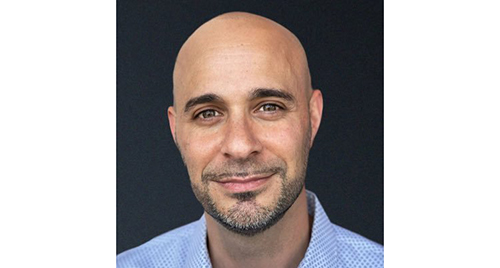
Christopher Verga, a Suffolk Community College history instructor, Schneps Media reporter, and Bay Shore resident, returns with a new book, “Nazis of Long Island” following his previous works, Saving Fire Island from Robert Moses and Cold War Long Island, the latter coauthored with journalist Karl Grossman, who pens the foreword to this latest release, Fire Island News reported.
Verga’s new work dives into the shocking presence of Nazi operatives and sympathizers on Long Island before and during World War II. Among the most startling incidents, he recounts how four Nazis arrived on Amagansett’s shore in 1947 aboard a rubber raft, posing as fishermen from Southampton. Trained as spies by the Nazi high command, they carried $175,000 in cash—equivalent to roughly $3 million today—for bribes and sabotage. Their mission: destroy power lines, disrupt the energy grid, and sow chaos to destabilize the U.S. government. All were eventually captured, tried, and convicted.
Fire Island News highlighted Verga’s exploration of the German American Bund, which promoted antisemitic propaganda through rallies and summer youth camps. Camp Siegfried in Yaphank, for instance, was modeled after Nazi Germany and indoctrinated children with Hitlerism, discipline, and militarism. Young campers were handed daggers and told, “When Jewish blood drips from the knife, then will the German people prosper.” Thousands of New York-area families sent their children there.
Verga also situates the Bund within a wider network of antisemitic influences on Long Island, noting the Ku Klux Klan’s local presence, sympathetic officials, and the circulation of The Protocols of the Elders of Zion. The combination of fear, xenophobia, and growing skepticism about democracy, Verga argues, created “a breeding ground for an American Reich,” as he titles Chapter 11.
Yet resistance was strong. As Fire Island News reported, in 1935, ten thousand anti-Nazi demonstrators marched down Eighth Avenue demanding the U.S. withdraw from the Olympic Games in Germany. Though the government did not comply, public pressure led authorities, including Governor Dewey, to investigate the Bund’s finances, eventually exposing its leader Fritz Julius Kuhn.
Verga details other espionage cases, such as the Duquesne Spy Ring, which included Merrick resident Everett Roeder, who supplied Nazi Germany with bombsights, guns, and autopilot technology from his job at Sperry Gyroscope in Garden City. Convicted along with 33 other agents, these cases helped dismantle Long Island’s Nazi network.
Fire Island News notes that Verga supplements his narrative with rare photos, letters, drawings, and cartoons, including one of boxing legend Joe Louis serving as a prison guard at Camp Upton. The book contextualizes historical antisemitism with contemporary relevance, warning that bigotry persists. As Grossman writes in the foreword: “There is no present or future—only the past happening over and over again—now.” Understanding these events, he argues, is crucial to preventing history from repeating itself.
With meticulous research and compelling storytelling, Verga’s Nazis of Long Island serves as both a historical account and a cautionary tale. The book reminds readers that the threats of hatred, propaganda, and extremist ideology are never fully confined to the past, making its lessons essential for today.