



|
Getting your Trinity Audio player ready...
|
By: Dean Weiner
The city may be bouncing back from the pandemic, but studies show that certain areas of Manhattan are slower in recovery process.
A new report just out from CBRE cites a bunch of upbeat metrics for the first quarter of 2023. But Realty Check’s eyes tell another story — not negating the findings, but adding nuance to the big picture, writes Steve Cuozzo of The New York Post.
First, the good news. According to CBRE, available storefronts tracked across 16 prime shopping corridors fell by 7.2% from the fourth quarter from 222 to 206.Average asking rents increased for the third consecutive quarter to $638 per square foot, up 3.7% from the prior quarter and 8% higher than a year ago.
There were impressive transactions at premier locations. LVMH signed a new 43,500-sq.-ft. lease for Louis Vuitton at The Trump Organization’s 6 East 57th Street, where Tiffany was temporarily parked before it moved back into its original building on Fifth Avenue.
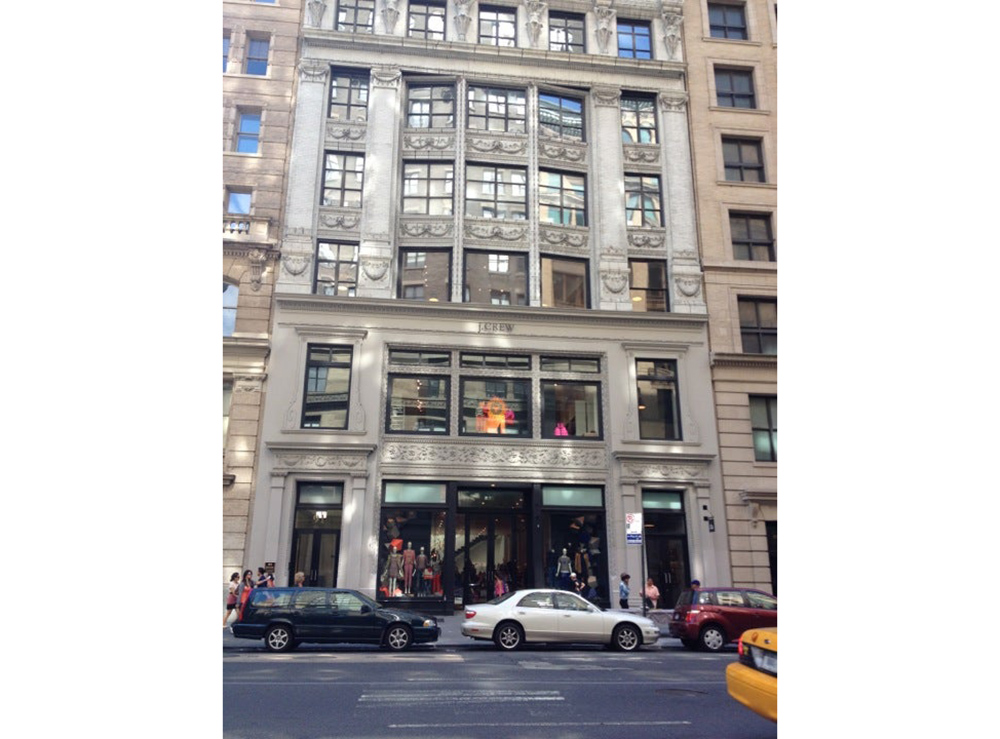
Substantial if smaller deals included J.Crew’s 27,000 square-foot renewal at 91 Fifth Avenue; a new, 26,000 square-foot lease for Aqua Restaurant Group at 902 Broadway; and a new, 18,000 square-foot location for H&M at 591 Broadway.
Within two blocks of The New York Post’s offices at 1211 Sixth, three large, highly visible corners have stood vacant for at least a year since prior tenants the NHL Store, Gap and Cafe Metro closed. In fact, little has budged in the stubborn, midtown-Sixth market. Another large corner at the New York Hilton at West 54th Street remains empty after years of trying, despite enormous foot traffic including high-spending hotel guests.
But CBRE retail broker Matt Chmielecki, who didn’t prepare the report but reviewed it, said there’s more to assessing any particular local situation than merely “looking at stores that are vacant and counting them,” which he called “the least scientific way to measure the market.”
Without referring directly to Sixth Avenue, he said that the lease-up process takes much longer than it did in the past, due to multiple layers of corporate approvals, among other things.
Manhattan has much more high-quality retail space than it did 25 years ago, due to new development and storefront creation at older buildings that previously had none. (The Hilton storefronts, for example, were built just a few years ago in what was previously a taxi driveway.)
Asked whether there’s enough demand to fill all the new Manhattan space, Chmielecki said, “The short answer is yes.”
He said the “longer answer” is that as high-end retail spread from Midtown and Uptown to the Meatpacking District, Soho, Bleecker Street and other areas, it took time for landlords, tenants and brokers to understand which kinds of tenants were viable there.
“Today, we’re much more clearly defined than in the past on the different markets.”