



|
Getting your Trinity Audio player ready...
|
By: Ariella Haviv
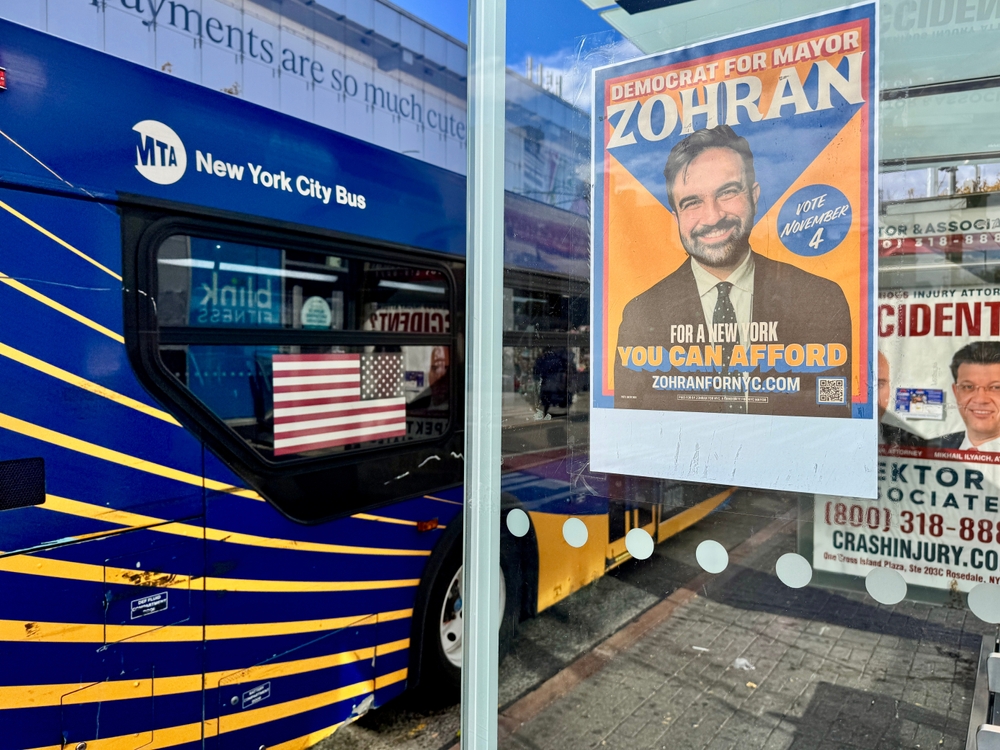
In the shimmering heat of a summer poised to deliver the spectacle of the FIFA World Cup to the metropolitan corridor, New York City finds itself at the threshold of an experiment that is as symbolic as it is logistical. Mayor Zohran Mamdani, newly installed and keen to translate campaign rhetoric into governing reality, is pressing for an audacious pilot: the suspension of fares on all city buses for the five weeks spanning mid-June to mid-July, the precise window in which more than 1.2 million visitors are expected to flood the New York–New Jersey region. According to a report on Wednesday at VIN News, the proposal has been framed by City Hall not merely as a gesture of hospitality to a global audience, but as a proving ground for one of Mamdani’s most resonant campaign pledges, the promise of “fast and free buses” as an antidote to the city’s gnawing affordability crisis.
VIN News has chronicled the early contours of this debate, situating the mayor’s gambit within a broader political narrative that has come to define his ascent: the conviction that mobility is not merely a function of infrastructure, but a social good that ought to be insulated from the market logic of tolls and turnstiles. In Mamdani’s rendering, the bus fare—now a $3 levy imposed on each rider—is not a trivial toll but a regressive tax that weighs most heavily upon the working poor, the elderly, and those whose livelihoods tether them to long, circuitous commutes across the city’s boroughs. By temporarily abolishing that fee during a moment of unprecedented international attention, the mayor hopes to conjure an image of New York as both capacious and humane, a metropolis that greets the world not with nickel-and-dime parsimony but with an open door and an open bus.
Yet as VIN News reported, the proposal has encountered a wall of institutional hesitation. The Metropolitan Transportation Authority, the behemoth that oversees the city’s buses and subways, remains deeply dependent upon fare revenue to sustain its sprawling $21 billion annual budget. State officials, too, have signaled unease, wary that a sudden, politically charged suspension of fares could set a precedent that erodes fiscal discipline and complicates an already fragile effort to curb fare evasion. The MTA’s current preoccupation with recapturing lost revenue through enforcement is not merely a technocratic obsession; it is a response to a reality in which nearly half of weekday bus riders were reported to have evaded fares in the most recent quarter, a figure that VIN News has underscored as both a symptom of economic strain and a challenge to the legitimacy of the system’s financing model.
The mayor’s allies, however, have seized upon those same statistics as evidence of a deeper structural malaise. In their telling, the prevalence of fare evasion is not primarily an indictment of civic virtue but a referendum on the affordability of public transit itself. VIN News has amplified this argument, noting that the widespread refusal or inability to pay fares exposes the tension between the city’s professed commitment to equity and the lived experience of those for whom even modest fees accumulate into meaningful hardship. The bus, in this view, is not a luxury but a lifeline, and the ritual of payment at its door an anachronism in a city that proclaims itself a sanctuary of opportunity.
Mamdani has sought to buttress his case with precedent. In 2023, the city piloted a modest program that rendered one bus route in each borough free of charge. VIN News has revisited the results of that experiment, which yielded a discernible uptick in ridership and a reduction in assaults on bus drivers, a grimly persistent feature of urban transit life. Yet the pilot also revealed the limits of fare abolition as a panacea: service speeds did not improve, and the structural impediments of traffic congestion and underinvestment remained stubbornly intact. For critics, these findings underscore the risk of mistaking symbolic generosity for substantive reform. They argue that scarce public dollars might be more judiciously deployed in modernizing fleets, expanding subway capacity, or untangling the bottlenecks that render bus travel so often an exercise in patience.
The World Cup, with its promise of global attention and its potential to transform the city into a temporary capital of sport and spectacle, has lent urgency to the mayor’s vision. Although the matches themselves will be staged across the Hudson at MetLife Stadium in East Rutherford, New Jersey, New York City anticipates a cascade of ancillary benefits: tourism, hospitality revenues, and a carnival of cultural events that will spill into its streets and squares. In a gesture heavy with symbolism, Mamdani last month appointed his former campaign manager, Maya Handa, as the city’s World Cup czar, a move reported by VIN News as emblematic of the administration’s desire to choreograph not merely logistics but narrative. The fare-free bus proposal, in this context, becomes a performative overture to the world, a declaration that New York’s arteries are open to all who arrive.
Yet beneath the choreography lies a more austere calculus. The MTA’s budgetary fragility is not a matter of abstract accounting but of concrete consequence: maintenance deferred, service curtailed, capital projects delayed. State officials have cautioned that a five-week suspension of fares, even if framed as a pilot, could punch a conspicuous hole in revenue streams already strained by the lingering aftershocks of the pandemic. They worry, too, about the political difficulty of restoring fares once the public has tasted their absence, particularly if the experiment proves popular among residents as well as visitors.
Mamdani, for his part, appears to welcome that tension. The temporary abolition of fares is not, in his rhetoric, an isolated flourish but a wedge intended to pry open a broader conversation about the moral economy of transit. The mayor’s “fast and free buses” promise was not a peripheral talking point during the campaign but a central plank of an affordability agenda that resonated with voters weary of incrementalism. To retreat now, in the face of bureaucratic resistance, would risk casting his administration as captive to the very institutions he once pledged to reform.
The stakes, then, are as much political as they are logistical. Should the pilot proceed and succeed in cultivating goodwill without precipitating fiscal or operational chaos, Mamdani would emerge emboldened, armed with empirical ammunition for a more ambitious bid to make fare-free buses a permanent feature of urban life. Such an outcome could recalibrate the city’s policy discourse, shifting the terms of debate from whether free transit is feasible to how it might be sustainably financed. Conversely, should the experiment falter—if buses become overcrowded, if revenue shortfalls ripple outward, if public safety deteriorates—the mayor’s critics will seize upon the episode as proof that idealism untethered from fiscal realism courts dysfunction.
In the end, the question that animates this moment is not merely whether New York City can afford to make its buses free for five weeks, but what kind of city it aspires to be when the world is watching. The VIN News report cast the proposal as a microcosm of a larger struggle between a vision of urban life rooted in universal access and a governance culture constrained by budgets, agencies, and the inertia of precedent. As the summer approaches and the global caravan of the World Cup draws near, the buses of New York may yet become unlikely stages upon which a contest of values is played out, one farebox at a time.
