



|
Getting your Trinity Audio player ready...
|
By: Arthur Popowitz
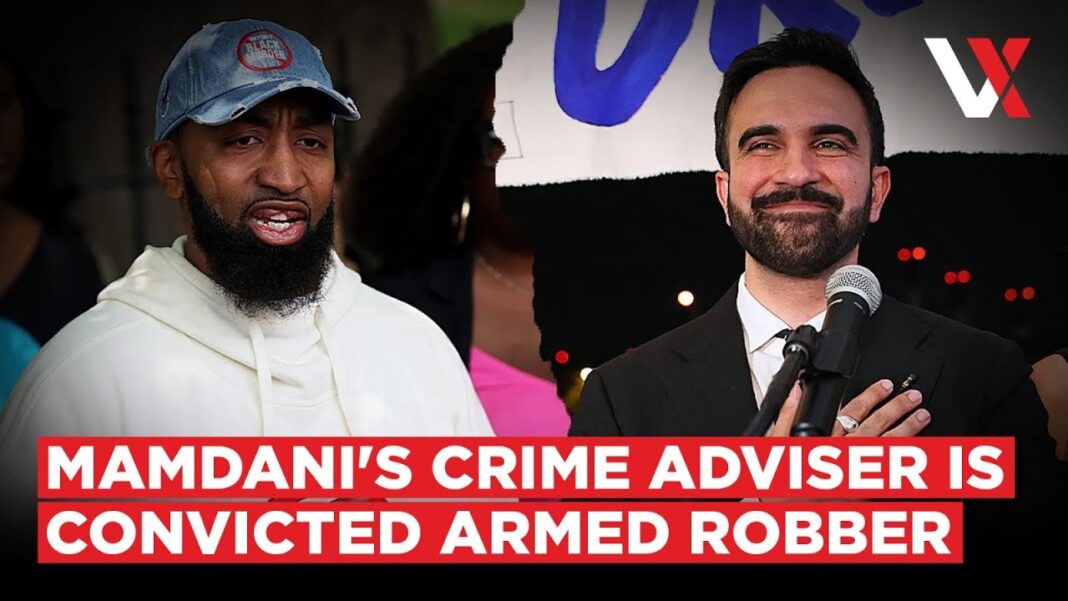
By any measure, the naming of Mysonne Linen—a once-promising rapper whose life veered into violent crime before pivoting to activism—as an adviser on mayor-elect Zohran Mamdani’s “criminal legal system” transition committee was bound to spark controversy. Yet as The New York Post reported on Tuesday, the most searing backlash came from a woman whose life was irreparably altered by the crimes prosecutors long attributed to Linen and his accomplices.
The Bronx widow of taxi driver Joseph Eziri, who died last year after living for decades with the trauma of a 1997 armed robbery, expressed disbelief when The New York Post informed her of Mamdani’s decision. Her voice, even filtered through journalistic recounting, carried an unmistakable mixture of anguish and bewilderment.
“Are you crazy?” she asked, dismayed that a man convicted of participating in the brutal robbery crew that terrorized her husband—and other cab drivers—had been elevated to an advisory role in shaping New York City’s criminal justice policy. The widow, who requested anonymity, was unequivocal in her condemnation. “It’s wrong. Somebody that committed that kind of crime—and then you make him an advisor on criminality? Please… To me, he is no good. Why do you give him a position like that?”
Her anguish, as recounted in The New York Post report, did not merely reflect private grief. It crystallized a broader public unease about a mayor-elect whose unapologetic socialist politics and adversarial rhetoric toward law enforcement have already unsettled large swaths of the city’s political establishment and Jewish community. In this controversy, however, the debate centers not on ideology but on memory—specifically, the memory of those who bore the brunt of violent crime in New York’s more lawless eras.
According to archival reporting by The New York Daily News and revived by The New York Post, Linen was convicted in 1999 for participating in a robbery crew responsible for terrorizing cab drivers across the Bronx. The June 8, 1997 assault on Eziri left lasting psychological scars. The widow recounted the night with the clarity of someone who has replayed it in her mind hundreds of times:
“My husband went to work that evening. Later in the night he called me, telling me that a guy he picked up—on Ogden Avenue, I think—took his money, and then he used a knife…”
It was the kind of robbery that was tragically common in the pre-2000 taxi world: sudden, swift, and devastating. Eziri survived, but the wound—emotional, not physical—never healed. Upon his death last year from a heart attack, his widow told The New York Post that he had never escaped the memory of that night.
“He would protest against it, that’s for sure. I know my husband. It’s very, very clear—that’s not a job for him. Let him advise people on how not to be criminals—not advise the mayor on criminality.”
Her words, anguished yet precise, cut to the heart of the controversy: who gets to shape New York’s future, and whose suffering is overridden when prestige attaches itself to narratives of redemption?
Facing a barrage of criticism from The New York Post and other outlets, mayor-elect Mamdani showed no indication of second-guessing his pick. At a press conference in Lower Manhattan, he defended Linen’s appointment as part of a broader commitment to including people with lived experience in the criminal justice system.
“We put together a team of more than 400 New Yorkers… who bring with them both fluency of the policies and politics of the city, the places they’ve succeeded and the places they’ve failed,” Mamdani said, again quoted by The New York Post. “We will take all of their experiences into account as we build a city for each and every person.”
To Mamdani and his allies, Linen represents a model of transformation: a man who served his sentence, denied involvement in the worst accusations, and dedicated his post-prison life to violence interruption and nonprofit work—most notably through his organization Rising Kings, which provides programming for Rikers Island inmates.
Yet even sympathetic observers acknowledge the profound optics problem. Linen’s record may tell a story of rehabilitation, but the pain of his alleged victims remains unmitigated—and the notion that someone tied to violent robberies now helps to advise a mayor on crime strikes many as tone-deaf at best, provocative at worst.
Linen is not alone among Mamdani’s controversial selections. As The New York Post detailed extensively, several members of the 17 transition committees have histories guaranteed to inflame New York’s policing and Jewish communities. These include Lumumba Bandele, a Black nationalist and leader within the Malcolm X Grassroots Movement, who has voiced support for Assata Shakur and Herman Bell—both convicted of murdering police officers and Vincent Schiraldi, former Maryland juvenile services chief, who resigned amid allegations of mismanagement and inadequate oversight.
Former NYPD Chief of Department John Chell offered a stark assessment to The New York Post: “It’s just another appointed adviser that has a questionable past, which is in line with some of his other recent appointees who were anti-police and establishment. The optics and reality here point to a potential erosion of public safety in New York City.”
That warning, delivered with unmistakable urgency, underscores what many see as Mamdani’s ideological rigidity: a preference for advisers whose backgrounds critique or challenge traditional law enforcement rather than reinforce it.
Linen, now 49, has long maintained that he was wrongly implicated in the robberies and insists his conviction does not reflect the man he is today. The criminal justice system, he says, unjustly derailed his early music career and thrust him into a punitive environment from which he emerged determined to rebuild and contribute.
If his story appeared in isolation—a man overcoming adversity and striving to give back—it might be held up as a testament to second chances. But public policy is not constructed in isolation. When individual redemption intersects with public expectation, unresolved trauma, and political messaging, friction is inevitable.
Mamdani, for his part, seems committed to the idea that participation from those who were formerly incarcerated is not only appropriate but essential. His defenders argue that individuals who have experienced the system from the inside possess insights unattainable through academic study or bureaucratic tenure.
His detractors respond that this argument must have limits—limits that should exclude individuals convicted of violent crimes against civilians, especially when victims or their families remain devastated.
The conflict playing out in this appointment reflects deeper tensions in contemporary New York: the clash between progressive visions of criminal justice reform and the public’s demand for safety, accountability, and respect for victims.
The New York Post has chronicled these anxieties extensively, particularly as Mamdani prepares to take office in a climate of rising antisemitism, polarized politics, and intensified scrutiny over public safety. For New Yorkers who remember the instability of the 1990s, the symbolism of elevating someone tied—rightly or wrongly—to a violent robbery crew feels like a regression.
To others, it suggests a future in which redemption is prioritized over retribution, and where those who have lived the consequences of punitive systems are empowered to reshape them. Yet the pain experienced by victims and their families cannot be abstracted in service of ideological goals.
The widow of Joseph Eziri embodies this tension. Her grief is a reminder that policymaking, however progressive in theory, intersects with real human suffering—and with memories that have never healed.
As Mamdani’s transition committees begin their work, the debate surged by Linen’s appointment—brought into public consciousness through The New York Post’s investigative reporting—is unlikely to fade quickly. The widow’s words continue to reverberate: “That’s not a job for him.”
Her judgment, born of lived experience rather than political ideology, reflects a broader unease now permeating the city. Whether Mamdani chooses to listen—or to double down on his convictions—will reveal much about the direction in which he intends to lead New York.
For now, the appointment stands. So does the widow’s grief.
And the city watches, once again, as its future is shaped by decisions that reach back into its past.