



|
Getting your Trinity Audio player ready...
|
Mamdani’s $100M Pledge for Migrant Deportation Defense Sparks Outcry Amid NYC’s Fiscal Strain
By: Andrew Carlson
New York City’s looming mayoral race has again turned into a proxy battle over immigration, fiscal priorities, and the direction of the city’s identity. This time, the firestorm centers on Democratic nominee Zohran Mamdani, who has declared that a “cornerstone” of his campaign will be a sweeping expansion of legal defense services for illegal migrants facing deportation.
As The New York Post reported on Saturday, Mamdani is pledging to add over $100 million in taxpayer funding to cover attorneys for the city’s undocumented population — a dramatic escalation from the already unprecedented $54.5 million allocated under the current budget passed in June.
“This is about keeping New Yorkers safe, keeping families together, and showing the world they are welcome here,” Mamdani proclaimed in an MSNBC interview, labeling the plan as part of his “Trump-Proofing NYC” platform. He pointed to the estimated 400,000 city residents “at urgent risk of deportation,” lamenting that fewer than 200 secured free lawyers last year.
But while Mamdani positions the initiative as humanitarian, critics across the spectrum are assailing the plan as fiscally reckless, legally dubious, and deeply unfair to immigrants who followed the law. The controversy, as The New York Post report noted, has become one of the defining flashpoints of the campaign season.
New York City is no stranger to staggering expenditures related to its sanctuary policies. Since the influx of asylum seekers began in 2022, the city has poured an estimated $12 billion into housing, food, education, and emergency services for migrants. The Adams administration, under pressure, has repeatedly warned that the city is approaching a fiscal cliff.
Mayor Eric Adams defended the existing $54.5 million allocation as the most generous municipal legal defense program in the nation. “More than any other major city in America,” Adams boasted earlier this year, even as he simultaneously pressed Albany and Washington for relief.
For Mamdani, however, that investment represents only a beginning. He has vowed to expand the Law Department’s headcount by at least 200 attorneys to handle the influx of deportation cases — though, as The New York Post report observed, his campaign has offered no details on funding mechanisms or staffing structures.
That vagueness has fueled further skepticism. “It’s one thing to propose $100 million more in spending,” one City Hall budget analyst told The New York Post. “It’s another to explain where it’s going to come from in a budget already stretched by billions for the migrant crisis.”
The backlash has been swift and blistering.
Council Member Robert Holden, a Queens Democrat known for breaking with his party on public safety issues, excoriated the plan in comments to The New York Post:
“New York is in a fiscal crisis, and Mamdani wants to rip another $100 million from taxpayers to bankroll deportation defense, rewarding lawbreaking while seniors, classrooms, sanitation, and public safety go without. It spits in the face of every immigrant who played by the rules, and I will fight this giveaway with everything I’ve got.”
Republican mayoral contender Curtis Sliwa, founder of the Guardian Angels and a longtime critic of sanctuary policies, was equally sharp: “It is unfair to taxpayers and to those who played by the rules to come here legally, and enough is enough.”
Even immigration lawyers unaffiliated with the campaigns have raised concerns about the precedent such funding could set. “Anybody who is present in the United States without status can be removed,” Candice Ackermann, who represents high-skilled immigrants, told The New York Post. “The law is clear. Prior administrations may not have enforced it strictly, but the idea that taxpayers should foot the bill while legal immigrants cover their own costs — and even new fees — is extraordinary.”
That inequity is perhaps the most politically combustible aspect of Mamdani’s proposal.
As The New York Post report highlighted, legal immigrants applying for asylum or visas must pay steep legal fees out of pocket, in addition to a $600 “asylum program fee” introduced last year. By contrast, Mamdani’s plan would provide illegal migrants not only with free representation but also with taxpayer-backed infrastructure designed to fight federal removal proceedings.
“It’s a double penalty,” said one immigrant advocacy attorney quoted in The New York Post. “Those who respect the rules end up funding those who didn’t, and that corrodes trust in the system.”
Mamdani’s strategy also raises thorny constitutional and federalism questions. Deportation is a federal process, carried out by immigration courts under the Department of Justice. While cities may offer support services, pouring $100 million into a program designed explicitly to resist federal deportation orders will almost certainly trigger confrontation with Washington.
Republicans in Congress have already signaled they may attempt to curtail federal funding to New York City if Mamdani prevails and enacts his plan. “We will not allow sanctuary cities to weaponize taxpayer money against federal law,” one House Judiciary Committee aide told The New York Post.
At the same time, Mamdani’s campaign has leaned heavily into its messaging on resistance to President Trump’s policies. By branding the initiative as “Trump-Proofing NYC,” the candidate is effectively daring Republicans to make immigration the centerpiece of their opposition — a gamble that could mobilize his progressive base while alienating moderate voters.
The debate over deportation defense has become a symbolic dividing line in an already volatile mayoral contest.
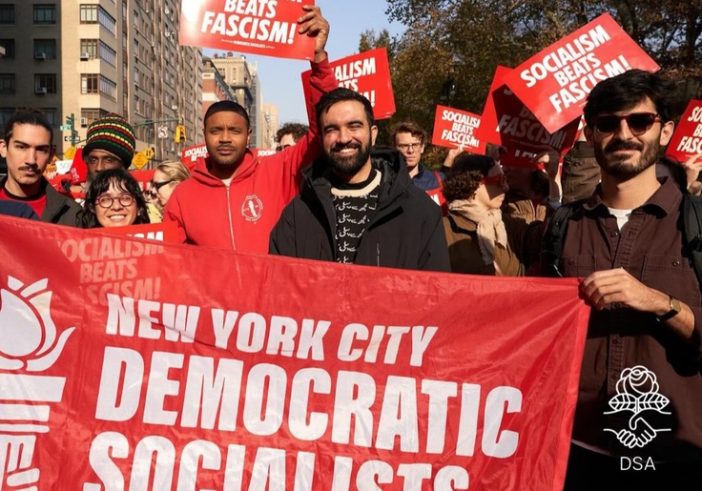
Mamdani, a Democratic Socialist, has surged on the strength of endorsements from progressive groups and activists. His unapologetically left-wing platform emphasizes housing as a right, defunding the NYPD, and opposing what he terms “imperialist wars abroad.”
By contrast, Curtis Sliwa has campaigned as the law-and-order candidate, railing against sanctuary policies and vowing to restore public safety. Former Gov. Andrew Cuomo, eyeing a political comeback, is positioning himself as the centrist alternative capable of uniting disillusioned Democrats and independents.
And incumbent Mayor Eric Adams, though not on the ballot, remains a pivotal figure — his fiscal management and handling of the migrant crisis loom heavily over the race.
As The New York Post report observed, Mamdani’s pledge has effectively forced every candidate to clarify their stance on taxpayer-funded deportation defense, a niche issue that could become a litmus test for the city’s political future.
Underlying the controversy is the sheer scale of the migrant crisis gripping New York. City Hall estimates that over 180,000 asylum seekers have arrived since 2022, overwhelming shelters, schools, hospitals, and social services.
The $12 billion spent thus far has drawn intense scrutiny, with auditors warning the figure could climb even higher absent federal or state intervention. Against that backdrop, Mamdani’s additional $100 million — while small compared to the overall sum — has become emblematic of the broader debate over priorities.
“Every dollar matters right now,” a senior budget official told The New York Post. “When we’re already struggling to fund classrooms, transit, and basic services, adding another nine-figure line item for deportation defense raises serious questions about judgment.”
Zohran Mamdani has staked his mayoral campaign on a bold, polarizing promise: that New York City should spend more than any other municipality in the nation not only to shelter and feed illegal migrants but also to fight their deportation in federal court.
For his supporters, the pledge represents moral clarity and a defiant stand against what they view as unjust immigration policies. For his critics, it epitomizes fiscal irresponsibility and misplaced priorities, rewarding lawbreaking while straining a city already in crisis.
As The New York Post report emphasized, the lack of details on funding, the unfair burden placed on legal immigrants, and the risk of federal backlash make Mamdani’s plan one of the most contentious — and consequential — proposals of the election season.
Whether voters embrace or reject it may ultimately determine not only the future of New York City’s mayoralty but also the city’s identity as either a bastion of sanctuary or a metropolis forced to reckon with fiscal reality.
