



|
Getting your Trinity Audio player ready...
|
By: Abe Wertenheim
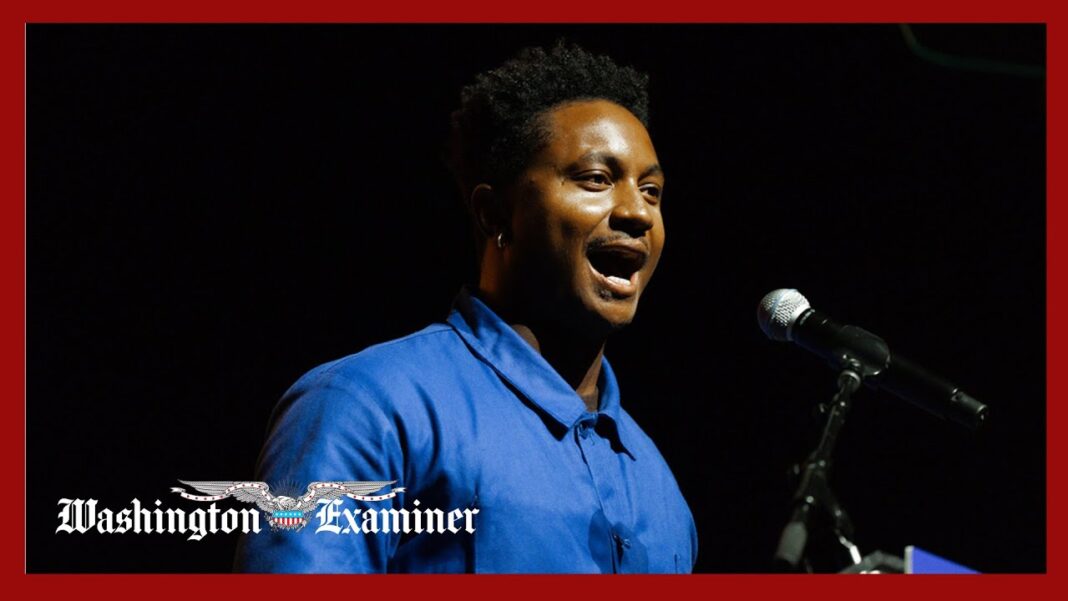
Mayor-elect Zohran Mamdani found himself navigating a delicate internal confrontation on Wednesday evening, as he appeared before the New York City chapter of the Democratic Socialists of America in an effort to dissuade the organization from endorsing a primary challenge against one of the most powerful Democrats in the country. According to a report that appeared on Wednesday evening in The New York Daily News, Mamdani’s presence at the meeting—held at Manhattan’s Church of the Village—served as a stark demonstration of the tensions roiling the influential left-wing group following his November victory.
The meeting, convened by the DSA’s Electoral Working Group, featured impassioned exchanges over whether to endorse Brooklyn City Councilman Chi Osse, a onetime campaign surrogate of Mamdani’s who has launched a 2026 primary campaign against House Minority Leader Hakeem Jeffries. Osse’s challenge to Jeffries has ignited a fierce debate inside the DSA and among broader political circles, as Democratic Socialists grapple with ideological ambitions, strategic limitations, and the rapid ascent of Mamdani, who is poised to become New York City’s first DSA-aligned mayor and its youngest mayor in more than a century.
The New York Daily News report noted that Mamdani’s decision to make an appearance—particularly at a moment when he is assembling his administration ahead of his January 1 inauguration—signaled his desire to exert influence over the direction of the DSA even as he prepares to take executive office. For the mayor-elect, the meeting was as much about political calculus as it was about the complex alliances that helped propel him to victory.
Mamdani, a dues-paying DSA member himself, opened his remarks with a warm “it is good to be home,” according to accounts provided to The New York Daily News by individuals who attended the gathering and spoke on condition of anonymity. Yet his posture quickly shifted to the pragmatic: he urged the organization to reject Osse’s request for an endorsement, warning that initiating a challenge against Jeffries could undermine the very legislative achievements the DSA seeks under his incoming administration.
“The choice is not whether to vote for Chi or Hakeem at the ballot box,” Mamdani told attendees, according to the sources. “The choice is how to spend the next year. Do we want to spend it defending caricatures of our movement, or do we want to spend it fulfilling the agenda at the heart of that very same movement?”
He continued by arguing that an endorsement would hinder his administration’s ability to deliver on promises of affordability and structural reform—issues that formed the backbone of his mayoral campaign and rallied more than one million New Yorkers to support him. “I believe that endorsing [Osse] makes it more difficult to do the latter,” Mamdani said, per the sources, “more difficult to deliver on the life-changing policies that more than 1 million New Yorkers voted for just two weeks ago.”
The mayor-elect added: “I know how I want to spend the next year, and I urge you all to join me in voting no on this endorsement, not because our dreams are too small, but because they are as big as the entire city.”
His remarks landed with unmistakable weight. Although Mamdani has no more formal voting power than any other dues-paying member within the DSA’s structure, his status as incoming mayor—and, notably, the highest-ranking elected official in the DSA’s New York City chapter—carries considerable symbolic and practical influence.
While Mamdani urged caution, other high-profile members of the DSA pushed back. Brooklyn Assemblywoman Emily Gallagher and Gustavo Gordillo, co-chair of the DSA’s New York City chapter, spoke in favor of Osse’s insurgent candidacy, according to the meeting accounts provided to The New York Daily News. Their arguments centered on the belief that a challenge to Jeffries—long a target of socialist criticism for his centrist ideology, staunch support for Israel, and robust ties to establishment Democratic politics—was not only justified but overdue.
But the fissures within the organization were equally visible on Mamdani’s side. Tascha van Auken, field director for Mamdani’s mayoral campaign and a DSA power broker in her own right, also spoke against endorsing Osse. She focused her critique on Osse’s relatively new membership within the organization, emphasizing that he had only begun paying dues after Mamdani’s primary victory earlier this year.
The implication, The New York Daily News report noted, was that Osse’s affinity with socialist principles was not sufficiently longstanding or deeply rooted to warrant movement-wide backing in such a high-stakes race.
The Electoral Working Group, the body responsible for debating and voting on endorsements, has until Saturday to render a decision.
Underlying Mamdani’s opposition is a larger electoral and strategic landscape. As The New York Daily News reported, the mayor-elect has privately signaled greater openness to supporting a progressive challenger to Rep. Dan Goldman, another centrist Democrat, in the 2026 cycle. Goldman, though well-resourced, is seen as more vulnerable to a primary challenge than Jeffries, whose dominance in his district and national prominence as House minority leader make him a formidable political opponent.
Mamdani reportedly believes that a full-throttle assault on Jeffries—whose district remains deeply loyal—could backfire, jeopardizing the DSA’s broader momentum at a critical juncture. The organization emerged from Mamdani’s mayoral victory invigorated and emboldened, and some of its most vocal members have urged that success to become a catalyst for a wave of primary challenges against centrist Democrats across the state.
But the mayor-elect’s message to the membership on Wednesday was clear: taking on Jeffries now could undermine the very gains the DSA seeks to consolidate. Mamdani’s appeal reflected a tactical realism that acknowledges the limits of political capital, even at a moment of ascendance.
For his part, Osse made an impassioned case for his candidacy earlier in the evening. According to attendees cited in The New York Daily News report, the councilman told members he had already secured $150,000 in pledged donations and was committed to fighting for what he described as “true socialism.” His platform includes Medicare for All, abolishing Immigration and Customs Enforcement, and imposing a U.S. arms embargo on Israel—policy positions deeply aligned with the DSA’s ideological tenets.
Osse acknowledged what he called “skepticism” in the room but insisted that the challenge was one rooted in principle. He sharply criticized Jeffries, accusing him of using race “as a shield” while failing to combat “fascism” and “empowering conservative principles.” “He cynically uses race as a shield, while he fails to fight fascism, sells out our communities, empowers conservative principles and funds mass slaughter,” Osse said, according to the sources quoted in The New York Daily News report.
But despite the force of his rhetoric, Osse also signaled that he may not proceed with his challenge if he does not secure an endorsement from the DSA—a reminder of the organization’s weight in shaping the electoral prospects of left-leaning candidates in New York City politics.
The exchange marked a notable evolution in the relationship between Mamdani and Osse. While Osse was a key surrogate during Mamdani’s primary campaign—helping him secure support among Black voters in central Brooklyn—their partnership appears to have strained following the councilman’s registration as a candidate against Jeffries earlier this month. Mamdani had repeatedly urged Osse, both publicly and privately, not to enter the race.
Adding another layer to the unfolding dynamic is Jeffries’ own decision to endorse Mamdani for mayor shortly before the November election. For months, the House minority leader withheld his endorsement, prompting speculation about tensions between the two Democrats. His eventual support is now viewed in some quarters as having influenced Mamdani’s attempt to prevent a challenge to Jeffries from within the DSA’s ranks.
The debate over Osse’s candidacy is unfolding at a pivotal moment for the Democratic Socialists of America. Fresh off Mamdani’s historic victory, the organization is being closely watched by party insiders, labor leaders, activists, and political commentators alike. According to the information provided in The New York Daily News report, Mamdani’s push to avoid an immediate confrontation with Jeffries reflects a desire to avoid internecine warfare between the left and the center-left at a time when he will soon assume responsibility for governing the nation’s largest city.
For some segments of the DSA, Mamdani’s message is pragmatic and strategic, recognizing the necessity of choosing battles that can be won and avoiding those that could fracture the coalition needed to implement his sweeping affordability agenda. For others, however, his caution risks being interpreted as a retreat from the movement’s boldest aspirations.
The Electoral Working Group’s decision will therefore serve as an early indicator of how the DSA intends to navigate its newfound prominence—and how much influence the mayor-elect will wield over its future direction.
The stakes of the debate extend far beyond a single endorsement. As several members told The New York Daily News, the vote on Osse’s candidacy serves as a referendum on the DSA’s strategic trajectory at a time when the organization has never had more visibility or political leverage.
The outcome will determine not only the nature of the DSA’s 2026 electoral strategy but also the contours of the relationship between the movement’s grassroots base and its most prominent officeholder. For Mamdani, it is an early test of leadership—measuring his ability to unify an ideologically diverse coalition while protecting the political capital he plans to deploy from City Hall.
For Osse, the decision will shape the viability of his challenge against Jeffries and clarify whether the socialist movement that helped propel him to prominence is prepared to back him against one of the most powerful Democrats in the country.
And for a Democratic Party already grappling with internal divisions and emerging generational and ideological rifts, the unfolding dispute offers a revealing glimpse of the battles to come.