



|
Getting your Trinity Audio player ready...
|
Mamdani Offers Baffling Rationale for Pushing NYC Tax Hikes, Cites City’s Sky-High Cost of Living
By: Carl Schwartzbaum
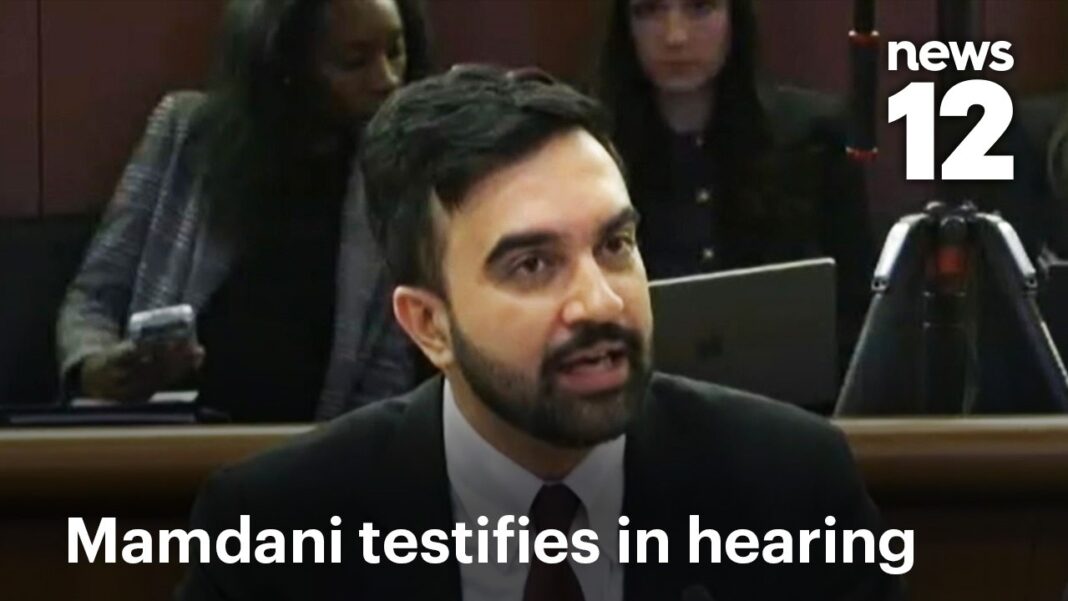
As New York City continues to wrestle with a punishing cost of living, an exodus of middle-class families, and a fiscal ledger strained by years of ambitious spending commitments, Mayor Zohran Mamdani has doubled down on a familiar refrain: the city is already the most expensive place in America to live, and therefore the wealthiest New Yorkers must be asked to shoulder a heavier share of the burden. Testifying before state lawmakers in Albany this week, Mamdani sought to recast his proposed tax hikes not as an ideological project but as a fiscal necessity born of urban hardship. The New York Post, which has closely tracked the mayor’s first months in office, reported on Wednesday that Mamdani defended a two-percent increase in the state income tax on residents earning more than $1 million a year, arguing that New York’s punishing costs leave City Hall with few alternatives.
Pressed by Assembly member Amanda Septimo of the Bronx to justify why high earners should be targeted for yet another levy, Mamdani framed the proposal as an almost inevitable consequence of New York’s global status and crushing expenses. “I think the why comes from the fact that we are the most expensive city in the United States,” he told lawmakers, according to The New York Post’s account of the hearing. In the mayor’s telling, the city’s fiscal dilemmas are inseparable from its economic stature: maintaining public services, housing programs, and transit systems in a metropolis as costly as New York, he suggested, requires deeper pockets than the existing tax base can reliably provide.
Yet Mamdani’s remarks carried a notable tension. On the one hand, he lamented the steady departure of working- and middle-class New Yorkers who, priced out of the city, seek refuge in less expensive regions. On the other hand, he has anchored his budgetary strategy in higher taxes on high earners and corporations, policies critics warn could accelerate the very flight he decries. The mayor acknowledged as much in Albany, cautioning that a fiscal approach that fails to keep the city affordable risks perpetuating a cycle of departures. But for many observers, including those quoted by The New York Post, the logic of raising taxes in one of the nation’s most heavily taxed jurisdictions appears at odds with the goal of retaining residents and investment.
Since launching his campaign and throughout his brief tenure at City Hall, Mamdani has positioned himself as a champion of redistribution. His platform includes not only the two-percent increase in personal income tax on millionaires but also a four-percent hike in the corporate tax rate. These proposals reflect the mayor’s broader ideological commitment to reshaping the city’s fiscal architecture in favor of what he describes as economic justice. Upon assuming office in January, Mamdani pointed to a looming multi-billion-dollar budget gap in the current fiscal year and the next as evidence that drastic measures were unavoidable. The city’s financial predicament, he warned, demanded bold revenue-raising initiatives lest essential services face deep cuts.
However, as The New York Post report underscored, the apocalyptic tone of those early warnings has since softened. During the same Albany hearing in which Mamdani defended higher taxes, his own budget director, Sherif Soliman, disclosed that the city’s projected $12 billion shortfall had failed to account for a substantial influx of end-of-year tax revenue. According to Soliman, an additional $7.2 billion in receipts materially altered the city’s fiscal outlook. While the gap remains serious, the revelation raised uncomfortable questions about the urgency and accuracy of the administration’s earlier claims.
For critics, this recalibration of the numbers, as detailed in The New York Post report, undermines the moral force of Mamdani’s tax crusade. If the direst projections were overstated, they argue, then the call for sweeping tax hikes may be less about necessity and more about advancing a preexisting political agenda. Business leaders and fiscal conservatives have seized on the revised figures to argue that City Hall should focus on controlling spending and improving efficiency rather than extracting more revenue from an already burdened tax base. The New York Post has given voice to these concerns, noting that many in the private sector fear the mayor’s proposals could further erode New York’s competitiveness at a time when rival cities and states aggressively court talent and capital.
The political stakes of the debate extend beyond City Hall. Governor Kathy Hochul has repeatedly signaled her reluctance to endorse higher income taxes, emphasizing that New York already ranks among the most heavily taxed states in the nation. The New York Post has chronicled Hochul’s resistance, framing it as a clash between Albany’s more cautious fiscal pragmatism and the mayor’s more confrontational approach to revenue generation. For Hochul, the specter of taxpayer flight looms large. She has warned that escalating taxes risks driving affluent residents and businesses to jurisdictions with more favorable fiscal climates, thereby shrinking the tax base and exacerbating long-term budgetary challenges.
This tension between city and state leadership reflects a broader debate about New York’s economic identity in the post-pandemic era. The New York Post has repeatedly explored how the city’s recovery has been uneven, with commercial real estate vacancies, remote work patterns, and shifting demographics complicating traditional revenue streams. Mamdani’s insistence that the city’s exorbitant cost of living necessitates higher taxes on the wealthy is, in this context, both a political statement and a gamble. It presumes that New York’s allure—its cultural capital, professional opportunities, and global prestige—will continue to outweigh the financial incentives offered by lower-tax locales.
Yet the evidence of outward migration, which Mamdani himself acknowledged in Albany, suggests that this presumption may be increasingly tenuous. The New York Post reported extensively on the movement of high-income earners and corporations to states such as Florida and Texas, where tax burdens are lighter and regulatory environments often more accommodating. Critics warn that if New York doubles down on its reputation as a high-tax jurisdiction, it risks accelerating this trend, thereby undermining the very revenue base the mayor seeks to expand.
Supporters of Mamdani counter that the city’s fiscal challenges demand structural solutions, not incremental adjustments. They argue, as The New York Post has reported, that New York’s vast wealth disparities justify asking those at the top of the income ladder to contribute more. From this perspective, the mayor’s proposals are less about punishing success than about ensuring that the benefits of living in a global city are underwritten by those most able to afford them. In a metropolis where public transit, housing assistance, and social services underpin daily life for millions, advocates contend that progressive taxation is a moral imperative.
Still, the optics of pushing tax hikes amid revelations that the budget shortfall was overstated complicate the narrative. The New York Post report highlighted how opponents have seized on Soliman’s disclosure to question the administration’s credibility. If the fiscal crisis is less acute than initially portrayed, they ask, why the rush to impose additional burdens on taxpayers? The mayor’s defenders reply that long-term structural deficits remain, and that relying on unpredictable revenue spikes is fiscally imprudent. The debate, in essence, pits short-term fiscal recalibration against a longer-term ideological vision of how New York should fund itself.
What emerges from this clash, as The New York Post’s report makes clear, is a portrait of a city at a crossroads. Mamdani’s testimony in Albany encapsulates the dilemma facing New York’s leadership: how to reconcile the city’s soaring costs and social ambitions with the realities of taxpayer tolerance and economic mobility. The mayor’s assertion that New York is already the most expensive place to live underscores a paradox at the heart of his agenda. If affordability is the problem, critics argue, then policies that risk driving away investment and high earners may deepen, rather than alleviate, the city’s fiscal and social strains.
As the state legislature weighs the mayor’s proposals and Governor Hochul maintains her resistance to broad tax increases, the outcome of this debate will shape New York’s fiscal trajectory for years to come. The New York Post report suggests that the battle lines are firmly drawn: between a mayor determined to redistribute the burdens of urban life and a constellation of critics warning that such redistribution, however well-intentioned, may carry unintended consequences. In the end, the question confronting New Yorkers is not merely who should pay more, but whether the city can sustain its global ambitions without eroding the economic foundations that have long underpinned its vitality.