



|
Getting your Trinity Audio player ready...
|
By: Max Horwath
In an era marked by rising social unrest and intensifying polarization, few issues have proven as legally complex — or as emotionally charged — as the question of how to define antisemitism. According to legal scholar Mark Goldfeder, the stakes of that debate have never been higher. In an expansive and at times urgent interview, Goldfeder warned that efforts to weaken established definitions of antisemitism are not merely academic exercises, but potential lifelines for those seeking to harass and intimidate Jewish communities.
Speaking on The Viktor Frankl Podcast, hosted by Rabbi Daniel Schonbuch, LMFT, Goldfeder delivered a sober assessment of the post–October 7 landscape, arguing that the surge in hostility toward Jews across the United States has laid bare the inadequacy of outdated distinctions between “anti-Israel” activism and plain old-fashioned antisemitism. His remarks, reported by VIN News on Sunday, reflect growing anxiety within the Jewish community that legal and political institutions are increasingly ill-equipped — or unwilling — to confront the new face of anti-Jewish hatred.
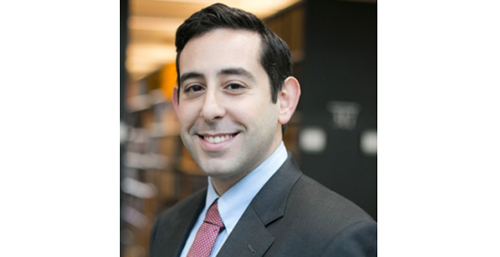
Goldfeder is no casual observer. As the CEO of the National Jewish Advocacy Center (NJAC) and director of the nation’s first antisemitism law clinic at Touro University, he sits at the intersection of scholarship, litigation, and public policy. From that vantage point, he sees both danger and opportunity.
“We’re going to be fine,” he told listeners in a tone that blended calm reassurance with steely resolve. “But we have to take a deep breath. We don’t panic — we plan.”
Those words, quoted in the VIN News report, framed a conversation that moved fluidly from philosophy to legal strategy, from constitutional theory to the daily lived experience of American Jews. Schonbuch and co-host attorney Lori Fein guided the discussion, pressing Goldfeder on the implications of New York City’s current political climate — particularly in the wake of the election of Mayor Zohran Mamdani — and on a broader national pattern in which anti-Jewish incidents are routinely minimized as mere “political speech.”
At the heart of Goldfeder’s argument lies what he calls the “definitional problem.” Jewish identity, he explained, defies neat categorization. It is at once religious, ethnic, national, and cultural. That multifaceted nature has long provided convenient loopholes for perpetrators and enablers alike.
“It has been too easy in the past for antisemites to commit heinous acts with impunity and then say it wasn’t antisemitism because it wasn’t based on this or that particular characteristic,” Goldfeder told the podcast audience, in comments later highlighted by VIN News. “That’s why it’s so important for there to be a definition of antisemitism in the law.”
For Goldfeder, the gold standard remains the International Holocaust Remembrance Alliance (IHRA) working definition of antisemitism — a widely adopted framework that includes contemporary manifestations of hatred toward Israel as expressions of anti-Jewish bigotry. Unlike narrower formulations, IHRA focuses on conduct and impact rather than ideological intent.
“It cuts through all of the tidy rationales given for a timeless hatred,” Goldfeder said.
Yet that definition, he warned, is increasingly under assault. Goldfeder pointed specifically to policy changes in New York City, where he claimed the Mamdani administration moved swiftly to remove the IHRA definition from official usage on its first day in office. VIN News reported his remarks, noting that Jewish leaders fear the city may soon adopt a far more restrictive standard that recognizes only overt violence as antisemitic while treating harassment and intimidation as protected expression.
Such shifts are not theoretical. Goldfeder pointed to recent incidents in which identical acts of hostility were treated differently depending on whether the target was perceived as Jewish or merely “pro-Israel.” One case involved chants supporting Hamas outside a Queens synagogue and yeshiva; another concerned a synagogue fire in Jackson, Mississippi. The responses, he noted, were strikingly inconsistent.
The alternative framework gaining traction in some progressive circles, known as the “Nexus” definition, drew particular criticism. According to Goldfeder, Nexus creates dangerous blind spots by recognizing only the most extreme acts as antisemitic while giving cover to everyday harassment.
“It can call a violent attack antisemitic if it’s linked to Israel,” he explained, “but anything short of that gets pushed into a gray zone.”
While the conversation was philosophical, it was also deeply practical. Goldfeder spent considerable time outlining the legal strategies NJAC is deploying to protect Jewish communities — strategies that the VIN News report described as part of a rapidly expanding “toolbox.”
One key instrument is Section 1983 of the Civil Rights Act of 1871, which allows citizens to sue state and local officials who violate constitutional rights under color of law. Goldfeder argued that this provision can be a powerful weapon when authorities apply rules selectively, fail to police threats against Jews, or permit antisemitic harassment under the guise of protest.
“Equal protection, viewpoint discrimination, due process — these are not abstractions,” he said. “They are concrete rights, and when they are denied to Jews, the law provides remedies.”
Another avenue is Section 1981 of the Civil Rights Act of 1866, historically associated with race-based discrimination. Goldfeder revealed that NJAC recently used the statute in an innovative way after a woman was allegedly choked with an Israeli flag at a demonstration. Although criminal charges were slow to materialize, civil litigation framed the attack explicitly as both racist and antisemitic.
“That language matters,” Goldfeder emphasized. “When the criminal system won’t say what something is, civil law sometimes can.”
Perhaps most surprising was his discussion of the FACE Act — legislation better known for protecting access to abortion clinics. Goldfeder described how NJAC successfully invoked the statute’s lesser-known provisions protecting religious worship after a June 2024 protest outside Adas Torah synagogue in Los Angeles. By treating interference with synagogue access as a federal offense, the case opened new pathways for deterring similar actions nationwide.
The VIN News report noted that the precedent could prove transformative at a time when demonstrations outside Jewish institutions have become increasingly aggressive.
A recurring theme of the interview was the erosion of the once-comfortable distinction between hostility toward Israel and hostility toward Jews. Fein, the co-host, observed that this boundary — long invoked by activists and academics — now appears largely fictitious.
“What the other side does very well is conflate things,” he said. “They hide behind slogans like ‘actions are speech’ and pretend that Zionism is some abstract idea instead of a national origin movement.”
His most forceful remarks came when he addressed the historical roots of Jewish identity.
“Zion is not an idea,” he declared. “Zion is a mountain in Jerusalem. We are Jews because we’re from Judea. We are Zionists because we’re from Zion.”
The VIN News report highlighted the comment as emblematic of Goldfeder’s broader thesis: that attempts to delegitimize Zionism are, in practice, attempts to delegitimize Jewish peoplehood itself.
