



|
Getting your Trinity Audio player ready...
|
By: Ella Bogen
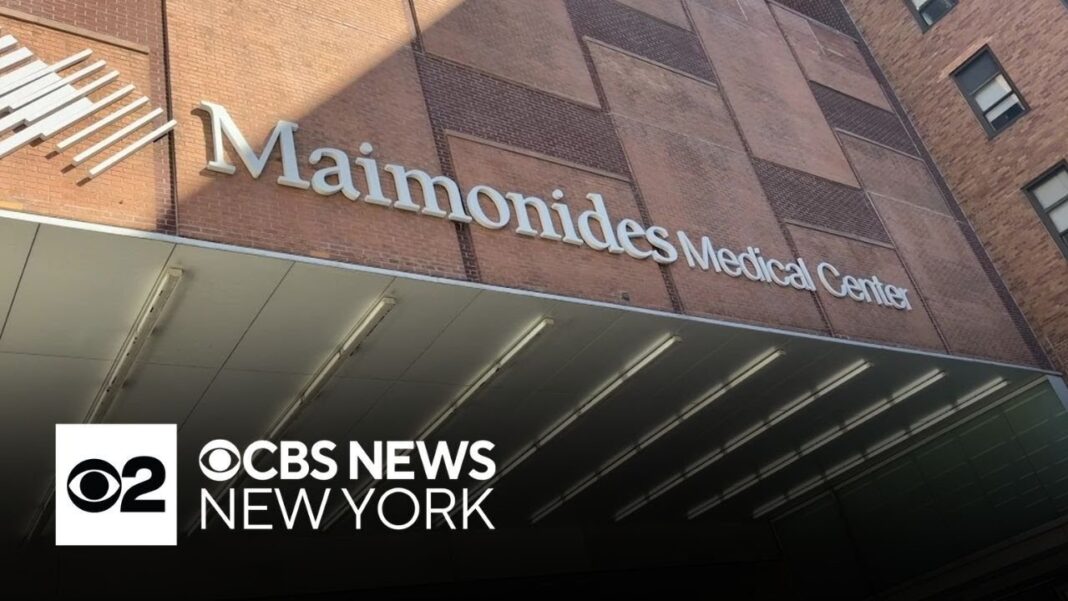
Maimonides Medical Center, the storied Brooklyn institution that has long served as a pillar of healthcare for New York’s Orthodox Jewish community and the broader borough, is poised to enter a new chapter in its century-long history. According to testimony delivered before the New York City Council, the hospital could formally become part of NYC Health + Hospitals as early as April 1 — a move that promises significant financial reinforcement and infrastructure upgrades but has also sparked legal opposition and cultural anxieties.
As reported om Monday by VIN News, Dr. Mitchell Katz, president and chief executive of NYC Health + Hospitals, told council members that preparations for the integration are well underway. While acknowledging the existence of a lawsuit aimed at blocking the transition, Katz emphasized that there is currently no judicial injunction preventing the merger from proceeding.
The proposed integration would bring Maimonides into New York City’s sprawling public hospital network, a system that operates 11 acute-care hospitals and numerous community health centers. For a facility that has long functioned as an independent, nonprofit institution deeply embedded in Brooklyn’s communal fabric, the shift represents a structural and cultural transformation of considerable magnitude.
At the heart of the proposal lies a financial rationale. Maimonides has faced mounting fiscal pressures in recent years, a predicament not uncommon among urban hospitals that serve large Medicaid populations. VIN News reported that joining the public system would substantially increase Medicaid reimbursement rates, resulting in an estimated multimillion-dollar boost in monthly revenue. Katz described the enhanced reimbursement as a stabilizing force, one capable of ensuring the hospital’s long-term viability.
Yet the merger is not solely a matter of balance sheets and reimbursement formulas. It also entails ambitious capital improvements. Katz informed council members that one of the immediate priorities would be the modernization of the hospital’s aging maternity facilities. Maimonides handles approximately 6,000 births annually, making it one of the busiest maternity centers in the New York metropolitan area. In neighborhoods with large Orthodox families, the maternity ward functions not merely as a medical department but as a communal cornerstone.
The VIN News report noted that the agreement envisions significant funding for the construction of a state-of-the-art maternity wing, designed to replace facilities that many observers describe as outdated. Hospital officials argue that such an upgrade is long overdue and essential to maintaining high standards of care amid rising demand.
Governor Kathy Hochul has pledged billions of dollars in funding over five years should the deal proceed, underscoring the state’s commitment to shoring up hospital infrastructure across New York. This infusion of capital would not only underwrite construction projects but also help modernize critical systems, including electronic medical records and digital patient portals.
Katz emphasized that integration into NYC Health + Hospitals would enable Maimonides to expand access to digital health tools, streamline administrative processes, and hire additional support personnel. He suggested that the hospital’s technological infrastructure lags behind contemporary standards and that public-system resources could accelerate long-needed upgrades.
Nevertheless, the path toward integration is far from frictionless. A lawsuit filed by several former board members seeks to halt the transition, contending that absorption into the municipal network could compromise patient care and dilute the hospital’s distinctive identity. VIN News reported that the plaintiffs argue the merger risks weakening the institution’s longstanding ties to the Orthodox Jewish community, which has historically regarded Maimonides not merely as a hospital but as an extension of communal life.
For many in Brooklyn’s Orthodox neighborhoods, Maimonides represents more than a healthcare provider. Founded in 1911 and named after the medieval Jewish philosopher and physician Moses Maimonides, the hospital has cultivated a reputation for cultural sensitivity and religious accommodation. It has long maintained policies designed to respect halachic considerations, including Sabbath observance and dietary requirements.
Community leaders have voiced apprehension about whether such practices would be preserved under municipal governance. VIN News highlighted concerns that bureaucratic centralization could erode the hospital’s responsiveness to religious needs or alter administrative structures that have historically facilitated close collaboration with rabbinic authorities.
Katz has sought to reassure skeptics. According to the VIN News report, he told council members that the agreement includes provisions safeguarding religious and cultural practices for decades to come. He underscored that the hospital’s name would remain unchanged and that much of its staff — including physicians, nurses, and administrative personnel — would stay in place.
The preservation of identity appears central to the merger’s political viability. By retaining the Maimonides name and maintaining continuity among staff, city officials aim to signal that integration does not equate to erasure. Rather, they frame it as a strategic partnership designed to bolster resources while respecting institutional heritage.
Still, the legal challenge introduces uncertainty. Although Katz stated that no court order currently blocks the process, litigation could delay regulatory approvals or complicate the timeline. The merger must also secure authorization from state health regulators, whose review will encompass financial projections, governance arrangements, and patient-care implications.
The debate has prompted robust discussion within the City Council and among Brooklyn residents. Supporters argue that public integration offers the most realistic path to financial sustainability in an era of escalating healthcare costs and shrinking margins. They note that affiliation with NYC Health + Hospitals could shield Maimonides from insolvency risks that have afflicted other independent institutions.
Critics, by contrast, caution that public ownership may subject the hospital to political pressures and budgetary fluctuations. They worry that municipal oversight could introduce bureaucratic rigidity or redirect priorities away from community-specific needs.
The question of patient care lies at the center of these competing narratives. Proponents contend that enhanced funding and systemwide coordination will improve clinical outcomes, reduce wait times, and expand specialty services. They point to the public system’s scale as a strength, enabling shared expertise and resource pooling.
Opponents counter that larger systems can sometimes struggle to maintain individualized attention. They emphasize the intangible qualities that have defined Maimonides for generations: familiarity, trust, and a sense of communal stewardship.
VIN News has consistently highlighted the emotional dimension of the debate, capturing the voices of patients and families who view the hospital as an anchor in times of vulnerability. For expectant mothers, elderly patients, and families navigating complex medical decisions, the institution’s ethos carries profound meaning.
Yet even some skeptics concede that the financial realities are formidable. Rising labor costs, infrastructure maintenance, and the demands of modern medical technology have strained hospital budgets nationwide. Medicaid reimbursement rates, in particular, have posed chronic challenges for safety-net providers.
By integrating into NYC Health + Hospitals, Maimonides would gain access to higher reimbursement formulas and a broader capital base. Katz argued, as cited by VIN News, that this revenue influx could support hiring additional nurses, social workers, and administrative staff — personnel essential to improving patient experience and clinical efficiency.
The modernization of electronic medical records represents another key objective. Expanding patient access to digital tools could facilitate appointment scheduling, prescription refills, and communication with providers, aligning the hospital with contemporary expectations of healthcare accessibility.
For now, the timeline remains contingent on regulatory review and the outcome of the legal challenge. If approvals proceed smoothly, April 1 could mark the formal commencement of integration. Should litigation intensify, the process may extend beyond that date.
In the broader context of New York’s healthcare landscape, the proposed merger reflects a growing recognition that standalone institutions may struggle to thrive amid systemic pressures. Public-private realignments, once viewed with skepticism, are increasingly considered pragmatic responses to fiscal constraints.
As the VIN News report observed, one reality stands clear: the fate of Maimonides Medical Center carries implications not only for Brooklyn’s healthcare infrastructure but also for the delicate interplay between financial sustainability and cultural continuity.
The coming months will determine whether integration into NYC Health + Hospitals fortifies the hospital’s legacy or reshapes it in unforeseen ways. For patients, staff, and the surrounding community, the stakes are both deeply personal and profoundly institutional — a testament to the enduring significance of a hospital that has served Brooklyn for more than a century.
