



|
Getting your Trinity Audio player ready...
|
By: Mario Mancini
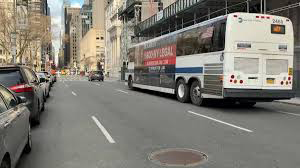
City Hall is once again betting big on bus lanes — and critics say New Yorkers are paying the price. As the New York Post reported, Mayor Zohran Mamdani’s administration plans to expand the Madison Avenue bus lane another 19 blocks, stretching it from 42nd Street down to 23rd Street by the end of the year, reigniting frustration among drivers, small businesses, and residents who argue the city is already drowning in lane reductions.
The plan was unveiled Sunday by Transportation Commissioner Mike Flynn, a longtime DOT official tapped by Mamdani on New Year’s Eve, alongside Deputy Mayor Julia Kerson. According to the New York Post, the expansion builds on the existing Madison Avenue bus lane and is part of the mayor’s broader promise to make buses “fast and free.”
Flynn said the current setup — two bus-only lanes on the east side of the avenue, a single general traffic lane, and a flexible parking lane — will simply be extended southward, the New York Post reported. But critics argue “simple” is hardly the right word when one of Manhattan’s busiest arteries continues to lose space for cars, deliveries, taxis, and emergency vehicles.
“When Mayor Mamdani asked me to serve, he challenged me to make New York City streets the envy of the world,” Flynn said at the press conference, according to the New York Post. What he didn’t address, opponents say, is whether those streets will still function for anyone not riding a bus or bike.
Kerson defended the move by pointing to congestion and sluggish bus speeds, which she said average just four to five miles per hour on Madison Avenue. As the New York Post reported, she warned that slow buses can ripple through daily life, causing workers to miss shifts, parents to arrive late for pickups, and patients to miss medical appointments.
But critics counter that City Hall’s obsession with bus and bike lanes is creating new problems rather than solving old ones. With each new lane painted, general traffic lanes disappear — squeezing cars into bottlenecks, backing up cross streets, and making deliveries nearly impossible for small businesses that rely on curb access, opponents say.
The Madison Avenue project also revives a DOT proposal that had been stalled under former Mayor Eric Adams’ administration. Kerson claimed Adams’ team interfered with the plan and missed the “painting season,” a delay she said Mamdani’s administration is now racing to correct, the New York Post reported. Flynn said the goal is to complete the work in 2026, weather permitting.
Yet to many New Yorkers, the timeline is less important than the direction. Critics argue that City Hall has spent years narrowing streets for buses and bikes while ignoring the realities of a city that still depends heavily on cars, taxis, ride-shares, and delivery vehicles — especially for seniors, families, and outer-borough commuters.
Madison Avenue cuts through dense commercial neighborhoods like Midtown and Murray Hill, home to office towers.
