



|
Getting your Trinity Audio player ready...
|
By: Tzirel Rosenblatt
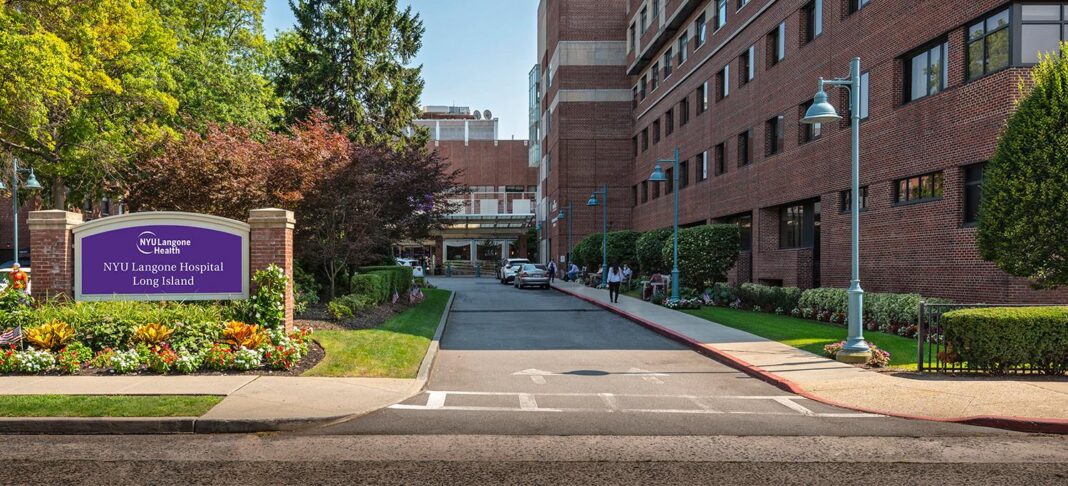
In a case that underscores the volatile intersection of free expression, workplace policy, and rising antisemitism in the United States, a Jewish nurse from Long Island has filed a lawsuit against NYU Langone Hospital in Mineola, alleging that the prestigious medical center reprimanded her, stripped her of a pay raise, and forced her to issue a coerced apology—all because she expressed support for Israel following Hamas’s deadly October 7, 2023, massacre.
According to a report that appeared on Saturday in The New York Post, 27-year-old staff nurse Leviah Ehrlich is seeking damages after she claims her employer singled her out for discriminatory treatment and subjected her to retaliation for speech rooted in her religious and cultural identity. Her lawsuit, filed in Brooklyn Federal Court, has already sparked heated debate over whether NYU Langone crossed the line between maintaining workplace neutrality and punishing employees for personal political or religious expression.
The controversy began just hours after Hamas terrorists launched their brutal surprise assault on southern Israel on October 7, murdering approximately 1,200 people, wounding thousands more, and abducting over 250 civilians and soldiers into Gaza. Horrified by the attack, Ehrlich posted two brief messages on her private Instagram account, viewable only to approved followers.
“You either stand with Israel or you stand with terrorism,” Ehrlich wrote in one of the posts, punctuating the message with two symbols: the Star of David and Hamas’s emblem, juxtaposed to emphasize her message of moral clarity.
In another post, Ehrlich uploaded a photograph of an Israeli soldier kidnapped by Hamas during the invasion—someone she identified as a former high school classmate. According to court papers, the inclusion of this personal detail reflected her immediate anguish, as the atrocities of October 7 were not a distant geopolitical event but a tragedy touching someone she once knew.
Yet, despite the posts being shared on a personal account outside of working hours, and despite the absence of any direct connection to her patients or hospital duties, Ehrlich’s comments soon became the subject of internal scrutiny at NYU Langone.
As The New York Post reported, about a month later, human resources representatives at the hospital summoned Ehrlich to a meeting. There, she was informed that someone had lodged a complaint about her posts, describing them as “wrought with bias and hatred.”
In December, she was called in again. This time, administrators escalated the matter, issuing her a written warning and insisting she craft a public apology post. The language of that apology, according to Ehrlich, was dictated by hospital officials and included references she had not chosen—such as the phrase “innocent people from both Israel and Palestine.”
For Ehrlich, the demand was not just disciplinary but humiliating, forcing her to dilute her message and publicly recast her solidarity with Israel into a broader statement that, in her view, misrepresented her beliefs. Her lawsuit contends this was an act of compelled speech, designed to sanitize her religious and political expression while appeasing those who had criticized her.
The dispute took an even harsher turn in January. Hospital administrators informed Ehrlich that her Instagram posts would cost her a $6,000 raise she had received the month before Hamas’s attack. Worse still, NYU Langone allegedly demanded that she repay the compensation she had already been awarded, a sum totaling more than $11,000.
According to the complaint, Ehrlich was blindsided. Her lawyers argue that the raise was tied to performance evaluations conducted before the October 7 massacre, making its revocation months later purely punitive. By tying the clawback of earned compensation to her political expression, the lawsuit claims, NYU Langone effectively weaponized its payroll system to punish her for her identity as a Jew and for her support of Israel.
“She did not engage in hateful or biased behavior,” the lawsuit asserts, “but was, in fact, the subject of discriminatory treatment and animus based on her religion.”
The broader thrust of Ehrlich’s lawsuit is that her case is not merely about employment law but about antisemitism in the workplace. By treating her pro-Israel posts as “bias and hatred,” hospital administrators allegedly cast Judaism itself as problematic, conflating Jewish identity with bigotry.
The lawsuit further argues that NYU Langone failed to apply its standards equally. The hospital has not, to Ehrlich’s knowledge, disciplined employees for expressing pro-Palestinian sentiments, even when such posts could be construed as political or inflammatory. The selective enforcement, her attorneys contend, points to a discriminatory double standard that punishes Jews for speaking out while tolerating or ignoring other political speech.
The New York Post report noted that NYU Langone declined to comment on the litigation, citing its policy against discussing pending legal matters.
Ehrlich’s case arrives at a time when reports of antisemitism in the U.S. are reaching record highs. Since October 7, Jewish students, employees, and community members across the country have reported harassment, intimidation, and discrimination tied to their identity and to the war in Gaza.
Hospitals and universities have become particular flashpoints. Just as college campuses have seen professors and student groups openly defend or excuse Hamas’s atrocities, health care workers in the U.S. and Europe have also made headlines for refusing treatment to Israeli patients or spreading antisemitic propaganda. Against this backdrop, Ehrlich’s lawsuit suggests that even in institutions dedicated to healing, Jews may feel unsafe expressing solidarity with their own people.
The case also echoes broader debates about social media and the workplace. Employers have long grappled with how to address employees’ personal posts on political issues. But in Ehrlich’s view, the issue is not neutrality but bias: while she was punished for siding with Israel, employees expressing pro-Palestinian or anti-Israel views may face no consequences.
According to the report in The New York Post, Ehrlich’s lawsuit sheds light on a fundamental question: when does an employer’s attempt to maintain workplace harmony cross into unlawful suppression of free expression and religious identity?
Legal experts say the case could hinge on whether the hospital’s actions were consistent with its stated policies. If NYU Langone regularly disciplines employees for political posts, it may argue that Ehrlich was treated no differently. But if her case proves to be an outlier, her attorneys could convincingly argue she was targeted specifically for her Jewish identity and support for Israel.
Her demand for damages—unspecified in the complaint—seeks not only financial redress but also recognition of the harm she says she suffered to her reputation and dignity.
The lawsuit against NYU Langone is emblematic of the fraught atmosphere in the U.S. since October 7. While the massacre by Hamas was met with global horror, the subsequent war in Gaza has fueled bitter polarization, with some accusing Israel of disproportionate force and others insisting on its right to self-defense. For Jewish Americans like Ehrlich, showing solidarity with Israel can now come at significant personal and professional cost.
As The New York Post report highlighted, her case raises the disturbing prospect that Jews in the U.S. may increasingly be forced to choose between their livelihoods and their faith. The fact that a nurse at a leading New York hospital—herself a caregiver—believes she was punished for affirming Israel’s right to exist illustrates how deep the fissures of antisemitism have become.
For Leviah Ehrlich, the lawsuit is more than a fight for compensation—it is, in her words, a stand against discrimination. “I was punished not because I did anything wrong,” she told confidants, “but because I am Jewish and I spoke up for Israel.”
Her case now awaits its day in federal court, but its significance is already reverberating far beyond Mineola. It is a test not only of NYU Langone’s employment practices but of America’s commitment to protecting Jewish voices at a time when they are under unprecedented attack.
As The New York Post report noted, the outcome will be closely watched—not just by lawyers and employers but by Jewish professionals across the country wondering whether their support for Israel could one day cost them their careers.

I hope she wins and it costs this bigoted institution millions upon millions of dollars. And for those that disciplined her, have them give up their cell phones along with every piece of Israeli technology and medication that they take and use.
Time to make ALIYAH !