



|
Getting your Trinity Audio player ready...
|
By: Serach Nissim
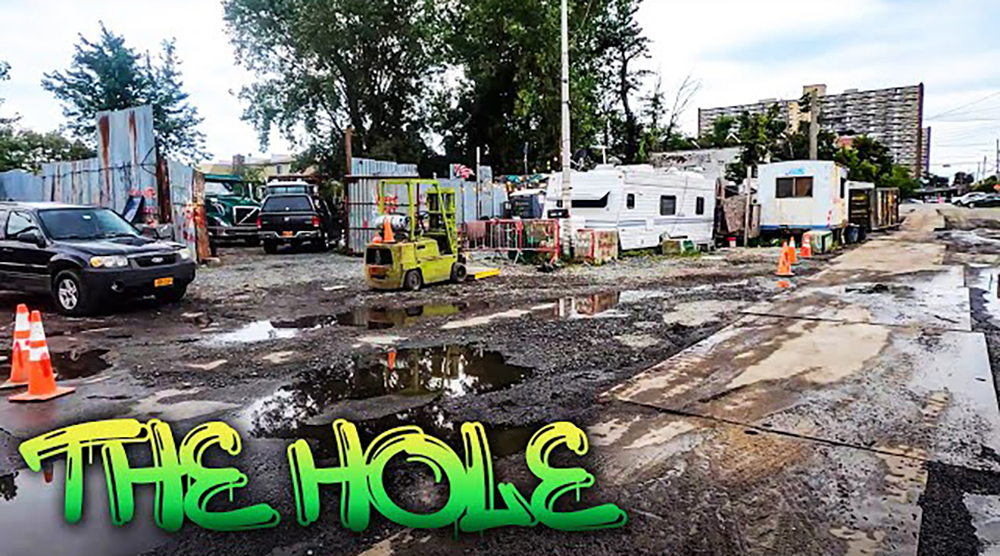
Situated by the border of Brooklyn and Queens, ‘the Hole’ is a poverty stricken, sunken neighborhood, with small buildings surrounded by vacant lots and streets full of potholes. Approximately four miles from Kennedy International Airport, the Hole, also known as the Jewel Streets, is a swampy area which rests at one of the city’s lowest elevations– roughly four feet above sea level. Per the NY Times, due to the low elevation, it is not connected to the city sewer system, and residents rely on septic tanks and cesspools. The streets are known to flood regularly whenever it rains. The cons of the neighborhood have left it to be used as a de facto junk yard and a place for people who live out of their vehicles. There are also some 300 full-time residents who have homes in the soggy streets.
As reported by the NY Times, resident Julisa Rodriguez, 38, said she is now used to rat infestation, septic tank leaks, groundwater pooling inside the home and even mushroom-like spores growing on the walls. On top of that, she says she recently found a snake in her backyard. “I almost passed out,” said Ms. Rodriguez, a stay-at-home mother of two.
Environmentalists are now questioning whether ‘the Hole’ is even sustainable in light of climate change. The neighborhood can be used as a graphic illustration of how climate change can affect the city. Activists and city planners say this neighborhood may provide insight as to problems that other flood-prone regions may face in the future. “All of those extremes are already happening here,” said Felicia Singh, a community activist who lives close by. The existential question is, can the neighborhood be saved or should residents move out, and leave the neighborhood to be taken over by the elements? The area has a broader history “not as solid land but as part of the coastal environment of Jamaica Bay,” said Kara Murphy Schlichting, an associate history professor at Queens College.
Per the NY Times, flooding and drainage are just becoming more severe as sea levels rise –even though the neighborhood is miles away from the ocean. “From a geological point of view, it’s not an area that should ever have been settled in the first place,” said Klaus H. Jacob, a climate expert at Columbia University, who said the area used to be a green valley with a creek and marsh area. As the city currently grapples with a housing crisis, however, it is not likely that the low-lying neighborhood would be condemned by city officials anytime soon.
In June, city officials and local organizers did begin holding meetings with residents to talk about how to make ‘the Hole’ a more livable place. Ideas mulled during meetings included elevating the streets, developing housing on nearby higher ground, designing green spaces with retention ponds for natural drainage, or even buying out the residents. The goal is to publish a resiliency plan for the neighborhood sometime this spring. Mayor Eric Adams has committed $75 million towards the project.
Per the NY Times, Rohit Aggarwala, the city’s climate chief, who is working on a resiliency plan, said his office is considering elevating the streets, but that this would require installing another pump station in the area, which would be very expensive.
