



|
Getting your Trinity Audio player ready...
|
By: Carl Schwartzbaum
The somber arc of a young man’s remorse reached its legal conclusion on Wednesday as Mordechai Berkowitz, a 23-year-old Orthodox Jewish resident of Lakewood, was sentenced to six years in New Jersey State Prison without the possibility of parole, following his guilty plea in the 2022 vehicular homicide that claimed the life of 44-year-old Juana Lopez-Hernandez. The case, which drew significant attention within the Orthodox community and was closely followed by VIN News, has become an emblem of both the catastrophic consequences of impaired driving and the complicated public conversation surrounding accountability, repentance, and communal responsibility.
According to a report that appeared on Wednesday at VIN News, Berkowitz admitted that he had been drinking on the evening of July 22, 2022, before getting behind the wheel on South Lake Drive, a picturesque but narrow road bordering Lake Carasaljo. Drifting over the center line, he collided head-on with Lopez-Hernandez’s vehicle, killing her instantly. Prosecutors emphasized that the fatal impact was the direct result of Berkowitz’s alcohol impairment, a point he himself acknowledged unequivocally during his plea earlier this year.
The sentencing—delivered in a courtroom heavy with grief, regret, and the lingering shock that has permeated both families and the broader Lakewood community—marks the end of the legal proceedings but not the end of the profoundly emotional reckoning that has unfolded over the past two years. As the VIN News report noted, the case is unusual not merely because of the tragic circumstances of the crash but because of Berkowitz’s highly visible, self-initiated response in the months that followed.
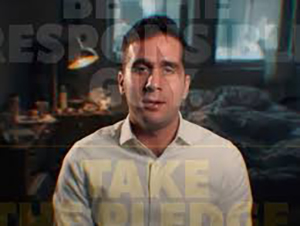
In the aftermath of the collision, Berkowitz launched a “Don’t Drink + Drive” campaign, an effort that rapidly circulated through Jewish media and social networks, ultimately garnering nearly 45,000 pledges from members of the Orthodox community and beyond. His message—delivered in videos, speeches, and written reflections—was one of stark confession and fervent warning.
As VIN News frequently reported throughout 2023 and 2024, Berkowitz became an unlikely figure in public safety advocacy, bearing the weight of his actions with unvarnished candor. His campaign resonated widely precisely because it did not seek absolution; instead, it presented his remorse as a moral imperative for others. He repeatedly characterized the crash as the defining catastrophe of his life—one he said he would carry forever but hoped others might learn from.
In July 2024, he published a raw and deeply personal op-ed in Mishpacha magazine recounting the night of the crash in wrenching detail. He described the exacting emotional toll of knowing that a preventable decision had taken an irreplaceable life and destroyed a family’s future. The piece, which VIN News cited extensively in its follow-up coverage, was credited with spurring additional community conversations about the dangers of alcohol misuse at weddings, Shabbat gatherings, and yeshiva events.
The court, however, remained bound not by Berkowitz’s advocacy but by the immutable facts of the tragedy and the legal standards governing vehicular homicide.